The instructional designer vs developer debate is one of the most common mix-ups in online learning. While both roles sound the same, they actually do very different jobs. Consequently, picking the wrong expert can slow your project and burn your budget.
So, which role do you actually need? Ultimately, it depends on where your project stands right now. In addition, it depends on the specific goal you want to hit.
To help you navigate this, this guide is clear and short. It specifically covers the instructional designer vs developer split so you can easily pick the right hire. As a result, by the end, you will know exactly what to do next.
Instructional Designer vs Developer at a Glance
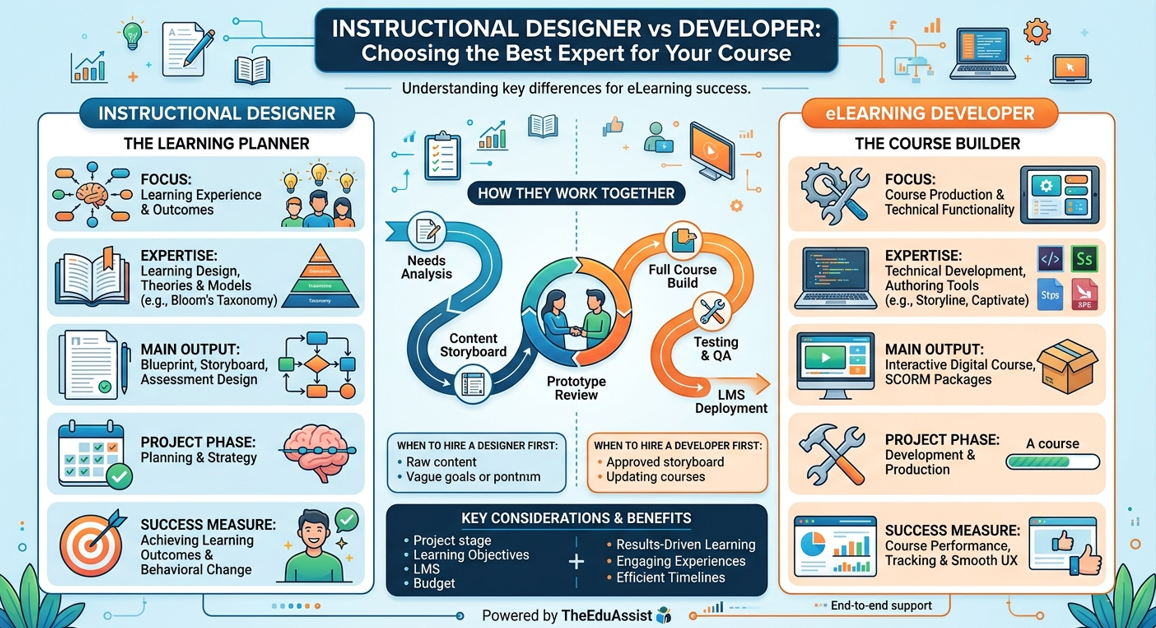
An instructional designer builds the learning plan. A developer builds the course.
The table below shows the key gaps at a glance. Therefore, use it as a quick guide before you read on.
| Area | Instructional Designer | eLearning Developer |
| Focus | Learning Experience | Course Build |
| Skills | Learning Design | Tech Work |
| Main Output | Plan and Storyboard | Live Course |
| Phase | Planning | Build |
| Goal | Learning Results | Course Output |
The Role of an Instructional Designer
An instructional designer plans how learners will reach a clear goal.
Before any course gets built, you need a plan. That is what an instructional designer does. Their job is to make sure real learning takes place. They focus on goals, flow, and learner needs.
Learning Goals and Outcomes
First, an instructional designer sets clear goals. These goals ask one key question: what should learners be able to do after the course? Without this step, even a great-looking course can fail.
Designers also use tried models like Bloom’s Taxonomy. These help map what learners need to know and do. As a result, each lesson has a clear aim.
Course Flow and Content Order
Good learning has a clear order. Therefore, the designer sorts content so each part builds on the last. They also pick how long to spend on each topic. This stops learner burnout and keeps the course on track.
Quiz and Test Design
Tests and quizzes are part of the design phase. However, they must link to the learning goals. For example, if the goal is to use a skill, then the test should check that skill in a real case. Otherwise, learners just recall facts and then forget them.
Learner Engagement Strategies
Adults learn best when content feels useful. So, instructional designer responsibilities include picking the right teaching style. For instance, stories, case studies, and real-world tasks all boost engagement. Furthermore, these methods help learners retain more after the course ends.
The Role of an eLearning Developer
An eLearning developer turns the design plan into a working online course.
Once the plan is ready, the developer steps in. Their work is hands-on and technical. They use software tools to build each screen, quiz, and click path. In short, they bring the design to life.
Course Build and Output
eLearning developer responsibilities start with building the course shell. Then they add text, slides, and links. Tools like Articulate Storyline, Adobe Captivate, and Rise 360 are used often. Speed and care both count at this stage.
Media and Interactive Elements
Developers also add videos, clips, and branching paths. These make the course more fun. However, they must serve the learning goal. Otherwise, they just add time and cost with no real gain.
LMS and SCORM Setup
Publishing a course is not just one click. Furthermore, the course must talk to the LMS the right way. Developers set up SCORM or xAPI files to track scores, time, and pass rates. This step needs specific platform know-how.
Testing and Quality Checks
Before launch, developers test the course on each device and browser. They check audio sync, broken links, and quiz logic. As a result, learners get a smooth ride from the first click. eLearning development services at this level protect the team’s good name.
How These Roles Work Together
Most strong eLearning projects need both roles in the right order.
The instructional designer vs developer relationship is not a competition. Instead, it is a handoff. Each expert handles a different phase. Together, they cover the full course development process from start to finish.
From Learning Plan to Course Build
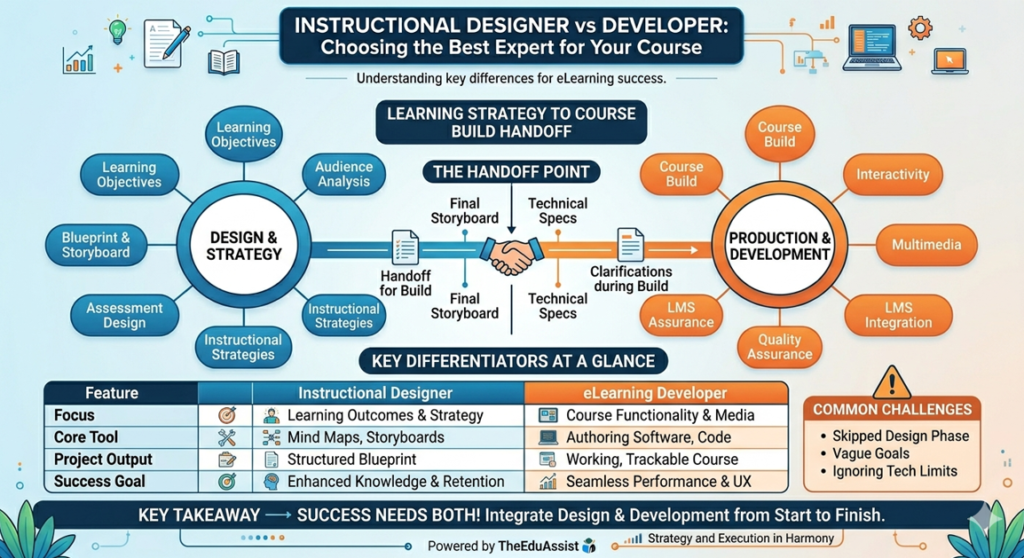
Design always comes first. The instructional designer creates the plan and storyboard. Then the developer picks it up and builds the course. Skipping design means building with no clear goal.
Typical Project Workflow
Here is how a standard project flows:
- Needs check and goal setting: Instructional Designer
- Content plan and storyboard: Instructional Designer
- Prototype review: both roles together
- Full course build: eLearning Developer
- Tests and fixes: eLearning Developer
- LMS launch and final checks: eLearning Developer
How Design and Dev Teams Work Together
The handoff is rarely a one-time event. Instead, designers often stay close during the build phase. They clear up questions when the developer needs help. Meanwhile, developers flag tech limits that may need design tweaks. This cuts costly rework down the line.
Common Project Problems
Things go wrong when teams skip the design phase. In those cases, developers are left to guess the learning goals. On the other hand, a plan that ignores tech limits causes costly build problems. Therefore, both roles must know each other’s work well.
Choosing the Right Expert for Your Project
Your project stage and business goal decide which expert you need first.
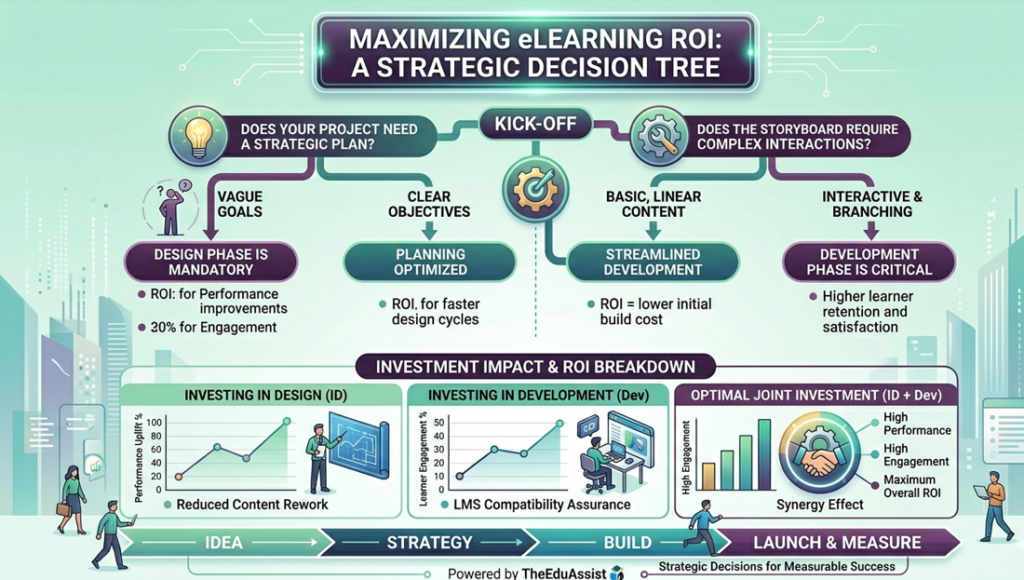
The instructional designer vs developer choice starts with a clear look at your project. Ask yourself: do you have a learning plan, or do you need one?
When Planning Comes First
Start with an instructional designer if you have:
- Raw content but no learning structure
- Training goals that are vague or not yet measured
- A new topic with no course built around it yet
- An old course that did not change learner behavior
When Building Comes First
Hire a developer first if you have:
- A finished, approved plan ready to build
- An old course that needs a refresh or new look
- A SCORM file that needs LMS setup
- Media files that need to be put into a course
When You Need Both
Building a course from scratch almost always needs both roles. Also, keeping them apart does not save time or money in real life. So, the instructional designer vs developer choice should be made early. End-to-end work goes best when both roles are planned together from the start.
Things to Think About Before You Hire
- What stage is the project at right now?
- Do clear learning goals already exist?
- Which LMS will host the course?
- What is the due date from start to launch?
- Is there an in-house expert to work with?
Cost and Project Scope
Project size and needs decide if you need one person or a full team.
What Drives Instructional Design Costs
Instructional design services vary in price. Course length, content depth, and review rounds all affect cost. Custom tests and detailed plans add to the scope. Moreover, working with many experts also adds to the design time.
What Drives eLearning Development Costs
Similarly, eLearning development services pricing reflects how much interaction is needed. A plain course costs less than a branching one with custom clips. Besides the build itself, video work, voiceover, and LMS setup also affect the final cost.
How to Budget for a Full Course
Understanding the instructional designer vs developer cost split helps a lot with budgeting. Track each role’s cost on its own. This makes the numbers much clearer. Also, teams that spend too little on design often spend more fixing a bad course after launch. Getting design right from the start is always worth it.
Common Myths About Instructional Design and Development
Many teams think these roles are the same, but they need very different skills.
Can One Person Do Both Roles?
Some people handle both sides of the instructional designer vs developer role. However, they rarely match the output of two dedicated experts. What an instructional designer does best is plan and design. What an eLearning developer does best is build and test. Hybrid roles work on small jobs. However, big or complex courses need one expert in each role.
Is Building More Important Than Design?
A great-looking course that fails to teach is a waste. Strong design with simple visuals often beats slick production built on a weak plan. Therefore, neither role is more key than the other. Both are needed for real results.
Does Every Project Need Both?
Not always. Short courses with simple goals can often be done by one skilled person. However, the instructional designer vs eLearning developer question matters most on mid-to-large projects. In those cases, errors at either stage cost a lot to fix. So, paying for both roles up front saves money over time.
References
- First principles of instruction. Educational Technology Research and Development, 50(3), 43–59.
- E-Learning and the Science of Instruction. Wiley Online Library.
- critical features from an instructional design perspective. Performance Improvement Quarterly, 6(4), 50–72.
Conclusion
The instructional designer vs developer distinction is simple at its core. Designers plan the learning. Developers build the course. Both roles count. Neither one replaces the other.
So, choose an instructional designer when you need a strategy, clear goals, and a set learning path. On the other hand, bring in an eLearning developer when you have a finished plan and need a working course. Combine both when you want the best results from start to end.
Also, the strongest eLearning programs solve the instructional designer vs developer question before work starts. They treat both roles as key investments. Teams that skip one or mix them up often end up rebuilding the course within a year.
Ready to build a course that works? Contact TheEduAssist today. The team handles both instructional design and eLearning development so your project moves from idea to launch with no gaps.
Frequently Asked Questions
What is the difference between an instructional designer and a developer?
The instructional designer vs developer difference comes down to plan vs build. An instructional designer creates the learning plan. Meanwhile, a developer builds the actual course using that plan as a guide. Design comes first. Development follows once the plan is approved.
Which role should I hire first?
Hire an instructional designer first if your learning goals are not yet clear. Conversely, hire a developer first only if you already have a finished, approved plan.
Can instructional designers build eLearning courses?
Some can, using basic tools. However, what an instructional designer does best is plan strategy, not production. For complex or interactive courses, a dedicated developer gives much better results.
Do small projects need both roles?
Not always. Simple courses with clear goals can often be handled by one skilled person. However, any course that must change behavior or track scores will benefit from both roles.
How long does course development take?
A typical project with both design and development phases takes six to twelve weeks. However, review cycles and feedback speed affect the timeline. Skipping design rarely speeds things up and often slows them down.
Authored by: Laiba Ayaz