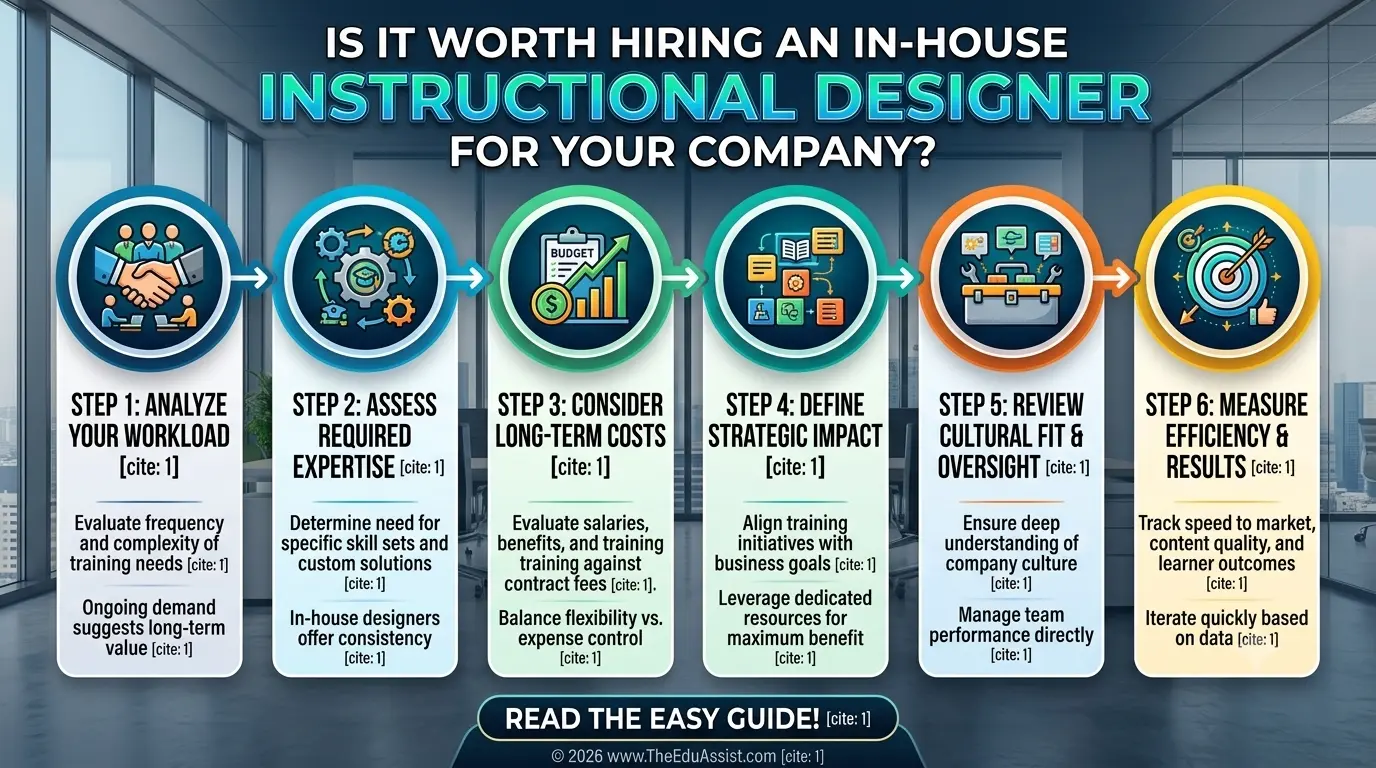
As organizations invest more heavily in employee training, onboarding, compliance education, customer education, and digital learning initiatives, a critical question continues to emerge: Should you hire an in-house instructional designer or outsource instructional design services?
For many companies, the answer is not as straightforward as posting an instructional designer vacancy and building an internal Learning & Development (L&D) team.
The growing complexity of corporate learning, AI-powered course creation, remote workforces, microlearning, and learning technologies has fundamentally changed how organizations approach training development.
Before deciding whether to hire a full-time instructional designer, companies should understand what instructional design actually involves, the true cost of internal hiring, and when outsourcing may offer a better return on investment.
This guide explores both sides of the debate to help organizations make an informed decision.
What Is Instructional Design?
Before discussing hiring decisions, it is important to understand what instructional design is.
Instructional design is the systematic process of creating effective learning experiences that help learners achieve specific outcomes. It involves analyzing learning needs, designing learning solutions, developing content, implementing training, and evaluating results.
Many instructional designers use frameworks such as the ADDIE instructional design model, which consists of:
- Analysis
- Design
- Development
- Implementation
- Evaluation
The ADDIE model remains one of the most widely recognized approaches within instructional system design and workplace learning.
In simple terms, instructional design ensures that training is not just created; it is created strategically to improve performance and knowledge retention.
For additional insights into how technology is reshaping learning design, read: AI vs Traditional Instructional Design
What Does an Instructional Designer Do?
A common misconception is that an instructional designer simply creates PowerPoint presentations or eLearning modules.
In reality, modern instructional designers perform a wide range of responsibilities.
Typical duties include:
- Learning needs analysis
- Curriculum development
- Storyboarding
- Assessment design
- Course development
- LMS implementation
- Learning analytics
- Performance improvement planning
- Multimedia content development
- SME collaboration
The role sits at the intersection of education, psychology, technology, and business strategy.
As learning ecosystems become more complex, instructional designers increasingly work with AI tools, authoring platforms, video production systems, and learning management systems (LMS).
Why More Companies Are Hiring Instructional Designers
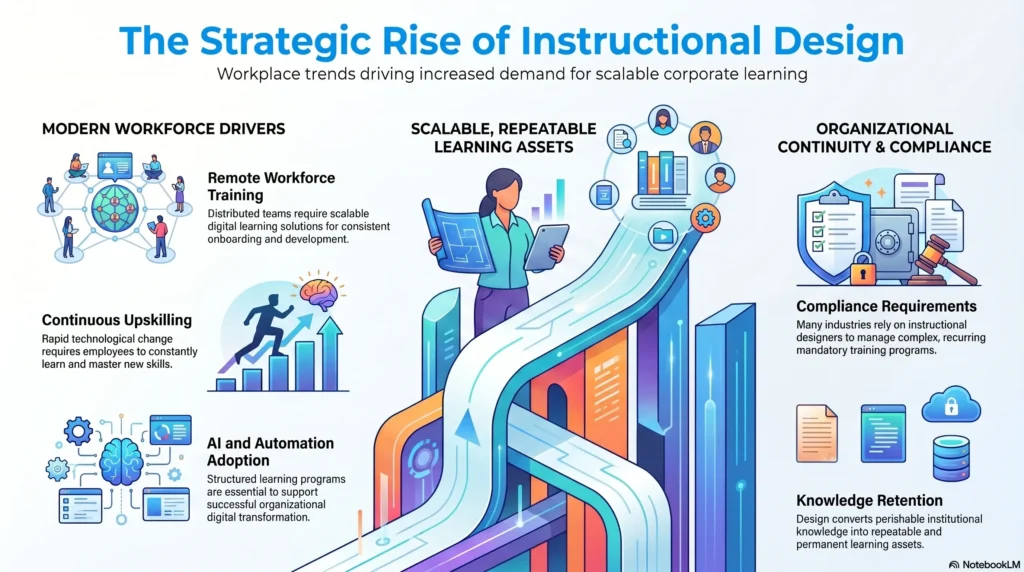
Several workplace trends are increasing demand for instructional designers:
- Remote Workforce Training — Distributed teams require scalable digital learning solutions.
- Continuous Upskilling — Rapid technological change means employees must constantly learn new skills.
- Compliance Requirements — Many industries require recurring training programs.
- AI and Automation Adoption — Organizations need structured learning programs to support digital transformation.
- Knowledge Retention — Instructional design helps convert institutional knowledge into repeatable learning assets.
As a result, instructional designer positions and instructional design vacancies continue to grow across corporate sectors.
The Benefits of Hiring an In-House Instructional Designer
There are several advantages to building an internal instructional design function.
Deep Organizational Knowledge
Internal designers develop a strong understanding of:
- Company culture
- Products
- Internal processes
- Organizational goals
This context often improves training relevance.
Faster Stakeholder Access
An in-house instructional designer can collaborate directly with:
- Subject matter experts
- Department managers
- Executives
- HR teams
…without the communication delays that sometimes occur with external vendors.
Long-Term Learning Ownership
Organizations with ongoing training demands often benefit from having a dedicated learning professional who continuously improves content.
Consistent Branding
Internal teams can ensure consistent voice, branding, and learning standards across all training initiatives.
The Hidden Costs of Hiring an Instructional Designer
Many organizations focus solely on salary when evaluating an instructional designer position. However, the true cost extends much further.
Additional expenses often include:
- Recruitment costs
- Employee benefits
- Software licenses
- Authoring tools
- LMS administration
- Professional development
- Equipment and technology
- Management overhead
For organizations with intermittent training needs, these costs can quickly outweigh the value of a full-time hire.
When Hiring an In-House Instructional Designer Makes Sense
An internal hire is often justified when:
- You Have Ongoing Training Needs — Large organizations producing training year-round typically benefit from dedicated resources.
- Training Is a Strategic Priority — Companies investing heavily in employee development often require continuous instructional design support.
- You Need Rapid Iteration — Internal teams can respond more quickly to organizational changes.
- You Have Multiple Learning Programs — Organizations managing onboarding, leadership development, compliance, and technical training simultaneously often require full-time expertise.
When Outsourcing Instructional Design Services Is the Better Choice
Not every company needs a permanent instructional designer. Many organizations achieve better outcomes through instructional design consulting and outsourced development.
Benefits of Outsourcing:
- Access to Specialized Expertise — Instructional design companies often provide learning strategists, eLearning developers, graphic designers, LMS specialists, and multimedia experts.
- Faster Project Delivery — External consultants work with established workflows and dedicated production teams.
- Lower Fixed Costs — Pay only for projects you need.
- Scalability — Scale resources up or down depending on requirements.
The Role of ADDIE in Modern Instructional Design
The ADDIE model remains one of the most widely used frameworks because it provides a structured approach to creating learning experiences. It guides projects through Analysis, Design, Development, Implementation, and Evaluation stages.
Whether you hire internally or outsource, a strong instructional designer should understand and apply established instructional design models such as ADDIE.
In-House vs Outsourced Instructional Design: Quick Comparison
| Factor | In-House Instructional Designer | Instructional Design Services |
|---|---|---|
| Initial Cost | High | Moderate |
| Long-Term Cost | High | Flexible |
| Scalability | Limited | High |
| Specialized Expertise | Limited to Hire | Broad Team Access |
| Project Speed | Moderate | Often Faster |
| Organizational Knowledge | Strong | Requires Onboarding |
| Technology Access | Company Purchased | Often Included |
| Flexibility | Lower | Higher |
The Growing Importance of Instructional Design and Technology
Modern instructional designers are expected to understand learning management systems, AI-powered learning tools, interactive eLearning platforms, learning analytics, and adaptive learning technologies.
This shift is one reason many companies are turning toward specialized instructional design consulting services rather than relying solely on internal teams.
Cost Reality Check
The real comparison should evaluate development quality, speed to launch, learning effectiveness, technology costs, opportunity costs, and internal management time.
An underutilized full-time instructional designer can become significantly more expensive than outsourced services. The best solution often depends on training volume rather than company size.
Our Recommendation
For most small-to-mid-sized businesses, hiring a full-time instructional designer is not always the most cost-effective option. Partnering with instructional design consultants often delivers better results.
Enterprises with ongoing learning initiatives, large workforces, and extensive training portfolios may benefit from dedicated internal talent.
The key is aligning your learning strategy with your business goals.
References
- https://docs.openedx.org/en/open-release-quince.master/educators/concepts/instructional_design/id_instructional_design_overview.html
- https://www.aihr.com/blog/addie-model/
- https://www.instructionaldesigncentral.com/addie-model
- https://www.instructionaldesign.org/models/addie/
FAQ
What is an instructional designer?
An instructional designer is a professional who creates learning experiences, training programs, courses, and educational content designed to improve knowledge, skills, and performance.
What does an instructional designer do?
Instructional designers analyze learning needs, design curricula, develop training materials, implement learning programs, and evaluate outcomes.
What is instructional design?
Instructional design is the systematic process of creating effective learning experiences using proven learning theories, instructional models, and performance-based methodologies.
What is the ADDIE instructional design model?
ADDIE stands for Analysis, Design, Development, Implementation, and Evaluation. It is one of the most widely used instructional design frameworks.
Should small businesses hire an instructional designer?
Not always. Small businesses often gain greater flexibility and lower costs by partnering with instructional design consultants or outsourcing specific projects.
Ready to Build Better Learning Experiences?
Whether you’re evaluating an instructional designer position, exploring instructional design consulting, or looking for a scalable alternative to hiring internally, the right learning strategy can dramatically improve training outcomes.
At TheEduAssist, we help organizations develop custom eLearning solutions, content development strategies, and learning programs that align with modern L&D goals.
Authored By: Sofia Arif