Automation tools are rapidly transforming how businesses operate. Entrepreneurs, startups, and digital professionals are increasingly adopting workflow automation platforms to reduce manual work and streamline operations. One platform gaining significant attention among developers, automation specialists and online course creators is n8n.
Because of its flexibility and open-source architecture, many educators and EdTech startups are now building online training programs to teach businesses how to use n8n effectively.
However, subject-matter expertise alone is not enough to build a successful course.
Many creators face challenges such as:
- Turning technical knowledge into structured lessons
- Designing engaging automation tutorials
- Explaining workflows to non-technical learners
- Creating practical exercises and scenario-based examples
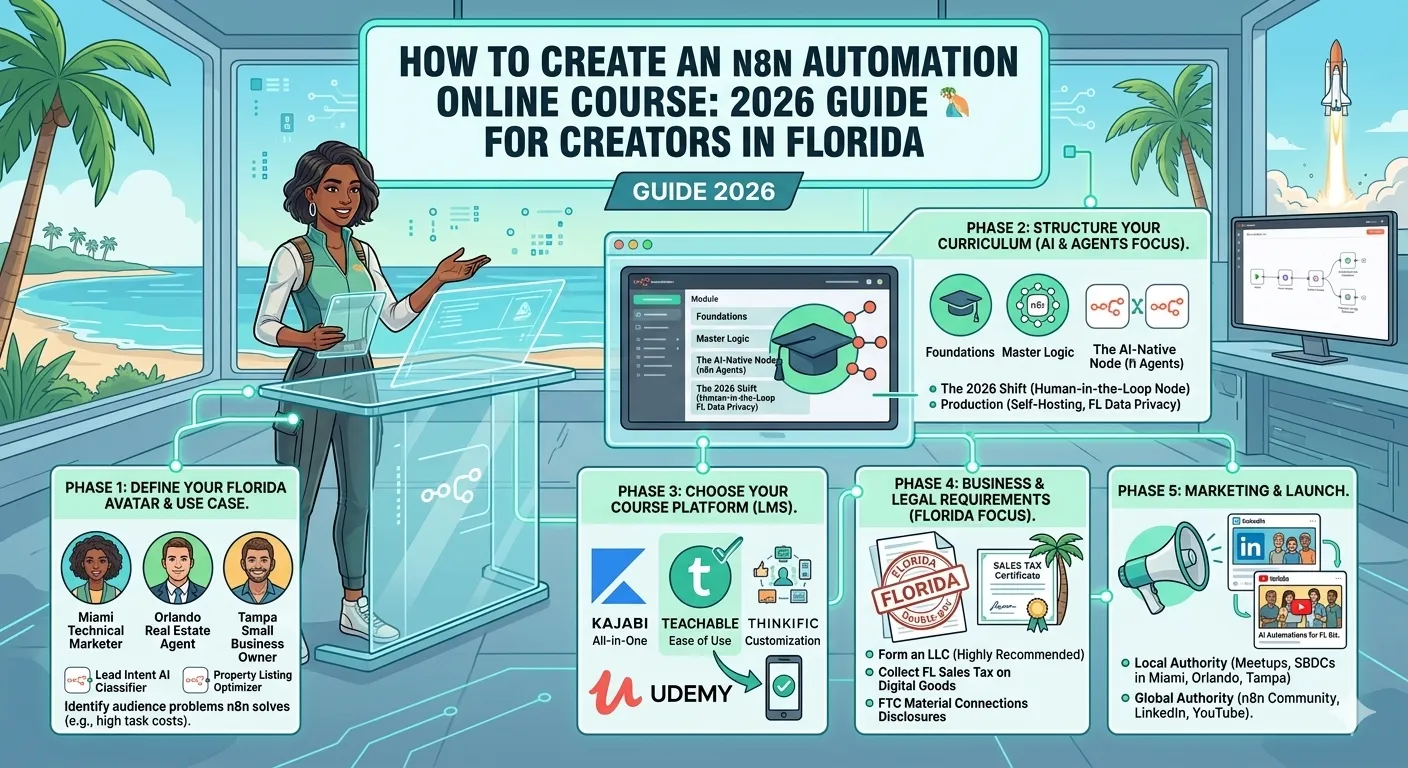
For educators and automation specialists in Miami, Orlando, Tampa, Jacksonville, and Fort Lauderdale, creating a structured automation course requires a combination of instructional design, curriculum development, and practical demonstrations.
This guide explains how to design and launch a professional n8n automation course in 2026.
Why Automation Courses Are Growing in Demand:
Businesses today rely heavily on automation tools to handle tasks such as:
- Lead generation workflows
- CRM updates
- Marketing automation
- Data synchronization
- Internal task management
Platforms like n8n allow users to create automated workflows without heavy coding.
Because of this, many professionals want to learn automation skills quickly through structured online courses rather than lengthy documentation.
For course creators, this presents a valuable opportunity to build automation training programs for entrepreneurs, freelancers, and startups.
Step 1: Identify the Target Learner
A common mistake when creating automation courses is designing them for developers only.
However, many learners today include:
- Small business owners
- Digital marketers
- Freelancers
- Startup founders
- Operations managers
For example, a business owner in Miami may want to automate customer onboarding, while a marketing professional in Orlando might need automation for email campaigns.
Understanding the learner’s background helps instructors simplify technical explanations and focus on real business use cases.
Step 2: Define Clear Learning Outcomes
Every automation course should begin with clear learning objectives.
Instead of promising vague outcomes such as:
“Learn automation with n8n.”
Define results like:
“By the end of this course, learners will build automated workflows that connect forms, CRMs, and email marketing tools using n8n.”
Clear learning outcomes help guide:
- Course structure
- Lesson design
- Exercises and projects
They also help learners understand the practical value of the training.
Step 3: Design a Scenario-Based Curriculum
Automation is best learned through real-world workflows.
Instead of teaching features one by one, structure lessons around business scenarios.
Example Curriculum:
| Module | Topic |
|---|---|
| Module 1 | Introduction to workflow automation |
| Module 2 | Installing and configuring n8n |
| Module 3 | Building your first automation workflow |
| Module 4 | Automating marketing tasks |
| Module 5 | Data integration and APIs |
| Module 6 | Advanced automation workflows |
For learners in Tampa or Jacksonville, scenario-based training makes it easier to understand how automation tools solve everyday business problems.
Step 4: Create Step-by-Step Automation Demonstrations
Automation courses are highly practical.
Each lesson should include visual demonstrations showing workflows being built in real time.
Typical Lesson Structure:
- Problem explanation
- Automation concept introduction
- Live workflow demonstration
- Testing the automation
- Best practices and optimization tips
This format helps learners follow along and replicate the automation themselves.
Step 5: Add Learning Assets and Practice Exercises
To reinforce learning, automation courses should include supporting materials.
Examples include:
- Workflow diagrams
- Automation templates
- Downloadable step-by-step guides
- Exercises and assignments
- Troubleshooting checklists
These resources allow learners to practice automation skills outside of the video lessons.
For example, a learner in Fort Lauderdale might download a template workflow and modify it for their own business process.
Step 6: Deliver the Course Through an LMS
Once the curriculum is complete, the course must be delivered through a Learning Management System (LMS).
Popular platforms include:
- Kajabi
- Thinkific
- Teachable
These platforms allow course creators to:
- Organize lessons and modules
- Track learner progress
- Host downloadable resources
- Deliver quizzes and certificates
Using an LMS ensures the course is structured, scalable, and easy to navigate for learners.
Step 7: Build Interactive Automation Projects
To ensure learners develop real skills, the course should include hands-on projects.
Examples include:
- Building a lead capture automation system
- Automating CRM updates
- Creating a marketing workflow
- Integrating APIs with automation tools
Projects transform theoretical learning into practical skill development.
Quick Comparison Table: Automation Course Platforms
| Platform | Best For | Key Advantage |
|---|---|---|
| Kajabi | Course businesses | Built-in marketing tools |
| Thinkific | Professional educators | Flexible course design |
| Teachable | Beginner creators | Simple setup |
Selecting the right platform depends on business goals and technical preferences.
Cost Reality Check: Creating an Automation Course
Building a professional automation course involves several components.
| Category | Estimated Cost |
|---|---|
| Instructional design consulting | $2,000 – $6,000 |
| Video production and editing | $1,000 – $4,000 |
| Course assets and templates | $500 – $2,000 |
| LMS platform subscription | $39 – $199 per month |
While some creators build courses independently, investing in professional instructional design often improves course quality and learner outcomes.
Final Thoughts:
Automation skills are becoming increasingly valuable across industries.
For educators and developers in Miami, Orlando, Tampa, Jacksonville, and Fort Lauderdale, creating a course on n8n presents a powerful opportunity to teach practical automation skills to modern businesses.
However, successful automation courses require more than technical expertise.
By combining scenario-based curriculum design, real-world automation demonstrations, hands-on projects, and structured LMS delivery, course creators can build engaging training programs that help learners implement automation confidently.
References:
FAQs:
What is n8n automation?
n8n is a workflow automation platform that allows users to connect applications and automate tasks without heavy coding.
Who should learn n8n automation?
Automation skills are valuable for entrepreneurs, digital marketers, developers, and operations professionals who want to streamline workflows.
What should an automation course include?
A strong course should include workflow demonstrations, real business scenarios, practice exercises, templates, and automation projects.
How long does it take to build an automation course?
Most automation courses take 4–10 weeks to develop depending on lesson count, production quality, and curriculum depth.
How can TheEduAssist help build an automation course?
TheEduAssist helps course creators develop structured automation course curricula, instructional video scripts, learning assets, and LMS-ready course content for platforms like Kajabi, Thinkific, and Teachable.
Authored By: Sofia Arif