
Have you ever realized how fast things change? The development of skills, occupations, andeven industries can change in just a few years. This dynamism confuses, immobilizes, or putsmany at a crossroads about their future. That is precisely the significance of learning: it is nolonger a task we only perform in school; it has now become a lifelong requirement that helps usbe more confident, competent in our careers, and gives us a better chance to thrive in amodern world. Today, it does not involve the memorization of information. It is about knowing,adjusting, and expanding ever. The skill to continue to learn has been one of the mostsignificant skills that a human being can possess, whether it is through modern education,digital learning, or self learning. What Does “Importance of Learning” Really Mean? It is not just about reading books and being in a classroom. In the real world, learningentails the acquisition of skills to solve problems, be critical, and make informed decisions. Itmakes people see the world in a new light and even be able to face challenges without fear. Through learning, people are able to adjust to new situations. When new demands emerge orthe technology alters in the workplace, the individuals who keep on studing adapt withminimal difficulty, whereas others do not. That is why the process of learning is highly relatedto the personal development, self-reliance and the success over the long run. How Learning New Skills Can Completely Change Your Future The acquisition of new skills can change the life of a person. One competence will provideaccess to new jobs, financial security, and professional recognition. In the current competitiveworld, it is risky to stick to old knowledge. The development of skills will make sure that yourskills are applicable and useful. Individuals who are constantly learning are more certain in their risk-taking, their occupationalchanges, or their adventures. They do not wait until they get opportunities; they make them.Acquiring new skills is no longer a choice but an obligation of every person who desires to havecontrol over their future. Why Skill Development Is the Real Key to Career Growth The Real Secret of Career Development Is Skill Development. Degrees alone are no longer a type of surprise to those in charge of decision-making in themodern workplace. It is not what you are doing that matters. Career growth has become basedon skill development as it directly affects productivity, the ability to solve problems, andinnovativeness. Experts who invest in skills of learning are ahead of others. They can adapt more quickly, theywork better, and they become leaders more easily. Skills development not only enhances jobperformance but also raises confidence and job satisfaction. Modern Education Is Changing. Contemporary education has a very different appearance compared to traditional education.Modern education is concerned with flexibility, practical knowledge, and implementation asopposed to strict systems. The educational approaches have come to be interactive, online, and project-based learning. The change will enable the learners to learn at their own pace and concentrate on what isimportant. Individuals who adopt modern education have an upper hand, whereas people whooppose change may end up being out of pace. The Real Benefits of Online Learning Most People Don’t Know Online learning has been vastly undermined by most people based on the assumption that it isof poor quality and lacks discipline. Online learning benefits are much deeper in reality. It givesthe learners a chance to obtain expert knowledge anywhere around the globe without time orplace restrictions. Online educational course promotes self-discipline and critical thinking. It allows learners to be in chargeof their speed and style of learning, which in most cases results in improved learning andultimate retention of knowledge. How Digital Learning Makes Education Easier Than Ever The way online course is making education easier than ever. skill development has eliminated most of the obstacles that complicated education in the past.Digital tools allow learning to be done via physical classrooms or fixed schedules. Students havethe option of studying at their most productive time. Digital education also enables education to be more interesting using videos, interactive learning,and real-time feedback. This method enhances comprehension and retention of learners. Best Learning Methods That Actually Help You Remember Things Learning Skills That Make You Smarter, Faster, and More Confident Certain skill abilities improve all spheres of life. The ability to think critically, communicate,and be digital enhances confidence and decision-making. These competencies assist one inlearning more and adjusting to change more readily. When individuals acquire good educational abilities, they become self-reliant and more conscious.They are not afraid of new challenges as they are confident in their powers to learn anddevelop. Can Self-Learning Really Work? The element of self education has turned out to be one of the best ways of acquiring knowledgein the current world. It enables people to study according to their needs, interests, andobjectives. It is easier and more organized than ever before, with the availability ofdigital courses materials as well as online platforms. Effective self-learners are personal responsibility leaders. They are regular, inquisitive, andenthusiastic, and this can be more effective than conventional ways of online study. Why Lifelong Learning Is the Secret of Successful People It is also a characteristic of successful people to engage in lifelong learning. They know that theydo not cease to learn after graduation. Rather, it persists into life since industries, technologies,and personal aspirations change. With Independent study, one will remain cognitively vibrant, career-wise valid, and personallysatisfied. It is a process and not an activity. Struggling to Focus While Learning? Most students have problems with concentration because they are distracted by a lot ofinformation. Enhancing concentration can be improved by incorporating basic modifications,including the formulation of specific aims, designing a schedule, and having small studyblocks. Natural concentration occurs when the learners put it into practice. Thatprocess is more interactive and does not seem as daunting. How eLearning Platforms Help You Learn Anytime, Anywhere The role of digital study Platforms in making you learn anywhere and at any time. The flexibility of these platforms with structure enables learning for all. They offerstructured classes,

What Is a Curriculum Development Centre? A Complete Explanation
In cases of failure in learning programs, it is not due to a lack of effort. In the vast majority of cases, it is a matter of form. Courses are designed as a compilation of topics, rather than an intentional way of learning. This contributes to confusion, a lack of interest, and improper knowledge implementation. There is the existence of a curriculum development centre to avert this very thing. These centres create sanity and order in learning. Each activity, lesson, and assessment has an objective. To avoid cramming information on learners, the curricula are designed in a way that they take them through the steps until they amass knowledge and skills that are relevant in the real world. In education, corporate training, professional certification, and so on, a curriculum development centre sees to it that learning programs are useful, involving, and goal-oriented. Learning about a Curriculum Development Centre in Easy Lingo Curriculum Development Centre is a special department that plans, designs, evaluates, and enhances curricula. It is much more than just writing content. It pays attention to the course of learning and the ways learners can obtain significant results. Simply put, the curriculum development centre responds to three core questions: what learners have to accomplish, how they should learn it, and how success will be measured. It transforms dispersed concepts into systemic programs that facilitate understanding, skills acquisition, and real-life application by applying the principles of instructional system design. The Importance of Curriculum Development Centres to Education and Training Learning may be haphazard and ineffective without an effective curriculum. Students may take courses and fail to put them into practice. This is solved in curriculum development centres where programs are designed according to clear objectives. In schools and universities, students accumulate structured knowledge. In business training, workers gain competencies that are directly associated with job performance. A formal learning and development plan enhances retention, involvement, and measurable results, increasing the effectiveness and credibility of training programs. Who Works in a Curriculum Development Centre? Curriculum Development Centre depends on cooperation among experts. Each role contributes to learning that is structured, engaging, and goal-oriented. Curriculum Developer Roles The general framework is formed by a curriculum developer. They identify learning outcomes, organize content, and align courses with standards, organizational objectives, or industry needs. Their work ensures the curriculum has clear purpose and direction, with the learner always at the centre. What Curriculum Developers Do Day in, Day out (Curriculum Developer Work) Day-to-day responsibilities include analyzing learner needs, reviewing course performance, optimizing content structure, and cooperating with subject matter experts. Curricula are continuously updated based on feedback, research, and industry trends to keep learning relevant and impactful. Curriculum Planners and Their Roles A curriculum designer focuses on the learner experience. While developers manage the framework, designers create lessons, activities, and assessments using instructional system design models. This ensures the content remains engaging, approachable, and logically sequenced so learners can apply their knowledge effectively. Designing the Courses that Work in a Curriculum Development Centre Designing an effective course requires deliberate effort, research, and structured planning. Curriculum development centres follow a defined process that starts with understanding learners and ends with measurable outcomes. Curriculum Planning Involves the Following Steps This systematic approach maximizes learning impact. Learning Objectives as a Guide to Course Structure A learning objective defines what a learner should be able to do by the end of a lesson or course. It guides course development, teaching methods, and evaluation planning. Clear objectives help learners know what to expect and help instructors stay focused on meaningful outcomes. Inclusion of Research-Based Instructional Strategies Curriculum development centres rely on proven teaching strategies such as active learning, scenario-based tasks, reflection, and practice. Grounded in learning science and cognitive research, these methods improve retention and practical application while keeping learners engaged. instructional System Design and Curriculum Development: The Link Instructional system design (ISD) offers an approach that assists in developing curricula by ensuring the correlation of: Curriculum development determines what learners should accomplish, whereas instructional design determines how learning is delivered to reach the highest effectiveness. Together, they create organized, results-based programs with tangible outcomes. Learning Strategies in Curriculum Development Centres To address diverse learner needs, curriculum development centres apply strategies such as collaborative learning, case applications, microlearning for flexibility, and blended digital and instructor-led approaches. This variety ensures learning remains relevant, engaging, and accessible. Course Outlines Designed by Curriculum Development Centres A course outline acts as a learning roadmap. Curriculum development centres ensure outlines are logical, consistent, and aligned with learning objectives. Clear outlines help instructors and learners understand topics, progression, assessments, and expectations, making learning predictable and effective. What Do You Need a Curriculum Development Centre? Any organization delivering structured learning benefits from curriculum expertise. This includes schools, universities, corporate L&D teams, professional training providers, NGOs, and EdTech companies. Meaningful, outcome-oriented learning requires intentional curriculum design. How Our Instructional Design Services Benefit Curriculum Development Centres At EduAssist, our instructional design services strengthen curriculum development by refining learning objectives, structuring courses, applying research-based methods, and delivering scalable digital solutions. This ensures curricula remain learner-centred, practical, and measurable. Advantages of Partnering with a Curriculum Development Centre for Training Programs Partnering with a curriculum development centre leads to: Learners gain confidence and competence, while organizations can track performance and learning outcomes. Frequently Asked Questions What is curriculum development centre? It can be defined as a specialized staff or department that plans, designs, reviews, and enhances curricula in order to make learning programs structured, outcome-driven, and aimed at meeting the goals of the learners and the organization. What is the work of a curriculum developer? A curriculum developer specifies the learning outcomes, organizes the content, and ensures alignment with standards, goals, or competencies. What is the distinction between a curriculum developer and a curriculum designer? Developers focus on frameworks and objectives, while designers focus on learner experience, activities, and teaching plans. What is the relevance of learning objectives in curriculum design? Learning objectives provide clarity on learner achievement and align

Kajabi Course Design Explained: How to Create Online course in 2026
E-learning has turned into one of the strongest methods of knowledge sharing, business development, and gaining authority. Online courses have been popularized through platforms such as Kajabi, making them accessible to nearly anyone. However, to create a course is one thing, and to keep the learners motivated to continue and complete it is quite another. This is where the design of Kajabi courses becomes very crucial. We do not simply upload your content to Kajabi at TheEduAssist.com. We assist you in creating an entire learning experience, one that encourages learners, keeps them interested, and provides real results. This article will describe the reason why most courses fail, the difference between our approach and others, and why we employ intelligent online course development techniques to enable creators to be successful. Why So Many Online Courses Struggle You are not alone if you have ever signed up for an online course and dropped out midway. Low engagement and low completion rates are the common challenges in the online learning industry. The majority of online courses fail due to the following reasons: The result? Poor course completion rates, disappointed learners, and lost business opportunities. Winning Formula of TheEduAssist.com We do not create courses in the same way at TheEduAssist.com. Our work is based on the principles of instructional design, the actual behavior of learners, and experience over the years in creating successful digital learning experiences. Our formula is on clarity, involvement, and inspiration, the three factors that any course that is a success requires. Modular Course Design: Learning in Small Steps The most crucial aspect of a successful Kajabi course design is a modular structure. We do not give long courses to the learners but rather subdivide content into small, focused modules. The modules have a single outcome, and thus the learners always know the outcome they are working towards. Such a strategy promotes microlearning, which shows to enhance learning and memorization. Students can finish lessons during brief intervals, and thus it is easier to remain consistent despite their hectic schedule. Modular design also: As soon as learning becomes manageable, there are high chances of learners continuing and completing the course. Multimedia Integration: Multimedia Makes Learning Fun. There are various ways of learning. Other people like pictures, whereas others are great listeners or by doing. That is why it is important not to use only text and talking-head videos to design effective, engaging eLearning. Multimedia integration is not in vain at TheEduAssist.com. This can involve short videos, visual explanations, worksheets that can download, audio summaries, and interactivity. The choice of each format makes learning easier, not distracting. For example: Through a combination of various formats, we are able to create interactive learning experiences that are not static or unchanged but instead dynamic and human. Engagement Strategies: The Motivation of Learners. Interaction does not occur accidentally. It has to be purposefully structured. We apply effective engagement strategies that enhance the motivation and involvement of learners, including: These plans make the learners feel engaged and encouraged, as opposed to passive. Once the learners perceive progress and feel rewarded, chances are high that they remain committed to the course. Our Approach with Kajabi Kajabi is an effective platform, and a large portion of courses fail to work because the creators have not designed them to run on the platform. The creation of our Kajabi online course is platform-specific. We know the way the learners browse Kajabi courses and create layouts that are easy to use and navigate. Our approach includes: With the help of the alignment of instruction design and the advantages of the Kajabi platform, we design courses that seem professional, polished, and easy to use. Success Case: 85% completion of the kajabi course by Sarah. Sarah is an online coach who was very good at her message but not at engagement. The content of her course was useful, and numerous learners had to leave it in the middle. Having cooperated with TheEduAssist.com, we restructured her course on a modular basis, as well as interactive activities and engagement-oriented design. The outcome was dramatic. The rate of her course completion rose to 85%, and the feedback of learners was higher as well. Students claimed to have better results in the real world. Her new and improved course became a pillar of her online coaching enterprise. It was not this success through the addition of more content, but superior design. TheEduAssist.com Course Creation and How kajabi Can Benefit You. You have a new course that you want to start, or you are just looking to enhance an existing course; we help you through it all. Our services include: Our interest is in performance, rather than in beauty alone. All decisions guided by the way learners interact, comprehend, and use learning. Call to Action The fact that your course does not provide the experience or outcome you expected does not imply that your idea is not worthwhile. It implies that the process of learning must be refined. TheEduAssist.com enables you to convert your skills to interesting, strong, and effective online courses in Kajabi.We shall create a course that your students will complete and retain. Final Thoughts Online courses of greatness are not made by accident. They are learner-centered and not merely content-centered. Your course can stand out in a saturated market with mindful Kajabi course design, effective engagement tactics, and a learner-centered approach. Frequently Asked Questions What is the difference between the kajabi course design offered by TheEduAssist.com and other courses? We emphasize the experience of the learner, the instructional strategy, and Kajabi’s specific design as opposed to generic templates. Why would I choose Kajabi to run my online course? Kajabi is a platform that provides an online learning delivery system, a marketing platform, and a host all in one. What is the advantage of designing modular courses? It makes the process of learning manageable in steps that enhance clarity, retention, and completion rates. Would TheEduAssist.com be effective in case I already have a course, but low
What Are Terminal Learning Objectives? A Practical Guide for Training 2026
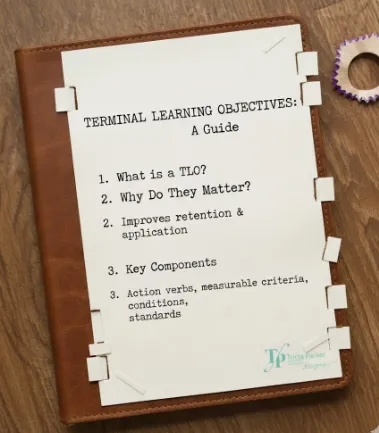
Did you ever leave a training program, succeed in the test, but still be unable to understand how it actually makes you better in the workplace? This experience is more prevalent than most organizations think. This problem is not often about the motivation or intelligence of the learner. In the majority of instances, it is the vague or poorly specified terminal learning objectives. Training when having unclear learning objectives is centered on delivering content as opposed to actual outcomes. Students become detached, leaders are unable to discern any effect, and training expenditure is unable to provide quantifiable benefits. Clear terminal learning objectives would eliminate this issue by giving a clear picture of what success would be by the conclusion of the learning process. What is a Terminal Learning Objective in simple words? A Terminal Learning Objective (TLO) is how a learner can describe what he or she will be able to do upon completion of the course. It does not emphasize hypothetical knowledge but focuses on performance. As an illustration, a statement like stating that a learner will be able to grasp the principles of customer service does not explain an outcome unmeasurable and unapplicable. Contrastingly, when one says that a learner will employ a regulated customer complaint resolution process when having live interactions, this is the clear definition of the expected performance. The final behavior is to define strong terminal learning outcomes as the conditions in which the terminal behavior should take place and the level of performance. It is a clarity that underlies the design of the instruction system, the learning objectives, and curriculum development. Why Every Course Needs Clear terminal Learning Objectives Many training programs are designed based on gathering the information and converting it into the form of slides, videos, or modules. Although the content may be true, learners are always left wondering how it fits into their work. Such content first approach results in low engagement, unhealthy assessment, and diminished learning retention. This is reversed through clear learning objectives. They bridge the gap between training and the actual job activities, direct the instructional choices, and provide the learners with a sense of purpose. Learners become more interested and put learning into practice when they are aware of what they are supposed to accomplish. Terminal vs Enabling Objectives What is the Difference? Terminal learning objectives outline the end outcome of training, whereas enabling objectives facilitate that outcome by dividing it into smaller skills or knowledge areas. The two are significant, but they play different purposes. As an example, when the terminal objective is to produce a compliant incident report, enabling objectives could be: The enabling objectives accumulate to the terminal objective, which eventually outlines the success. This fact is particularly significant when designing storyboard instruction, as the sequence of learning and skills development should be well-traced. The 7 Steps to Writing a terminal Learning Objective that is Readable and Measurable 1: Select specific action verbs that describe observable behavior as the first step in writing effective learning objectives. 2: Learning could be objectively evaluated with the help of words like apply, analyze, demonstrate, or evaluate. 3: Such words as know or understand are not specific. 4: No less significant is measurability. 5: A powerful goal enables teachers and students to have a clear-cut definition as to whether a result has been attained. 6: This is essential in both instructor-based training and in electronic learning, whereby the assessments have to be standardized and reproducible. 7: Lastly, the learning objectives should linked to the actual workplace skills. Learners should motivate and greatly retain what they learn when they have a clear outlook of the connection between training and job performance. Terminal Learning Objectives and the Design of Your Course A proper course outline begins with the end-point learning goals and proceeds backward. It is the objectives that define what they cover, the arrangement of the content that should be covered, and the evaluation of learning. In the absence of clear purposes, the course outlines get overwhelmed with information that is not focused. When goals drive the structure, there is a reason behind each module, activity, and evaluation. The Storyboarding of Instructional Design: Where it Fits In An instructional design storyboard converts the learning targets into a learning plan and a visual plan. It demonstrates that experts reinforced objectives with the help of content, interactions, scenarios, and assessments. Storyboarding will make it consistent throughout the learning process and will not make irrelevant content distract a learner from what he or she intends to achieve. Here, the learning goals are made practical learning experiences. Improving retention of learning through Research-Based Instructional Strategies Good training is not based on intuition. It uses research-based instructional methods that have been studied to enhance learning retention and transfer of skills. These include: Using goals as a guide to the choice of strategy, the learners not only expose the information; they also get to put it into practice in a real-life situation. The Electronic Learning Role of Terminal Learning Objectives In eLearning, there is a tendency to allow the learner to advance without the supervision of the instructor in real time. Specific terminal learning objectives are effective in that they give some direction and focus to the learners, making them know what is most important. They also approve proper evaluations, significant engagements, and a future-proof learning structure. Digital learning is ineffective and soon turns into a passive one without definite goals. Typical Writing Learning Objectives: Bad Practices Among the most frequent errors, there is writing objectives describing content, as opposed to performance. The other one is employing language that cannot measure or try to put two or more results in one goal. Goals should also develop later; a factor that creates misalignment. By preventing these errors, the clarity, the engagement of the learners, and the effectiveness of the training in general will be enhanced. The EduAssist Process of Developing Result-Hunting Training We focus in training designs at EduAssist. The instructional design services we offer

A Practical Guide to Planning and Development Training for modern workforces
Planning and Development Training That Helps Your Team Learn, Grow, and Perform Better In today’s fast-changing workplace, training is no longer just about delivering information. It is about helping employees build real skills, retain knowledge, and apply learning on the job. At EduAssist, our Planning and Development Training design to do exactly that. We combine thoughtful planning, strong instructional design services, and modern eLearning development to create training that truly supports workforce performance. Our approach focuses on people, performance, and practicality. Instead of generic courses, we design learning experiences that align with business goals, employee needs, and real workplace challenges. Why Most Workplace Planning and Development Training Fails Many organizations invest heavily in training, yet still see poor results. Common reasons include: When training is poorly planned, learners disengage, forget what they learned, and fail to apply new skills. Better planning changes this outcome. By using a structured learning and development strategy, organizations can ensure training is relevant, focused, and results-driven. At EduAssist, we believe strong planning is the foundation of effective learning. It ensures every course has a clear purpose, a logical structure, and measurable outcomes. Our planning and Development Strategy That Actually Works We follow a practical and proven learning and development strategy that keeps both learners and business goals in focus: This step-by-step approach ensures training is not only engaging but also effective and aligned with organizational priorities. How We Design Training That People Don’t Forget Finding the Real Skill Gaps in Planning and Development Training Effective training starts with understanding what employees truly need to learn. We conduct role-based analysis, stakeholder discussions, and performance reviews to identify real skill gaps. This prevents wasted training time and ensures learning is directly connected to job performance. Setting Clear Learning Goals Clear learning objectives guide the entire training process. They help learners understand what they will gain and help organizations measure success. Each objective is written in simple, action-oriented language that focuses on real workplace outcomes. Building an Easy-to-Follow Course Plan A well-structured course outline makes learning easier and more engaging. We organize content into logical sections that build knowledge step by step. This structure reduces cognitive overload and improves understanding. Structuring Content With Instructional System Design We use proven instructional system design (ISD) principles to align content, activities, and assessments. This ensures learners can practice skills, receive feedback, and reinforce learning leading to stronger learning retention. Custom eLearning Development for Today’s Busy Teams Modern employees need training that fits into their workday. Our custom eLearning development solutions designed for flexibility and ease of use. Training can be accessed anytime, anywhere, across devices. Key features include: This approach supports continuous learning without disrupting daily work responsibilities. Using Smart Learning Strategies to Improve Learning Retention Learning is only effective when it is remembered and applied. We use research-based instructional strategies such as: These strategies significantly improve learning retention and long-term performance. Modern eLearning That’s Interactive, Practical, and Easy to Use Microlearning for Quick Skill Building Microlearning platforms allow learners to access short, focused lessons that address specific skills. This is ideal for busy teams who need quick, just-in-time learning. Scenario-Based Learning in Planning and Development Training Scenario-based learning places learners in realistic situations where they must make decisions and solve problems. This method improves critical thinking and prepares learners for real workplace challenges. Interactive Digital Learning Experiences Interactive elements such as quizzes, simulations, and guided activities keep learners engaged and motivated. These experiences turn passive learning into active participation. From Training Plans to Real Workplace Performance Our planning and development training connects learning directly to performance. By aligning curriculum development with job tasks and business goals, organizations can see clear improvements in: Training becomes a strategic tool rather than a checkbox activity. Who This Planning and Development Training Is Perfect For Organization ? Our solution is ideal for: Whether you are building new programs or improving existing ones, EduAssist supports every stage of the learning journey. Why Companies Choose EduAssist for Instructional Design Services Organizations partner with EduAssist because we offer: Our experience in workforce training and curriculum development ensures training delivers measurable value. Let’s Build Training Your Team Will Actually Enjoy The Problem readers mostly face in Planning and Development Training Many employees face challenges with training programs that are generic, overly long, or irrelevant to their specific job roles. This often leads to low engagement, poor knowledge retention, and difficulty applying what they learn on the job. Our Solution EduAssist develops practical, well-structured, and engaging learning experiences that are directly applicable to real job performance. Our programs address actual skill gaps and include interactive elements to boost engagement. Real-world scenarios are integrated to ensure knowledge is effectively applied in the workplace. By combining research-based instructional strategies with custom eLearning development, we help employees retain information, gain confidence, and improve overall workplace efficiency. The Results Organizations benefit from: Visual and Learning Experience We focus on clean design, clear navigation, and supportive visuals that make learning intuitive and enjoyable. conclusion Our training solutions are built on real-world experience, instructional expertise, industry best practices, and continuous learning research establishing trust and credibility. Call to Action Ready to improve your training strategy? Visit eduassist to explore our Planning and Development Training services or contact our team to start building learning that truly works. Frequently Asked Questions What does Planning and Development Training mean? Planning and Development Training is a guided method of planning, developing and presenting learning programs with regards to business objectives and performance requirements of employees. It puts emphasis on clear learning outcomes, good instructional design and quantifiable training outcomes. What is the difference between EduAssist training and the regular training in the workplace? EduAssist offers tailored eLearning development as opposed to generic training programs, which are developed on actual skill deficiencies and job descriptions. The research is based on instructional strategies and instructional system design to ensure a greater engagement level and learning retention in our solutions. Is this training organization specific? Yes. All our training programs on
Instructional Design Services for Custom eLearning Development & Better Learning Outcomes
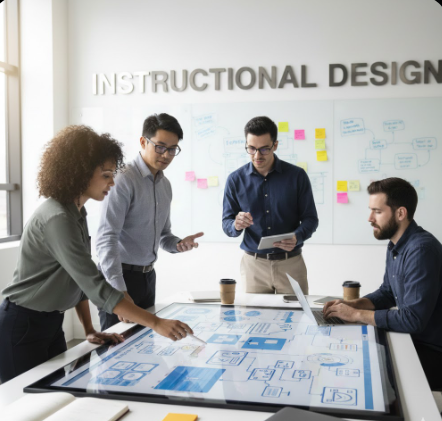
Numerous training programs are unsuccessful due to the same reasons. Students often become overwhelmed with information, forget easily, or complete a course without fully understanding how to apply what they have learned. This normally does not occur because of what is teaching; it is the design of the training that is the issue. This content developed for informational purposes and throws light on instructional design best practices that based on learning science and industry experience. Instructional design services come here. Instructional design is concerned with the way in which people learn, remember things, and use them in practice. Rather than having huge quantities of content, it packages learning in a manner that seems coherent, organized, and useful. Through instructional system design, custom eLearning development, and eLearning content development, training can focus more for information delivery approach than actual understanding and quantifiable learning results. what is instructional design It is the process of planning, organizing, and creating learning experiences so people can understand information easily, remember it longer, and apply it in real life. Designing Custom eLearning Supported by How People Learn Learning does not happen by chance. It happens by design. The custom eLearning development finds on the behavior of learners, cognitive science, and practice. We create learning material to meet specific objectives, work assignments, and the needs of the learner, rather than using generic content. learning plans prepare in well method, and the material should organized in a manner that helps remember and learn. When learning structured in the way people process information, then learning becomes less difficult to follow, less difficult to remember, and less difficult to apply in practice. How Our Instructional Design Process Works Good training does not impose information on learners. It guides them step by step. The design of the instructional system offers a systematic means of doing this. Using Research-Based Learning Strategies Evidence-based teaching methods can be useful in alleviating cognitive load and enhancing learning retention in the long term. These strategies facilitate various learning styles and help to make learning meaningful rather than overwhelming. Setting Clear Learning Goals and Outcomes All courses begin with specific learning objectives, such as terminal learning objectives and performance-based outcomes. Clarity of goals makes the learners know what they are supposed to attain and enables organizations to test whether the training is succeeding. Creating a Clear Course Design A structured course outline will ensure that learners are oriented and confident. There are logical sections of the content, simple ideas are presented at the beginning, and the complexity is built up. This design allows the elimination of confusion and facilitates consistent learning. Storyboarding the Learning Experience An instructional design storyboard plot charts the entire learning process prior to development. It establishes the flow of content, learning methods, interactions, evaluation, and use of media. This will be done to make sure that all that is in the course is in line with the learning objectives. eLearning Content Development for the today’s Digital Learners Digital learners expect clarity, flexibility, and relevance. Contemporary students demand the flexibility, clarity, and relevance of learning materials. eLearning content development’s aim is to fulfill these conditions due to the careful design and digital learning tools. Microlearning to Improve Learning Retention Microlearning platforms provide short and carefully targeted learning units, which simply finish and simply revisit. This method has a higher retention and is suitable even in a busy schedule. Interactive and Engaging Online Learning No one restricts a good use of e learning to static slides. To learners, interactive engagements and practice activities, as well as real-life problem solving, enable the application of learning. Simple Screen Design and Learning Flow Skid row design and straightforward navigation can be used to make the learners concentrate on learning rather than trying to understand how the course works. A constant flow of learning minimizes distractions and enhances learning. Training Planning and Development That Improves Performance Training planning and development bridge the gap between learning and actual performance requirements. The gaps in skills are identified, the learning strategies are chosen with a purpose, and the outcomes are measured after a period of time. Instructional design aids in making sure that the training not only gets completed, but also is implemented in everyday work as well. What an Instructional Designer Does for Your Business many people think, what instructional designers do. The role and responsibilities of an instructional designer are to analyze the needs of learners, shape the goals of learning, plan learning activities, and organize the lesson content in a manner that will allow comprehension and retention. The instructional designers are important in the onboarding, upskilling, reskilling, and long-term curriculum development. Tools and Platforms We Use for eLearning Development At EduAssist, we use technology to enhance learning through effective instructional design. We create structured and scalable eLearning solutions using learning management systems (LMS), microlearning platforms, interactive tools, and multimedia systems. All our courses follow SCORM standards and WCAG accessibility guidelines, ensuring a seamless and inclusive learning experience for all users. It is no longer about the capabilities of technology, but about learning performance. Who Can Benefit from Instructional Design Services? Instructional design services are applicable to the corporate training staff, educational institutions, EdTech providers, professional certification programs, and all those who design instructional design courses or curricula. learners can easily apply Instructional design in any organization that may desire that they comprehend, recall, and implement learning. Why Businesses Choose Our Custom eLearning Solutions Eduassist developed this Custom eLearning solutions to fulfill the needs of the learners, research-based teaching and learning, and long-term learning efficiency. Learning experiences created to facilitate actual performance and quantifiable outcomes rather than empty one-size-fits-all content. Conclusion. EduAssist provides instructional design services, custom eLearning development, and LMS-supported training solutions for businesses, educational institutions, and EdTech providers. Our instructional designers apply research-based learning strategies to create training programs that enhance understanding, retention, and real-world performance. Effective training does not relate to a lot of information shared. It refers to the level of comprehension, retention, and application

Education Data Privacy Laws: FERPA’s Role in a Data-Driven World
Nowadays, with the emergence of digital learning and data-driven education, securing the information of students is the most important thing. Family Educational Rights and Privacy Act is a law that gives the legal provisions to protect the records of students in the United States. The concept of FERPA, its necessity, application, purpose, and importance are highly essential to find answers to such questions by educational institutions, administrators, teachers, and EdTech providers. This guide provides a close-up view of FERPA compliance, effective strategies, and the advantages of the privacy of students. What is FERPA? The Family Educational Rights and Privacy Act is a federal legislation in the United States of America that was passed in 1974 in order to safeguard the privacy of the education records of students. It is a federal law that is set in all educational institutions that are funded by the U.S. Department of Education. Co-ordinate objective: Empower students (and their parents, where under 18) on the control of their education records. Key Rights Under FERPA: Who it applies to: Why Do We Need FERPA? The FERPA exists in order to provide privacy, preserve trust, and control the disclosure of sensitive student information. With the rise of a more digital world and digital platforms of learning, student data is at risk of unauthorized access, misuse, or data breach. It responds to these difficulties by: Sample:In the absence of FERPA, some sensitive student data, like grades, disciplinary records, or health information, may be disclosed to unauthorized third parties, jeopardizing the privacy and credibility of the institution. Where is FERPA Used? It is applicable in many different institutions of learning: K–12 Schools Colleges and Universities EdTech Online Learning and Platforms Research Institutions Third-Party Service Providers Role of FERPA in Education FERPA is the key to contemporary education because it: Example:The teachers are only allowed to access class records that are relevant to them, whereas administrators have greater access to enable good educational and operational management. Importance of the FERPA Compliance FERPA is important as it sets legal, ethical, and operational standards for managing student data: Actions to Have FERPA Compliance Identify Education Records Implement Access Controls Secure Data Storage Obtain Written Consent Employee Education and Policy Implementation Vendor Management The Advantages of FERPA Compliance Common Challenges Active measures:Policies, audit, employee training, and contracts with safe vendors. Frequently Asked questions Who is covered under FERPA? All students studying in schools that are federally funded. Parents lose their rights at age 18 or upon postsecondary enrollment. What constitutes an education record? Any documentation that is directly linked to a student, including grades, transcripts, disciplinary records, health files, and personal identifiers. Is it permissible to share student information in schools without permission? Yes, with certain exceptions, such as reports to school officials with legitimate educational interest, emergency, or law enforcement. What are the FERPA violations penalties? Failure to do so may result in federal investigations, defunding, and reputational harm, but FERPA is not a punitive statute. Is FERPA applicable to online learning systems? Yes, any site that contains, handles, or retrieves student records should be in accordance with FERPA. Conclusion FERPA is not just a statutory requirement; it is an imperative model that safeguards student privacy, confidence, and performance. Its responsibilities and importance go beyond compliance and dictate the way in which learning institutions handle data, their interaction with students, and the implementation of technology solutions. Institutions will be in a position to fully adopt FERPA compliance by locating education records, deploying secure systems, seeking consent, educating employees, and keeping track of third-party providers. FERPA is becoming more important in the time of digitalization of education, as students and institutions are recognized as the highest priority of the law, and their privacy is preserved. Key Takeaways
Personal Learning Environment: How to Learn in a Changing World 2026
In a world where skills become outdated in a short time and industries are moving at an unprecedented pace, the most significant ability a learner should strive to achieve is teachability. Teachability does not refer to knowing everything but to knowing how to learn continually. This is where it comes in. Discover how a Personal Learning Environment helps learners build teachability, take control of learning, and improve retention through self-directed, flexible, and digital learning practices. What Is a Personal Learning Environment? It is a learner-directed system, which is a combination of tools, resources, learning strategies, and reflection practices, to assist in continued learning. A PLE is customized, adaptive, and flexible, unlike the conventional classroom style of learning or the LMS-based learning. It is not just one software or an application. Rather, it is an individual learning system that is constructed in accordance with the objectives, strengths, and weak points of the learner. Personal Learning Environment provides answers to three major questions of learning: The responses to these questions develop teachability in learners and shift them away from passive content consumption and into active knowledge building. Where does a Personal Learning Environment Find Application? It is applied in a variety of learning situations: The Personal Learning Environment facilitates flexibility, which is an important characteristic of teachable learners in any environment. Why Do We Need Personal Learning Environment today? Conventional education systems have difficulty with reality-based learning issues: It addresses these issues by leaving the control to the learner. In the fast-changing digital economy, learners need to: By promoting reflection, experimentation, and continuous improvement, which are important aspects of teachability, a PLE facilitates this cycle. Examples The following are realistic examples of how Personal Learning Environments apply in practice. Example 1: Corporate Learner A professional develops a PLE by using: This will enhance retention of learning and performance at work. Example 2: University Student A student builds a PLE with: The outcome is further insight and academic confidence. Example 3: Career Switcher A student studying in a new discipline uses: This adaptable speeds up the process of teaching and learning skills. The way a Personal Learning Environment enhances retention of learning. It is also known that learning retention becomes better when learners process information and do not passively absorb it. A Personal Learning Environment facilitates retention in the following ways: Learners revisit the concepts in new formats, and as a result, memory paths are reinforced. Empirical instructional methods affirm that learner-controlled environments are a great way of enhancing long-term retention. Motivation is enhanced when the learners have a sense of ownership of learning, and motivated learners retain more. Personal Learning Environment: Using Learning Strategies. Personal Learning Environment can only be effective after being coupled with effective learning strategies. Key strategies include: These plans make learning a skill. In the long run, learners are more teachable in that they will be able to improvise in case the results are poor. The Microlearning Platforms and their role in contemporary learning. The present-day Personal Learning Environment includes the necessity of microlearning platforms. They provide specialized information in small, easy-to-digest portions that fit in hectic schedules. Benefits include: Microlearning facilitates teachability by promoting regular learning practices and immediate practice. Electronic Learning Personal Learning Environment. A Personal Learning Environment in electronic learning puts more emphasis on the development of the learner rather than the course completion. Learners combine instead of relying on one LMS : This participatory style encourages independence, flexibility, and sustained development, which are all desirable attributes of a contemporary professional. Frequently Asked Questions What are the learning strategies within a personal learning environment? Strategies in a learning environment are methods by which learners understand, retain, and effectively apply knowledge. These are active recall, spacing repetition, reflection, and problem-based learning. They make teachability stronger by enabling the learners to change their approach with time. How does a personal learning environment enhance learning retention? Personal learning environment enhances retention of learning as it allows repeated learning, self-directed learning, and practical implementation. It helps learners to revisit content by reflection, practice, and feedback, which reinforces long-term memory. What is the key objective of a personal learning environment? The primary idea behind a Learning Environment is to provide learners with the ability to control the learning process. It assists people to become teachable, flexible, and ongoing learners. What is the difference between the personal learning environment and the traditional learning systems? This is flexible and controlled by the learner, unlike traditional systems, which are standardized and instructor-controlled. A PLE is flexible to personal requirements and learning styles. Is it possible to train using personal learning environments in organizations? Yes. this is becoming more popular in organizations aimed at personalized upskilling, microlearning, and lifelong learning using electronic learning systems. Conclusion A Personal Learning Environment is not a current craze in learning; it is a viable means to handle the modern learning issues. The systems constructed by integrating learning strategies, microlearning platforms, and electronic learning tools enable learners to be adaptable and successful in the long run. Most significantly, a Personal Learning Environment leads to the creation of teachability, the capacity to learn constantly in unpredictable settings. Change is something that never stops in the world; individuals who learn to learn will always be ahead.
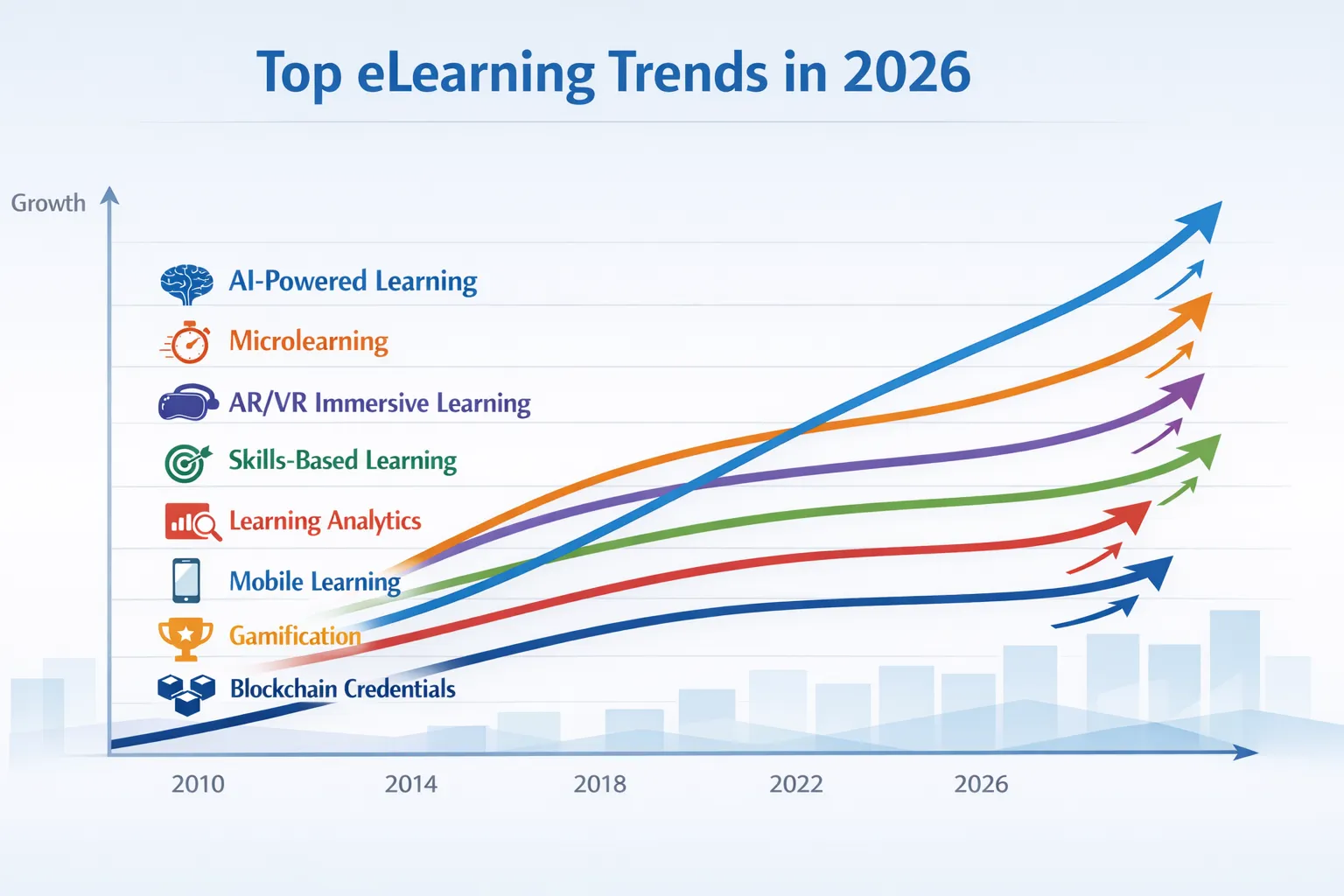
eLearning 2026: How Technology is Reshaping Education
Learn about the future of online learning by looking at the future of eLearning in 2026. Discover the solution to the current learning problems with AI, microlearning, immersive technologies, blockchain credentials, and data-driven education. Introduction Online learning has evolved from a convenience to a necessity, becoming a vital component of education, workforce development, and global upskilling. eLearning is no longer about content delivery in 2026 but rather about the experience of the learner, their skill development, and their impact, which can be measured. Individuality, adaptability, and applicability are the qualities that learners require, whereas the institutions require quicker training, regulation, and the ability to demonstrate proficiency in skills. The awareness of the best eLearning trends of 2026 can assist educators, training facilitators, and companies to overcome the endemic issues of disengagement, skills mismatch, and credential mistrust. Artificial Intelligence-based Customized Learning. In 2026, AI is still reinventing the concept of online learning. AI-powered platforms use the information of learners to develop individualized learning experiences, adjusting the content, speed, and evaluations according to the performance of an individual. Problem-Solving Value With AI, it is possible to make smarter suggestions, provide automated feedback, and make predictions, so learners can get the necessary assistance when it is needed. On-Demand Skill Building by using microlearning. The use of microlearning is still among the most successful eLearning trends in 2026. Students are becoming more inclined to brief, intensive learning modules which have an immediate pay-off. Why Microlearning Works Microlearning is employed to upskill employees, enhance their knowledge, and optimize performance in a quick fashion without interfering with productivity. AR and VR: Immersion Learning. Online learning is being changed to an immersive and hands-on experience with the help of Augmented Reality (AR) and Virtual Reality (VR). These technologies are hugely embraced in technical, safety, and medical training. Key Benefits Immersive learning is a way of filling the gap between theory and practical implementation. Outcome-based and Skills-based Learning. By the year 2026, people can gauge learning success not only through certificates but also through skills. Skills-based education matches education with job market demands. Impact The modern eLearning strategies revolve around assessments, real-world projects, and competency mapping. Learning Data-Driven Decisions and Analytics. dth pxHeight Information is vital in determining successful learning experiences. High-level learning analytics also give information on learner engagement, performance, and content performance. How Analytics Helps Through information-based decision-making, there is a constant improvement and responsibility. Mobile-First and Flexible Learning. Mobile-first eLearning is mandatory in 2026, with the adoption of remote and hybrid learning models becoming a norm. Students demand cross-platform connections. Benefits Mobile learning promotes accessibility and inclusiveness in a global context. Learner Engagement through Gamification. Gamification is still a motivating factor and contributor to online learning. Learning becomes more interactive in the form of points, badges, leaderboards, and challenges. Problem-Solving Impact Gamification is beneficial when employed in a strategic way, as it enhances both fun and results. Learning with an eye on society and collaboration. In 2026, learning is becoming more collaborative. Interaction and sharing of knowledge are promoted through discussion rooms, peer learning, live, and group projects. Why It Matters The social learning enhances participation and memorization. Blockchain and Crypto-Based Credentials Credential trust has emerged as a key issue as online education is increasingly becoming popular. The blockchain technology is also employed more widely in 2026 in the issue of secure and tamper-proof digital certificates. Blockchain credentials enable learners to have their achievements and share them safely, and employers can confirm qualifications right away. This lowers the possibilities of credential fraud, enhances international awareness, and confidence in online learning systems. Corporate Reskilling and Upskilling. The high rate of technological transformation has rendered reskilling a business priority. Organizational institutions are now depending on eLearning platforms to provide role-specific training that is scalable. Key Advantages Corporate eLearning AG in 2026 is centered on agility, personalization, and performance impact. Online Learning The Way to Go? Online learning of the future is intelligent, immersive, and outcome-focused, with skills, adaptability, and trust being prioritized, and with the help of advanced technologies and learner-centred design. Technology is not the only ingredient to success, but when learning solutions are in tandem with the real needs of the learners and organization objectives, then success will follow. Conclusion The best eLearning trends in 2026 can clearly reveal that there is a shift to custom, skills-based, and technology-based learning. Such long-standing issues as the lack of engagement, skills, and the credibility of credentials are being resolved with the help of AI, microlearning, immersive technologies, data analytics, and blockchain credentials. Teachers, institutions, and training agencies that adopt these tendencies will be in a better place in spearheading the future of online learning. It is time to review your eLearning plan and invest in solutions that will produce meaningful and measurable impact. FAQs What will be the best eLearning trends in 2026? Artificial intelligence-based learning, learning in a micro, training in an immersive environment with AR/VR, learning based on skills, learning analytics tool, learning on mobile, learning via games, and blockchain credentialing. What can blockchain do to assist eLearning? Blockchain secures the digital certificates, eliminates fraud, allows instant validation, and provides the learner with ownership of their certificates. What is the significance of personalized learning? Personalized learning is used to configure a piece of material to the needs of the people, enhancing interaction, retention, and learning results. What is the best way in which organizations position themselves about future eLearning trends? This is through the adoption of learner-centric platforms, skills development focus, use of analytics, and credential security.

Go High Level for Education Businesses: What Actually Works
In the fast-changing digital age, online business development and eLearning are not distinct fields any longer. The tools that integrate marketing automation with instructional design principles are turning out to be essential to professionals, educators, and entrepreneurs. Go High Level (GHL) has become a one-stop solution that facilitates marketing, interacting with customers, and developing courses, which is an important resource to an instructional designer. This paper will discuss the way Go High Level fits into the instructional design philosophy, and how practitioners can use it to develop high-impact learning experiences and expand their business. What is Go High Level? Go High Level is a marketing and CRM tool that is an all-in-one solution that targets agencies, entrepreneurs, and business owners. GHL is a single platform that provides various marketing capabilities, unlike single-use tools: GHL offers the possibility of integrating marketing automation with course delivery features so that instructional designers are able to create learning content as well as to effectively market it to the appropriate audience. What is an Instructional Designer? An Instructional Designer (ID) is a practitioner who creates educational programs and experiences in learning based on the theory of learning and instructional design. They aim at having the learners acquire knowledge, skills, or behaviors in an orderly, interactive, and quantifiable manner. Some of the major duties are: With the help of instructional design and integration with such tools as Go High Level, IDs can scale their courses, involve learners in a dynamic process, and track performance effectively. How Go High Level Assists Instructional Designers. GHL has a unique position to help the instructional designers as follows: Minimized Administration of Courses. Conventional Learning Management Systems (LMS) usually demand distinct marketing and delivery tools. GHL enables instructional designers to: Marketing Your Courses Making great content is not sufficient; you require exposure and distribution. In GHL, instructional designers can: Improved Student Interaction. Participation is very important in eLearning. GHL provides: Analytics and Reporting Actionable data are required by instructional designers to enhance the learning outcomes. Go High Level offers tracking of learner development in modules. Guidelines for Practice Instructional Designers with the use of GHL. The following is a stage-by-stage process of combining the instructional design and Go High Level: Step 1: Determine Learning Objectives and Target. Step 2: Develop Your Course Framework. Step 3: Build Your Course in GHL Step 4: Establish Marketing Funnels. Step 5: Monitor Interaction and Optimize. Step 6: Scale Your Course Advantages of Instructional Design and Go High Level Combination. The introduction of the instructional design principles into the GHL has a lot of advantages: Difficulties and Problems. Although Go High Level is a potentially vast opportunity, instructional designers must take into account: The Future Direction of Instructional Design and Automation The merging of instructional design and marketing automation is one of the trends in 2026. Professionals are also embracing websites such as Go High Level to: Such a mixture gives instructional designers an opportunity not only to generate powerful learning experiences but also to grow their business successfully. Conclusion Go High Level is not just a tool of marketing but a platform of strategy for instructional designers who intend to combine content excellence with business development. With the help of GHL, the designers will be able to provide organized courses, automate interaction, and obtain information about the performance of the learners and their promotion efficiency. In the case of the instructional designers in 2026, Go High Level will not only be a competitive advantage but also a gateway to creating scalable, high-impact learning programs without compromising maximum revenue. Call to Action Eduassist.com can provide an instructional designer with the tools to optimize their workflow, attract learners, and expand their business, if they want to remodel the way they deliver courses and advertise them. Begin experimenting with GHL and combine your instructional design abilities and knowledge, and enjoy the following tier of digital education and automation of business activities. Frequently Asked Question Is Can Go High Level an appropriate replacement for a traditional Learning Management System (LMS)? Go High Level is a lightweight LMS that can work in numerous applications, particularly those of a coach, consultant, or course developer. Although it might not substitute advanced enterprise LMS platforms, it can be used very effectively in order to host courses, deal with memberships, and automate the engagement of learners. What are the ways that Go High Level facilitates learner engagement? Go High Level favors interaction with automated emails, SMS reminders, surveys, quizzes, progress tracking, and drip content delivery. These characteristics make it possible to keep the learners motivated and increase the rate of course completion. Does Go High Level apply to corporate training and professional development? Yes, Go High Level would be suitable in corporate training, onboarding training, and professional development training, especially when training is coupled with client management, communication, and performance monitoring. What are the ways that the instructional designers can sell their courses through Go High Level? The Go High Level will allow instructional designers to build landing pages, sales funnels, email, and SMS workflows. These are the tools that assist in attracting learners, nurturing leads, and transforming prospects into enrolled participants. Is Go High Level a platform that allows individualized learning? Yes, Go High Level allows customized learning processes with automation. Depending on the learner’s behavior, progress, or the level of engagement, content, reminders, and follow-ups can be triggered.