Introduction
The way we train employees has really changed over the past few years. This change is largely due to microlearning.Think about how we used to train employees: they would spend hours in workshops.They would go through manuals or try to complete long boring online courses.
These methods still have their place. They are not always practical in today’s fast-paced work world.Employees are now expected to learn skills quickly. They have to balance a workload and a busy schedule.
As a result companies are looking for flexible and engaging ways to help their teams grow.Microlearning is becoming the approach for workplace training.It breaks down information into lessons that take only a few minutes to complete.
By overwhelming someone with information, microlearning lets them learn a little bit at a time.It’s no wonder so many organizations are making the switch. It’s a much better way to keep people engaged, help them actually remember what they’ve learned, and get real results.
The Basics of Microlearning
Learning in parts is a great way to teach people new things. This method gives you bits of information that’re easy to understand. Each lesson is usually one thing and you can finish it in five to ten minutes.
The things you can learn from microlearning can be, in different forms, including:
- Short videos
- Interactive quizzes
- Infographics
- Podcasts
- Mobile learning modules
- Situation based exercises
- Flashcards
The goal is to make learning more accessible, convenient and engaging for employees.We want to help employees learn in a way that’s easy and fun.
Organizations can provide information in chunks.This way it fits naturally into the workday. Employees do not have to dedicate hours to training sessions.
| Traditional Training | Microlearning |
| Long training sessions | Short learning modules |
| Information-heavy content | Focused lessons on one topic |
| Lower flexibility | Accessible anytime, anywhere |
| Can overwhelm learners | Easier to absorb and retain |
| Often classroom-based | Mobile-friendly and digital |
| Requires larger time commitment | Takes very less time |
Why Most Traditional Training Programs Fail
Many organizations put a lot of money into training programs. They do not get the results they want.One of the problems is that there is just too much information.
Employees often go to training sessions and then they forget a lot of what they learned soon after.
Research has shown time and time again that people remember things better when they learn a bit at a time over a period of time rather than trying to learn everything all at once.
Traditional training can also cause problems such, as:
- Low engagement levels
- Limited knowledge retention
- Scheduling difficulties
- Makes it harder to stay productive
- Leaves learners feeling drained and tuned out
When employees feel really overwhelmed they do not want to do their job. They are more likely to forget the things they have learned about their work.
Microlearning helps with these problems. It makes training easier to handle for the employees and more fun for the employees to learn. Microlearning is a way to make sure employees remember the things they have learned about their work.
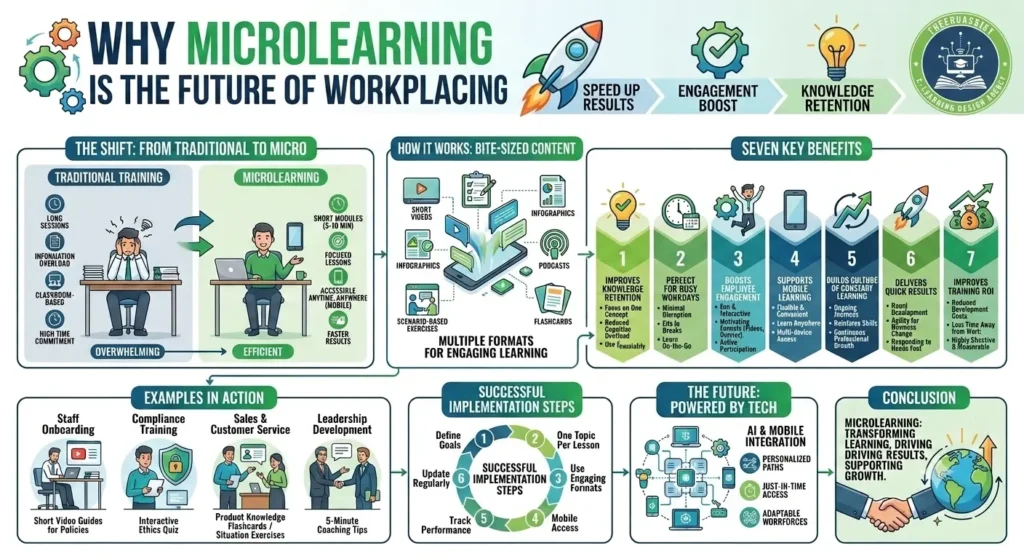
How Microlearning Is Making Training Better for Everyone
The workplace today needs people to keep learning all the time.
People at work have to learn things often so they can keep up with new technologies and what is happening in their industry and what their organization needs.
It is a way that helps people learn things by giving them the information they need when they need it.
Microlearning is good because people do not have to stop what they are doing to learn something, about microlearning they can just keep going and learn about microlearning at the time.
Instead, people can learn things as part of their daily workplace journey.
This is why Microlearning is so important for organizations that want to keep getting better.
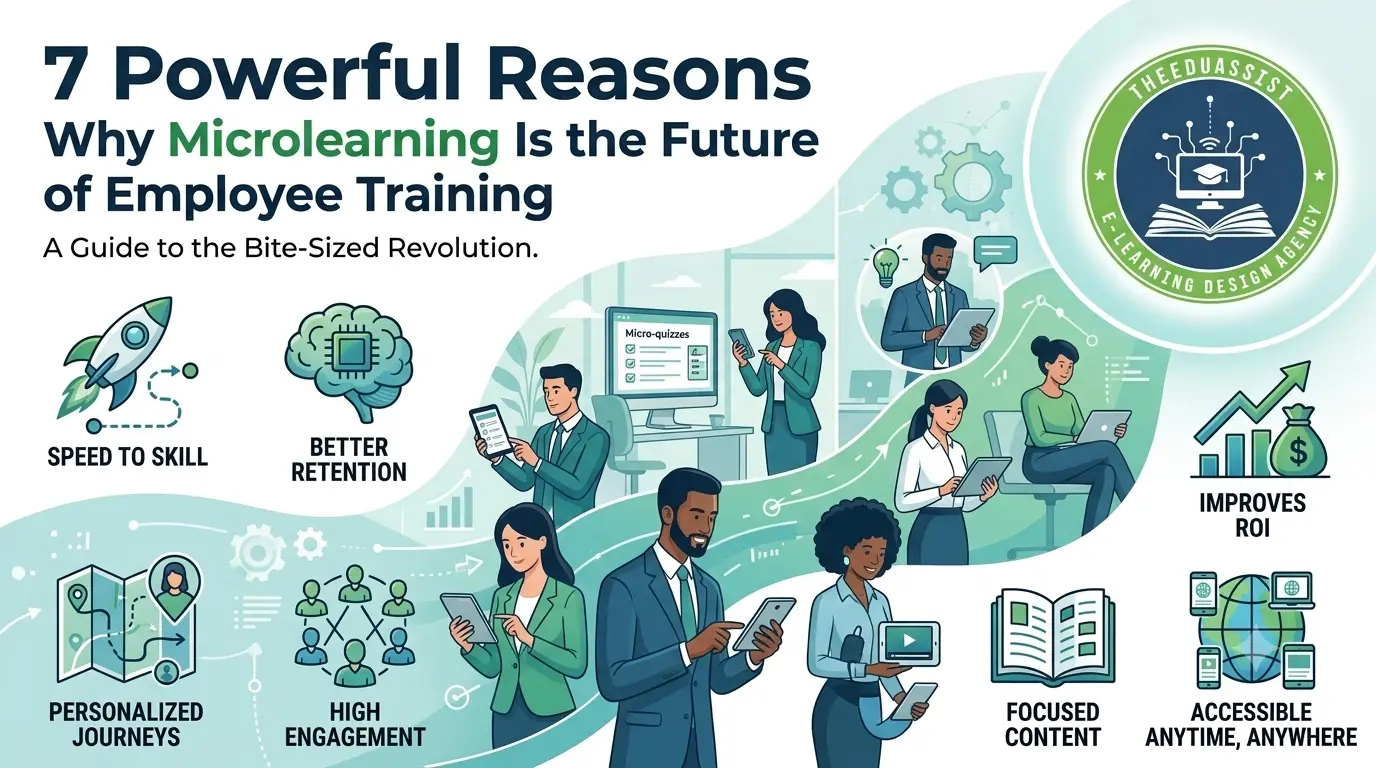
1. Improves Knowledge Retention
One big advantage of microlearning is that people remember information better.
When learners get information in chunks they can understand and recall it more easily.
Short lessons help reduce confusion and let employees focus on one idea at a time. This helps learners to remember information and use it well at work.
Microlearning often gives results in the long run compared to traditional training methods, for organizations that use it.
2. Perfect for Busy Workdays
Finding time for training is tough, for employees.They have a lot of work to do and not a lot of time to spare.
Long training courses are a problem because employees have to stop working for a time and that hurts productivity.
Microlearning is a solution because it gives employees training that they can do in just a few minutes.
Employees can do this training during their breaks. While they are waiting for a meeting to start. That makes it easy for employees to learn without messing up their daily work.
3. Boost Employee Engagement
Employee engagement is a problem in workplace learning.
Long presentations and courses with much text usually don’t hold learners attention.
Microlearning uses fun and interactive content that makes learners participate.
This includes videos, quizzes, simulations and learning experiences based on real-life scenarios.These formats help keep learners motivated to keep learning.
When employees enjoy learning they are more likely to finish courses.
4. Supports Mobile Learning
Today people who work are often on the move.Employees usually work because they travel a lot or they use their smartphones and tablets all day.
Mobile learning is great because people can learn things when they want to. They can take lessons from almost any place they are.
Mobile learning is really good for the people who are doing the learning. They can look at the information whenever they need to.
This means they do not have to be at their desk or in a classroom to learn something about mobile learning.Companies can also make sure everyone on the team gets the training they need with learning.
5. Building a Culture of Constant Learning
Learning is something that should keep going even after you have finished the training.
Companies that do well know that helping their employees get better at their jobs is something that never really ends.
The idea of microlearning is a way to keep learning going because it gives employees a chance to learn new things and practice what they already know on a regular basis.
By just having training every now and then companies can make a plan that helps employees keep learning all year round.
This way companies can build a culture of learning and help their employees grow in their careers.
6. Quick Results
Traditional training programs take a time to get ready and to put into action. This can take weeks or even months.
Microlearning modules are different. They are faster to make and to share with people.
When new rules come out or products change companies can make learning material to help employees do their jobs better.
This way companies can stay ahead. Microlearning helps companies do this quickly.
7. Improves Training ROI
Every organization wants to get the most out of the money they spend on training.
Microlearning is a way to do this because it makes training more interesting which means people are more likely to pay attention.This also means they spend time in training and more time doing their actual work.
Employees learn what they need to know in an amount of time.Microlearning helps organizations save money on developing training programs. It also works better.
So microlearning is often a better choice, than the old way of doing training because it costs less.
How You Can Use Microlearning ?
Microlearning is really useful, in different fields and training programs.
It can be used in a lot of ways.
Some common examples of Microlearning include:
Onboarding process
New employees can do some lessons about the company rules, how things are done at the workplace and the company culture.
Compliance Training
Organizations can deliver regulatory updates and compliance requirements through brief learning modules that are easier to understand and remember.
Sales Training
The sales teams have the ability to get to the information about the products ways to handle objections from customers and strategies to engage with the customers at any time they need this information
Customer Service Training
Customer service reps need to go over practices and ways to solve problems before they talk to customers.
This helps them assist customers in the way possible.
Management and leadership Development
Managers can get better at leading by taking classes on how to communicate well, coach their team members and make good decisions.They can learn to communicate with their team.This helps in making decisions.
| Training Area | Microlearning Example |
| Staff Onboarding | Short videos explaining company policies |
| Compliance Training | Interactive compliance quizzes |
| Sales Training | Product knowledge flashcards |
| Customer Service | Situation-based exercises |
| Management and leadership Development | 5-minute leadership lessons |
| Software Training | Video Guides – Step by step |
In what ways can organizations utilize Microlearning to their advantage?
Well microlearning is really good for a lot of things. To do it right organizations need to think it through carefully. Microlearning is a way to learn but organizations have to plan it out if they want to be successful, with microlearning.
Organizations should:
- Identify learning objectives so that people know what they are trying to learn
- Focus on one topic per lesson because this is not too confusing
- Use engaging content formats so that people do not get bored
- Ensure accessibility because people use their phones a lot to learn things, about organizations
- Track learner performance
- Update content regularly
The organizations who help workers learn things at their jobs like TheEduAssist think it is a good idea to make sure the things they are learning are related to what the company wants to achieve.
When you use microlearning as part of a plan to help people learn it can really help the workers get better at their jobs and the company can do better too.
The Future of Microlearning in modern workplace
As the way people learn at work is changing, Microlearning is going to be more important for teaching employees new things.
New technology, like intelligence and mobile phones is making Microlearning a lot better.
Now people can get the training they need when they need it.
Companies are starting to see that employees learn better when they get training that’s useful and easy to get to.
Microlearning helps with all of this. It also helps companies make their workers more able to adjust to new things.
Many experts think that Microlearning will change how we train employees and how the way employees learn at work.
Conclusion
Companies are using microlearning to teach employees in a way.Microlearning is a way to help employees learn new things because it gives them short lessons that they can do whenever they want.
This way, employees can learn skills without it getting in the way of their busy work schedules.
Microlearning has a lot of things about it.It helps employees remember what they learned and they are more interested in the lessons. It supports them as they keep learning.
Microlearning is also a way for companies to spend their money on training because they get a good result from it.This is good, for both the employees and the companies they work for.
As companies keep changing to meet the needs of their employees, microlearning will be a part of how they teach employees new things.
FAQs
What is microlearning used for?
The purpose of microlearning is to help people learn things in a way. Microlearning is a teaching method. It gives people pieces of information.This helps them understand things better. They also remember things easily.
Why is microlearning good for people who are learning?
Microlearning is good for people who are learning because it does not give them much to think about at one time. Microlearning also makes people more interested in what they’re learning. It helps people remember what they learned.
How much time does a microlearning class take?
A microlearning class is usually very short. It can be as short as five minutes or long as ten minutes. Some microlearning classes might be a little longer than that.. They are still not very long.
Can microlearning replace traditional training?
Microlearning can supplement standard training or, in some situations, replace it for specific learning goals. The most effective strategy is determined by the content’s intricacy.
What industries use microlearning?
The use of microlearning is really common in lots of areas like corporate training, healthcare, education, sales, customer service, compliance training and leadership development.
Authorized by: Humna Mariyam