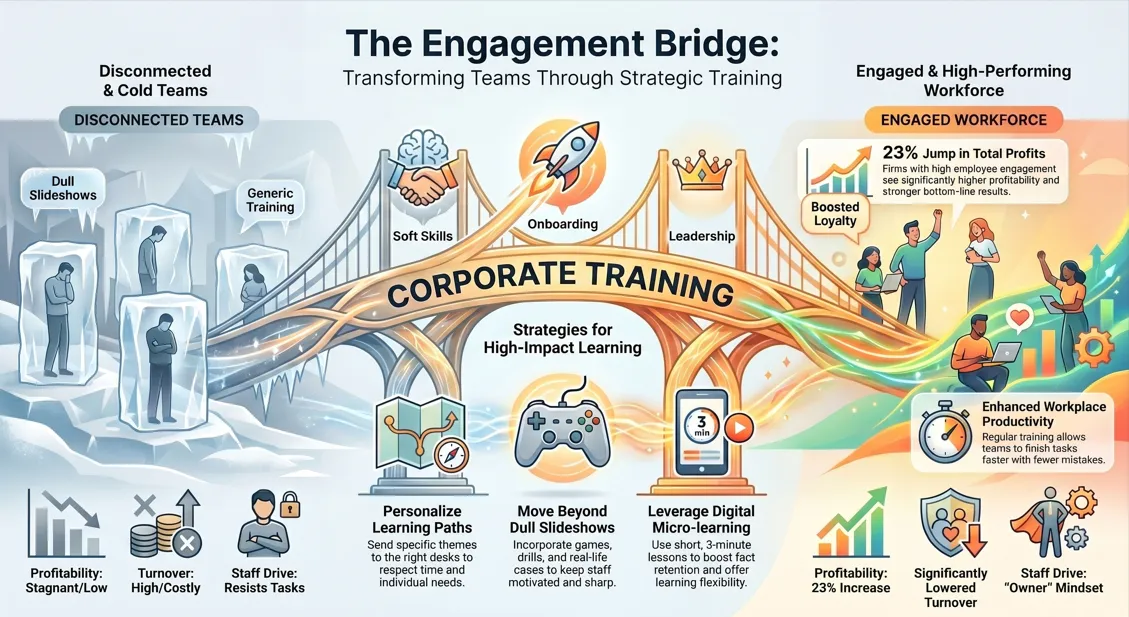
Good corporate training is something most firms buy each year. Yet, many still struggle with cold, disengaged teams. Why does this happen? It happens because training alone is not enough; it must be done right.
When programs are good, they change how teams feel about work. Specifically, they build confidence, close skill gaps, and create a great culture where people want to stay.
Consequently, this article explains how corporate training improves employee engagement and how you can make it work for your firm today.
What is Corporate Training and Employee Engagement?
What is Corporate Training?
In short, corporate training is a set plan. It helps staff build skills to do their work well. Therefore, firms use it to grow talent at every single level.
Generally, there are four main types of workforce learning:
- Onboarding plans: help new hires feel at home fast.
- Technical tracks: teach tools, software, and job skills.
- Soft skills: focus heavily on talk, teamwork, and calm problem-solving.
- Leadership paths: train future bosses and key decision-makers.
What is Employee Engagement?
Engagement is the deep emotional bond a person feels toward their job. Because of this bond, staff care deeply about their outcomes. Thus, they show up glad, keen, and ready to try hard every day.
Crucially, it is not just about being happy at work. Instead, it also includes:
- A clear, strong bond to company goals.
- A natural wish to go far past basic job roles.
- High daily output, sharp focus, and much better team harmony.
Why Employee Engagement Matters in the Workplace
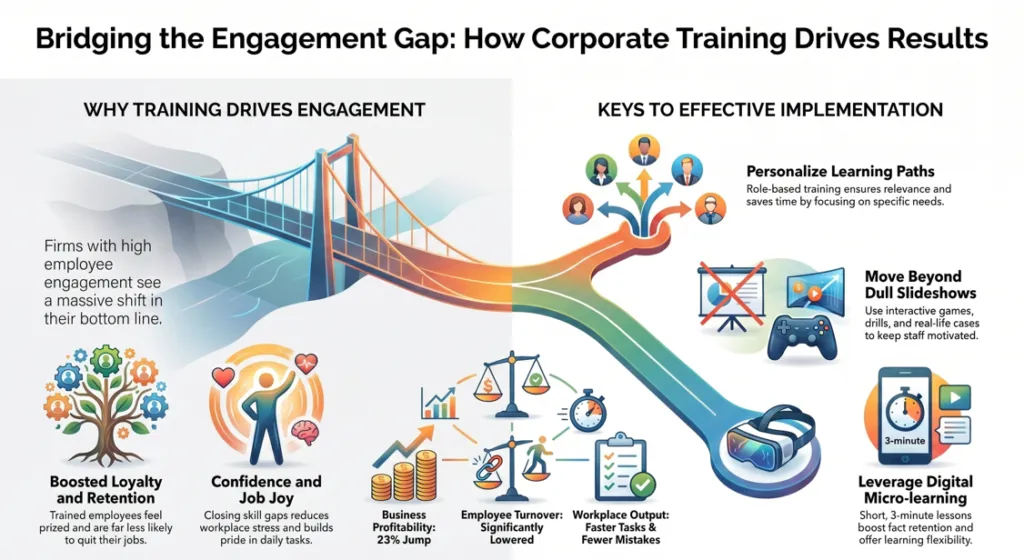
Engaged staff drive real, clear gains. For instance, data shows that firms with high engagement see a 23% jump in profits. That is a huge shift for any firm.
Additionally, strong workplace drive directly improves:
- Stay rates: Engaged staff are far less likely to quit their jobs.
- Output: Keen workers finish tasks fast and make fewer mistakes.
- Team life: Peers talk well and back each other up.
How Corporate Training Improves Employee Engagement
Builds Employee Confidence and Job Satisfaction
First, corporate training cuts out bad skill gaps. When staff know how to do tasks well, their trust grows fast. As a result, they feel less stress and far more fit for the job.
Consequently, job joy goes up. Staff who feel good at work also feel proud of their tasks. Ultimately, that pride leads to better drive every single day.
Provides Clear Career Growth Opportunities
Another big reason staff quit is a lack of path. Fortunately, work learning solves this by giving clear steps. Because of these steps, staff see a path from where they are to where they want to be.
Furthermore, regular classes fit staff for promotions. When people know that growth is real, they put more heart into their current roles.
Enhances Job Performance and Productivity
Clearly, better learning leads to better gains. Staff who get regular corporate training do tasks much faster. In addition, they make far fewer slips over time.
As a result, teams work at a much higher level. This creates a good loop. Ultimately, success moves people to keep doing better.
Increases Employee Loyalty and Retention
When staff get good classes, they feel prized right away. They see that the firm wants to back their future. Naturally, that feeling builds deep, true faith in the firm.
Therefore, firms that focus on corporate training see much lower turn. Since a new hire costs a lot, wise training is a sound thrift choice.
Encourages Active Participation in Work Culture
Live learning classes move staff to get involved. For example, groups and games break down cold office walls. Meanwhile, staff build firm bonds through these shared times.
Moreover, active learning teaches staff to take real charge. Consequently, they stop being dull workers and become live sparks in the culture.
Types of Corporate Training That Increase Engagement
Onboarding Training Programs
Onboarding sets the right tone from day one. Specifically, it helps new hires feel glad, primed, and tied to the team. Therefore, a good start lifts early drive by a lot.
Because of this, staff who get good onboarding fit in fast. They also reach full output much sooner than those left to work alone.
Technical Skills Training
Good technical classes keep staff up to date. They cover key tools, code, and trade steps. When staff know the tools they use daily, stress drops and output rises.
In addition, tech updates show that the firm prizes fine work. As a result, staff take great pride in being sharp and current in their fields.
Soft Skills Development Training
Soft skills are often missed, but they are vital for team life. For instance, this type of corporate training treats:
- Clear talk across all teams.
- Group work under tight stress.
- Kind hearts and fast fix of fights.
When staff have good soft skills, they get along fast with clients. Thus, these skills make daily tasks smooth and full of joy.
Leadership Development Programs
Leadership-focused corporate training builds the next team of bosses. It gives staff a owner mind. Because of this, people who think like bosses care far more about firm goals.
Additionally, these tracks show staff that the firm sees their future worth. That nod alone lifts daily drive by a lot.
Continuous Learning and Upskilling Programs
Daily learning keeps drive alive long after the start. For example, short tasks let staff grow in tiny, easy steps. Meanwhile, web tools keep learning fast and free for all.
As a result, staff stay keen and highly primed. Great learning becomes a core habit of the firm rather than a short, one-time task.
Key Benefits of Corporate Training for Organizations
- Better output: Skilled staff work fast and smart.
- Higher stay rates: Trained staff stay long and quit less.
- Stronger culture: Shared tracks bring all minds to one spot.
- Fresh ideas: New skills bring new plans and fast fixes.
- True team work: Groups trained as one work well as one.
Challenges in Corporate Training Implementation
Even the best corporate training tracks face blocks. However, knowing these blocks helps firms plan well.
- Low staff drive: Some resist classes if they do not see the point.
- Poor plans: Dull or old themes lose the room fast.
- Tight funds: Small firms often lack the cash for high tracks.
- Dull ways: Long talks and slides rarely move minds.
Fortunately, all of these blocks have simple fixes. The next part tells you how.
How to Make Corporate Training More Engaging
Use Interactive Learning Methods
Live ways turn dull classes into fun times. Therefore, try to use these tips:
- Games: Points and ranks make learning fun.
- Tests: Quick checks keep staff sharp and set.
- Drills: Real tasks build skills in a safe space.
Personalize Learning Paths
Not all staff need the same track. Because of this, role-based corporate training sends the right theme to the right desk. This care shows staff that the firm knows their real needs.
Furthermore, split paths save precious hours. Staff fix just on skills they need now instead of sitting through dull slides.
Use Real-Life Case Studies
Real tales make class themes come alive. True cases show staff how rules work in real life. Consequently, learning feels useful right away instead of just plain theory.
Indeed, staff keep facts much better when they see real gains. Cases also spark good chat and deep thought in the room.
Leverage Digital Learning Platforms
New web tools make staff growth super free. Because of this tech, staff can learn at their own pace, on any tool, at any time. This ease clears away a huge block.
Furthermore, web tools track paths and yield clear facts. Therefore, firms can see who takes part in the corporate training and who needs help.To set up your system with zero tech stress, consider using expert LMS management and course setup services to deploy your digital platform seamlessly.
Provide Feedback and Recognition
True praise drives zeal. When staff finish their corporate training, thank them for their work. Simple gifts, web badges, and public praise go a long way.
Meanwhile, daily notes help staff see their real steps. As a result, they know where they stand and what to learn next.
Future of Corporate Training in Employee Engagement
The future of staff growth is bright because tech is changing how firms build their teams.
- AI tools: Smart tech shifts themes in real time for each mind.
- Micro steps: Short lessons of 3 minutes boost fact hold by a lot.
- Mix tracks: In-room and web classes give ease without loss of touch.
- Fact audits: Deep metrics help firms see what works to hone corporate training paths.
In short, firms that choose these paths will build strong, ready teams. On the other hand, those that pass them by will slip back.
References
The Role of Training Satisfaction and Work Engagement on Employee’s OCB
Skill Development Loop & Organizational Profitability
Training Satisfaction & Lower Work Anxiety
Conclusion
Ultimately, corporate training is not just a box to tick. Instead, it is one of the best tools firms have to drive true, long zeal.
When done well, corporate training builds skills, lifts trust, and makes a space where staff feel prized and keen to grow. Thus, it cuts loss, binds teams, and lifts daily output.
Simply put, keen staff are trained staff. Spending on a solid corporate training plan is a straight bet on the future of your whole firm.
FAQs
1: How does corporate training improve employee retention rates?
First, high-quality instruction directly cuts down on daily workplace stress. When teams know how to do their tasks well, their job joy goes up fast. Consequently, staff feel prized by the firm and choose to stay long-term. Therefore, regular learning paths are a great way to lower costly staff turn.
2: What is the main difference between training and employee engagement?
In short, training is a set plan to teach clear work skills. On the other hand, engagement is the deep emotional bond a person feels toward their job. However, the two ideas connect deeply. Specifically, good learning programs build up that emotional bond by making staff feel ready, fit, and backed.
3: Why do corporate training programs fail to motivate staff?
Generally, most programs fail because they use old, dull ways like long slideshows. Furthermore, some classes fail if the themes do not fit the helper’s daily tasks. To fix this, firms should switch to live games and separate tracks. As a result, staff will see the real worth right away.
4: How can small businesses fund corporate training on a tight budget?
Fortunately, small firms do not need massive funds to grow their teams. For instance, you can use free web tools or short three-minute micro-lessons to save cash. Additionally, cross-training peers to teach each other is a great, low-cost path. Ultimately, these quick steps keep drive high without a big bill.
Authored by: Laiba Ayaz