
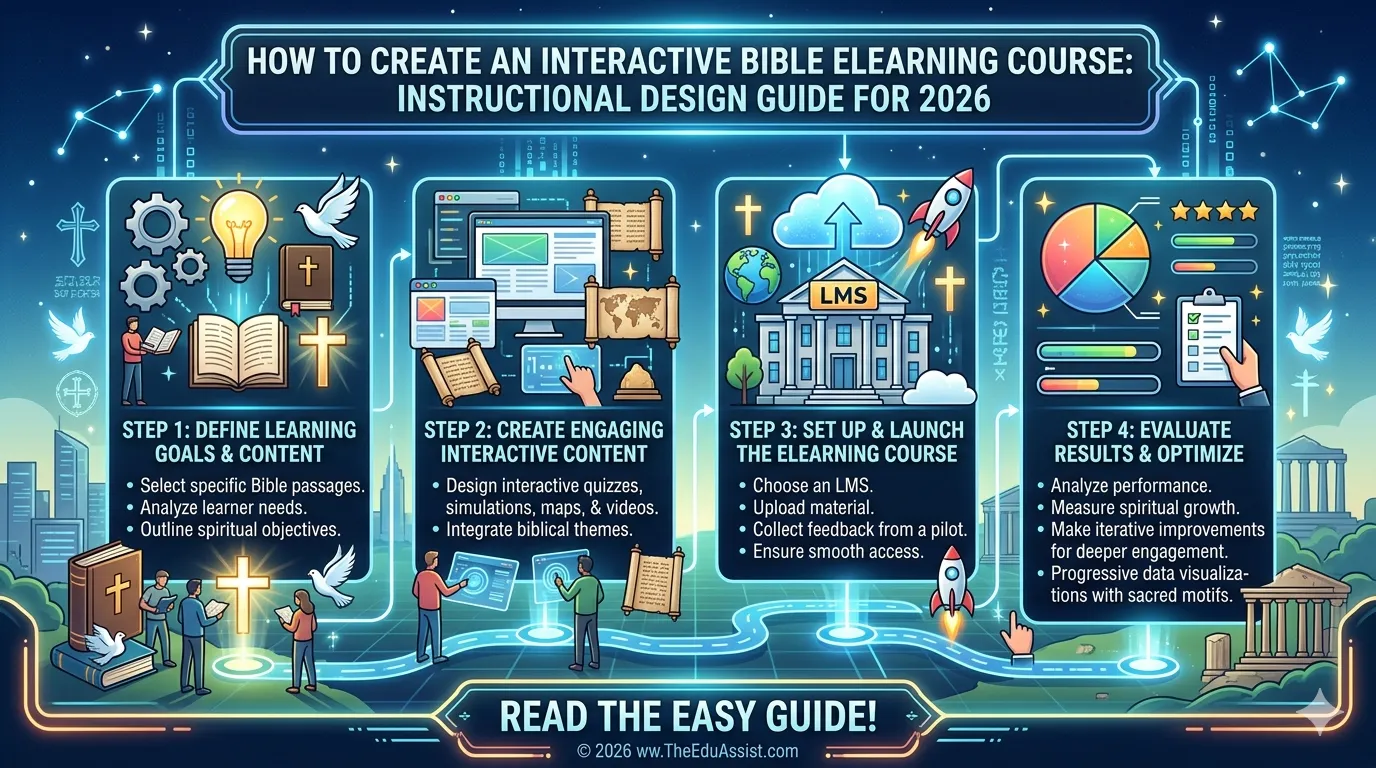
Creating a Bible-based eLearning course is no longer just about recording sermons or uploading lecture videos. In 2026, learners expect interactive, engaging, and structured spiritual learning experiences, not passive content.
Course creators working on projects like an interactive Bible using platforms such as TrainerCentral often face a familiar challenge:
- They have valuable Biblical content
- They may already have pre-recorded videos
- But they struggle to make the course engaging, interactive, and learner-friendly
The result?
- Low engagement
- Passive learning
- Limited retention
This is where instructional design, custom eLearning, and structured content development become essential.
This guide walks you through how to build a high-impact interactive Bible eLearning course aligned with eLearning trends 2026.
Why Traditional Bible Courses No Longer Work
Many online Bible courses follow a simple format:
- Video lecture
- Optional reading
- Minimal interaction
However, research in digital learning shows that interactive learning environments significantly improve engagement and knowledge retention.
Learners today want to:
- Reflect on teachings
- Participate in discussions
- Apply Biblical lessons to real life
Without interaction, even meaningful content can feel disconnected.
The Core Problem: Passive Content vs Active Learning
The biggest issue is not the content, it’s the delivery model.
Most courses focus on:
- Delivering information
- Not facilitating transformation
But Biblical learning is inherently:
- Reflective
- Discussion-driven
- Application-focused
To achieve this online, you need to design a course that promotes:
- Participation
- Reflection
- Engagement
What Makes an Interactive Bible eLearning Course?
A well-designed course includes:
- Structured modules
- Guided reflections
- Quizzes and knowledge checks
- Discussion prompts
- Real-life application exercises
Effective eLearning should include three types of interaction:
- Learner ↔ Content
- Learner ↔ Instructor
- Learner ↔ Peers
This creates a holistic learning experience rather than a one-way lecture.
Step 1: Define Clear Learning Outcomes
Start by identifying what learners should achieve.
Instead of: “Teach Biblical concepts”
Define: “Help learners understand, reflect on, and apply Biblical teachings in daily life.”
Example Outcomes:
- Interpret key passages
- Apply teachings to real-life situations
- Engage in meaningful discussions
Clear outcomes guide curriculum development and instructional design decisions.
Step 2: Structure the Course Into Thematic Modules
Organize your course into logical, progressive sections.
Recommended Module Structure
| Module | Focus |
|---|---|
| 1 | Introduction to Biblical Themes |
| 2 | Understanding Key Scriptures |
| 3 | Interpretation and Reflection |
| 4 | Application in Daily Life |
| 5 | Group Discussions and Insights |
| 6 | Final Reflections and Assessments |
This structure ensures progressive learning and sustained engagement.
Step 3: Turn Videos Into Interactive Experiences
If you already have pre-recorded videos, enhance them by adding:
- In-video quizzes
- Pause-and-reflect prompts
- Guided questions
Example Prompt:
“Pause here and reflect: What does this passage mean in your daily life?”
This transforms passive watching into active learning.
Step 4: Add Discussion-Based Learning
Discussion is central to Biblical education.
Include:
- Discussion forums
- Guided group questions
- Peer interaction
Example Questions:
- “How would you apply this teaching in your current situation?”
- “What different interpretations can arise from this passage?”
This approach aligns with modern L&D strategies and interactive content development.
Step 5: Use Scenario-Based Learning for Real-Life Application
To make lessons practical, include scenarios such as:
- Ethical dilemmas
- Real-life decision-making situations
- Reflective case studies
Example Scenario:
“How would you respond to this situation based on Biblical teachings?”
Benefits:
- Improves critical thinking
- Builds personal connection
- Increases retention
Step 6: Deliver Through an LMS for Structured Learning
An LMS ensures smooth delivery and navigation.
Recommended LMS Platforms
| Platform | Best For | Key Advantage |
|---|---|---|
| TrainerCentral | Structured training programs | Interactive features |
| Kajabi | Course businesses | Marketing tools |
| Thinkific | Educators | Flexible design |
LMS platforms allow you to:
- Organize modules
- Host videos and discussions
- Track learner progress
- Manage quizzes and assignments
Poor navigation is a common reason for drop-off.
Ensure:
- Clear module structure
- Simple lesson flow
- Easy access to resources
Learners should always know:
- Where they are
- What to do next
- How to progress
This improves user experience and course completion rates.
Cost Reality Check: Building an Interactive Course
| Category | Estimated Cost |
|---|---|
| Instructional Design | $2,000 – $6,000 |
| Content Development | $1,000 – $3,000 |
| LMS Setup (monthly) | $39 – $199/month |
| Interactive Tools | $500 – $1,500 |
While basic courses can be created independently, investing in custom eLearning and consulting services often leads to higher engagement and better learning outcomes.
Unique Perspective: From Teaching to Transformation
In 2026, successful Bible courses are not just about teaching; they are about transformation.
Interactive learning helps learners:
- Connect deeply with content
- Reflect on personal experiences
- Apply teachings in real life
This aligns with evolving eLearning trends 2026, where learning is:
- Personalized
- Interactive
- Experience-driven
A Note for Creators
Whether you’re developing your course in New York City, Los Angeles, Chicago, or Houston, the demand for structured, interactive spiritual learning programs is growing across global audiences.
Final Thoughts
Creating an interactive Bible eLearning course requires more than content — it requires intentional design.
By combining:
- Instructional design
- Structured curriculum
- Interactive elements
- LMS delivery
- Reflection-based learning
You can build a course that is:
- Engaging
- Meaningful
- Scalable
Platforms like theeduassist.com support creators through edu-assist consulting services, helping design custom eLearning programs with strong content development and learner engagement strategies.
References
- https://www.researchgate.net/publication/322152184_Development_of_an_interactive_e-learning_model_for_an_instructional_design_course
- https://pmc.ncbi.nlm.nih.gov/articles/PMC10137401/
- https://journals.sagepub.com/doi/10.1177/07398913251383942
FAQs
What makes a Bible eLearning course interactive?
Interactive courses include quizzes, discussions, reflection prompts, and real-life application exercises.
Can I use pre-recorded videos for an interactive course?
Yes, but they should be enhanced with questions, prompts, and activities.
Which LMS is best for Bible courses?
Platforms like TrainerCentral, Kajabi, and Thinkific are effective.
Why is instructional design important in religious courses?
It ensures content is structured, engaging, and aligned with clear learning outcomes.
How can TheEduAssist help create an interactive Bible course?
Through consulting services and custom eLearning solutions, theeduassist.com helps design structured, engaging, and scalable spiritual learning programs.
Authored By: Sofia Arif