In 2026, simply uploading slides or recorded lectures is no longer enough to build a successful online course. Across Miami, Orlando, Tampa, Jacksonville, and St. Petersburg, eLearning creators and EdTech startups are facing a common challenge:
- Their content is informative
- But it lacks engagement
- Learners drop off before completion
The problem isn’t the content, it’s the lack of interactivity.
Modern learners expect:
- Hands-on activities
- Real-time engagement
- Practical application
This is why interactive eLearning has become a core part of eLearning trends 2026.
If you want to create a course that keeps learners engaged and drives results, you need more than slides; you need structured instructional design, custom eLearning strategies, and interactive content development.
This guide walks you through how to build an interactive eLearning course that delivers real learning outcomes.
Why Traditional Courses Fail to Engage Learners
Many creators rely on:
- Static slides
- Long video lectures
- Passive learning formats
But research shows that passive learning reduces retention and engagement.
Interactive learning, on the other hand:
- Improves knowledge retention
- Increases learner participation
- Enhances problem-solving skills
Studies in digital education highlight that active engagement significantly improves learning outcomes, especially when learners interact with content rather than consume it passively.
This is why modern L&D programs prioritize interactive learning experiences over static content delivery.
The Core Problem: Content Without Interaction
A common mistake in course creation is focusing only on content delivery instead of learning experience design.
Creators often ask:
“How do I present information?”
Instead, the real question should be:
“How do learners interact with this information?”
Without interaction:
- Learners lose focus
- Engagement drops
- Completion rates decline
This is where instructional design and content development play a critical role.
What Makes an eLearning Course Truly Interactive?
An interactive course includes:
- Quizzes and assessments
- Scenario-based learning
- Simulations
- Discussion prompts
- Real-world tasks
It transforms learners from passive viewers into active participants.
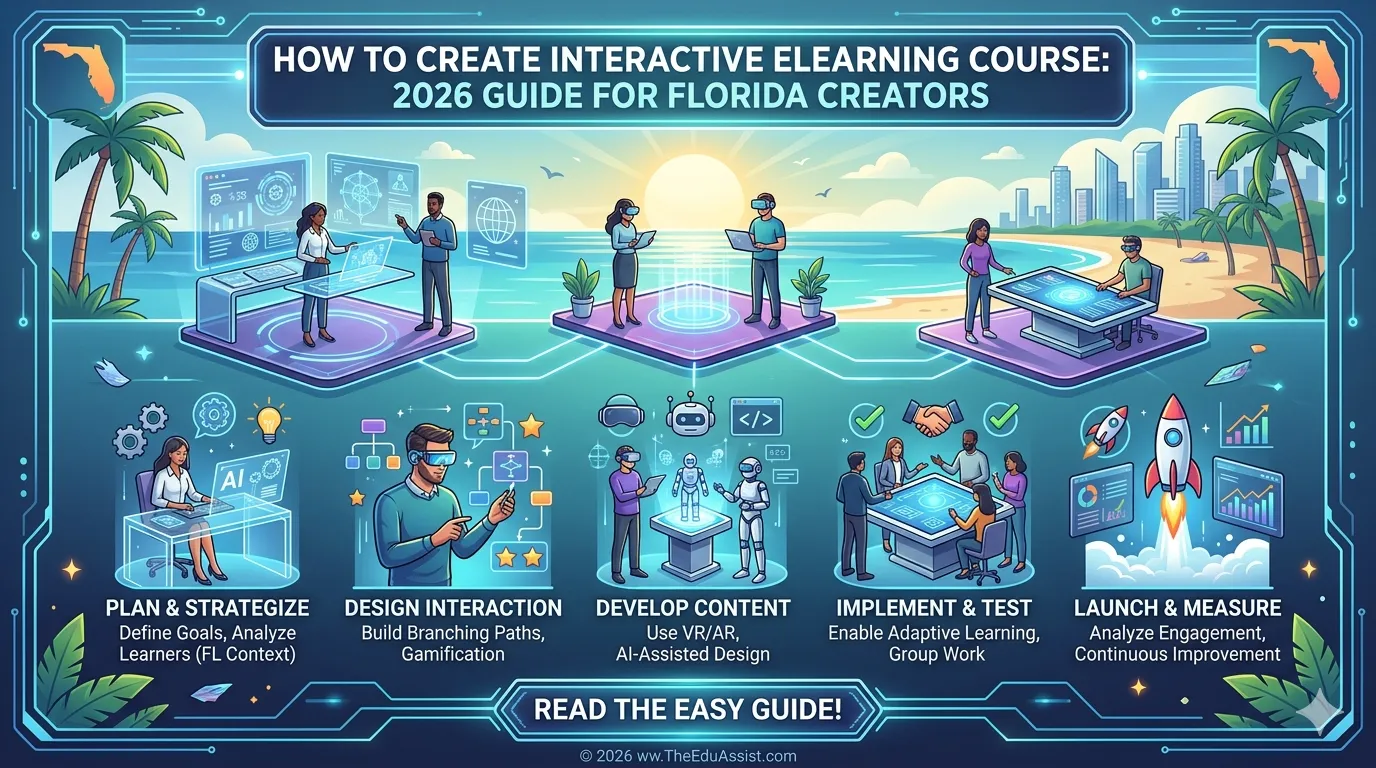
Step 1: Start With Learning Objectives (Not Content)
Every interactive course begins with clear learning goals.
Instead of:
“Teach a topic”
Define:
“Enable learners to apply knowledge in real-world situations.”
For example, a creator in Miami designing a business course should aim for:
- Applying concepts
- Solving problems
- Making decisions
Clear objectives guide curriculum development and interactivity design.
Step 2: Structure Content Using Microlearning
Modern learners prefer short, focused lessons.
Break your course into:
- 5–10 minute video lessons
- Single-topic modules
- Bite-sized activities
This aligns with microlearning strategies and improves retention.
For learners in Orlando or Tampa, this format makes courses easier to consume and complete.
Step 3: Add Interactive Elements at Every Stage
To make your course engaging, integrate interaction throughout, not just at the end.
Examples:
- Before learning: Pre-assessment quizzes
- During lessons: Interactive questions and prompts
- After lessons: Assignments and tasks
This creates a continuous engagement loop.
Step 4: Use Scenario-Based Learning
One of the most effective interactive methods is scenario-based learning.
Instead of explaining concepts, present situations:
- “What would you do in this case?”
- “Choose the best solution”
This approach:
- Improves decision-making
- Enhances critical thinking
- Increases learner involvement
It is widely used in custom eLearning programs and professional training courses.
Step 5: Incorporate Multimedia Content (Beyond Slides)
Interactive courses go beyond basic slides.
Use:
- Animations
- Video demonstrations
- Infographics
- Interactive visuals
Tools like:
- Articulate Storyline
- Articulate Rise 360
help create engaging and dynamic learning experiences.
These tools are widely used in professional content development and instructional design workflows.
Step 6: Deliver Through an LMS for Interaction Tracking
An LMS is essential for managing interactive learning.
Popular platforms include:
- Kajabi
- Thinkific
- LearnDash
These platforms allow you to:
- Track learner progress
- Monitor engagement
- Analyze performance
- Deliver interactive quizzes
For creators in Jacksonville or St. Petersburg, LMS platforms ensure scalable and structured course delivery.
Step 7: Use Data to Improve Engagement
Interactive courses generate valuable data.
Track metrics like:
- Completion rates
- Quiz performance
- Time spent on lessons
This helps you:
- Identify weak areas
- Improve course structure
- Optimize learner experience
This data-driven approach is essential in modern L&D and consulting services.
Quick Comparison Table: Tools for Interactive Course Creation
| Tool | Best For | Key Advantage |
|---|---|---|
| Articulate Storyline | Advanced interaction | Custom simulations |
| Articulate Rise 360 | Quick development | Responsive design |
| LearnDash | WordPress users | LMS flexibility |
Cost Reality Check: Interactive Course Development
| Category | Estimated Cost |
|---|---|
| Instructional design | $2,000 – $6,000 |
| Interactive content tools | $500 – $1,500 |
| Video production | $1,000 – $4,000 |
| LMS subscription | $39 – $199/month |
While DIY options exist, investing in custom eLearning and professional content development often leads to higher engagement and better outcomes.
Unique Perspective: Interaction = Retention + Revenue
In 2026, interactivity is not just a feature; it’s a business strategy.
Courses that include:
- Active participation
- Real-world application
- Engaging content
tend to:
- Increase completion rates
- Improve learner satisfaction
- Generate better reviews and sales
For platforms like theeduassist.com, building interactive learning systems is key to delivering high-impact educational experiences at scale.
Final Thoughts
For creators in Miami, Orlando, Tampa, Jacksonville, and St. Petersburg, interactive eLearning is no longer optional; it’s essential.
By combining:
- Instructional design
- Microlearning
- Scenario-based learning
- LMS delivery
- Data-driven optimization
you can create courses that are engaging, effective, and scalable.
References
FAQs
What makes an eLearning course interactive?
Interactive courses include quizzes, scenarios, simulations, and activities that engage learners actively.
Which tools are best for creating interactive courses?
Tools like Articulate Storyline and Articulate Rise 360 are widely used.
Why is interactivity important in eLearning?
Interactivity improves engagement, retention, and learning outcomes, making courses more effective.
Can interactive courses be created without coding?
Yes, many tools allow creators to build interactive courses without technical skills.
How can TheEduAssist help create interactive courses?
Through edu-assist consulting services, theeduassist.com helps creators build custom eLearning solutions with structured curriculum, interactive content, and LMS integration.
Authored By: Sofia Arif