
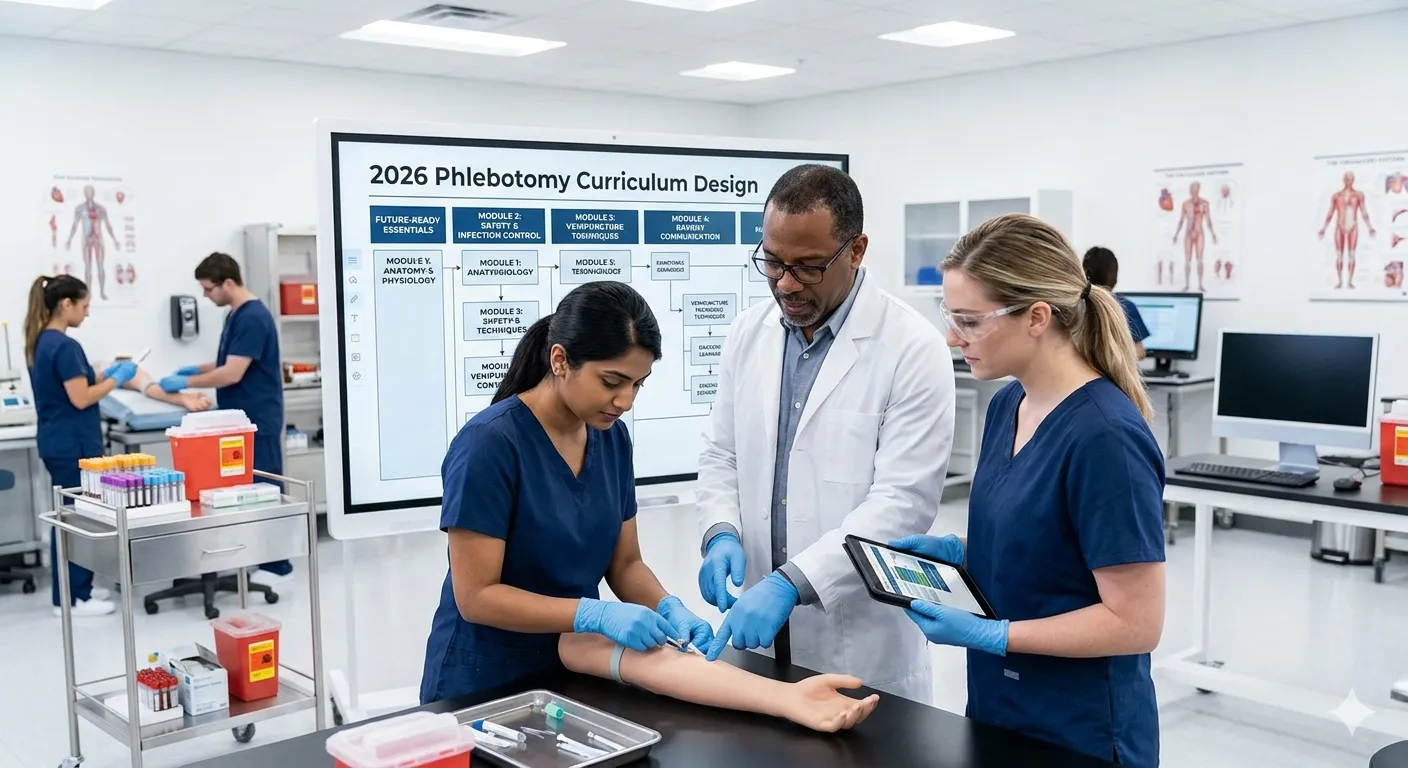
Healthcare training is evolving rapidly as digital technologies and AI tools reshape how clinical skills are taught. Diagnostic laboratories now rely on precise specimen handling, strict safety protocols, and efficient workflow coordination. As a result, phlebotomists are expected to possess not only technical venipuncture skills but also strong patient communication abilities and regulatory awareness.
At the same time, the rise of Edtech and digital learning systems is transforming how training programs are delivered. Many institutions now deliver phlebotomy education through hybrid models that combine classroom instruction, simulation labs, and online course platforms supported by learning management systems (LMS).
Innovations such as AI-powered learning systems, virtual patient simulations, and microlearning modules are also becoming common in healthcare training environments. These tools allow students to practice procedures repeatedly, receive adaptive feedback, and learn at their own pace.
However, despite these technological opportunities, designing an effective phlebotomy curriculum remains a complex task. Educational institutions and training providers must ensure their programs meet clinical standards while still leveraging modern digital learning tools effectively.
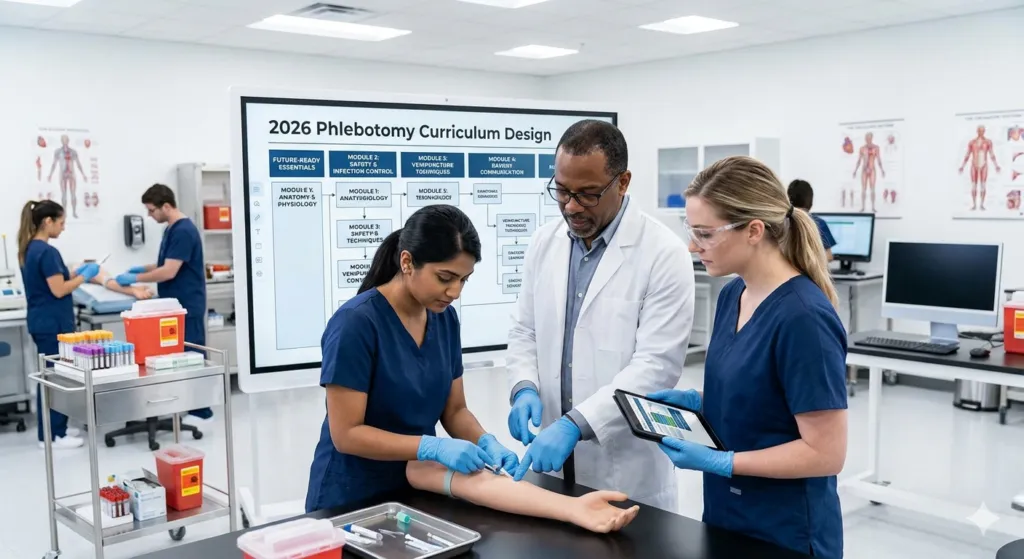
The Real Challenge Behind Modern Phlebotomy Training Programs
Organizations planning to launch or upgrade a phlebotomy training program often face a similar challenge: how to design a curriculum that balances industry standards with modern educational technologies.
Many training providers are eager to incorporate AI, immersive simulations, and interactive learning tools into their programs. Some even envision advanced training experiences involving realistic digital patient scenarios or intelligent tutoring systems.
Yet simply adding technology does not automatically produce better training outcomes. Without a well-structured curriculum, these tools can become disconnected from the core learning objectives.
For example, a training institution might develop an online course with interactive modules, but if the content is not aligned with clinical competencies—such as specimen labeling protocols or infection-control procedures—graduates may still lack the practical skills needed in real healthcare environments.
This disconnect between technology adoption and competency-based curriculum design is one of the most common problems facing modern healthcare training programs.
Why Many Phlebotomy Curricula Fall Short
Several factors contribute to poorly designed training programs.
Technology Implemented Without an Instructional Strategy
The rapid growth of Edtech solutions has made advanced learning tools widely accessible. However, many institutions implement AI learning systems, gamified modules, or simulation tools without a clear instructional design framework guiding their use.
Technology should support learning outcomes—not replace structured curriculum planning.
Lack of Industry-Aligned Competencies
Effective phlebotomy training must reflect real clinical responsibilities, including:
- Patient identification protocols
- Venipuncture techniques
- Infection control standards
- Specimen handling and labeling
- Laboratory workflow coordination
When these competencies are not clearly mapped into the curriculum, students may complete the course without mastering essential clinical skills.
Overly Theoretical Learning Models
Some programs rely heavily on lectures or digital readings while offering limited hands-on training. Even when delivered through a modern online course platform, learning must include realistic practice opportunities.
Clinical training requires procedural repetition, supervised practice, and scenario-based learning experiences.
The Hidden Risks of an Outdated Training Design
An ineffective curriculum does not only affect learning outcomes—it can also create broader institutional risks.
- Patient Safety Concerns
Improper blood collection techniques can compromise diagnostic accuracy and affect patient care. - Skill Gaps Among Graduates
Students who complete training without sufficient clinical practice may struggle when entering professional laboratory environments. - Reduced Employer Confidence
Healthcare facilities increasingly expect graduates to demonstrate competency immediately upon entering the workforce. - Lower Program Credibility
Training programs that fail to keep pace with modern healthcare standards may lose competitiveness in the rapidly expanding healthcare education market.
These risks make it clear that designing a phlebotomy curriculum requires both educational expertise and industry awareness.
A Practical Framework for Designing a Modern Phlebotomy Curriculum
Developing a future-ready training program requires a structured curriculum design strategy that integrates clinical standards with modern digital learning tools.
Step 1: Define Core Clinical Competencies
The foundation of any phlebotomy program should be a clearly defined set of competencies aligned with healthcare practice. These competencies typically include:
- Anatomy related to venipuncture
- Patient preparation and identification
- Safe blood collection techniques
- Infection prevention protocols
- Specimen processing and transportation
These competencies serve as the backbone of the curriculum structure.
Step 2: Design Modular Learning Pathways
Once competencies are defined, the curriculum can be organized into progressive modules. For example:
- Foundations of Phlebotomy Practice
- Infection Control and Safety Protocols
- Venipuncture Techniques and Equipment
- Specimen Handling and Laboratory Workflow
- Patient Communication and Professional Conduct
This modular approach allows programs to incorporate microlearning units, enabling learners to master specific skills through shorter, focused lessons.
Step 3: Integrate AI and Interactive Learning Tools
Modern Edtech platforms provide powerful opportunities for enhancing clinical education. Examples include:
- AI-based tutoring systems that provide personalized feedback during training
- Virtual patient simulations for practicing communication scenarios
- Interactive learning environments that replicate laboratory workflows
These tools can significantly improve learner engagement when integrated into the curriculum strategically.
Step 4: Combine AI-Based Digital Learning With Practical Training
Even the most advanced online course platform cannot fully replace real clinical experience. Effective programs combine digital learning with:
- Simulation labs
- Supervised venipuncture practice
- Clinical externships
This blended approach ensures that students develop both theoretical knowledge and procedural confidence.
Step 5: Implement Competency-Based Assessments
Instead of relying solely on quizzes or written exams, phlebotomy programs should include performance-based assessments such as:
- Simulated procedure demonstrations
- Clinical scenario analysis
- Instructor-observed skill evaluations
These assessments verify that students can apply their training in realistic healthcare settings.
The Strategic Advantage of a Well-Designed Curriculum
As healthcare education continues to evolve, institutions that invest in thoughtfully designed training programs will gain a significant advantage.
A modern phlebotomy curriculum should combine:
- Strong instructional design principles
- Industry-aligned competencies
- Emerging AI and Edtech tools
- Structured clinical training opportunities
When these elements are integrated effectively, training programs can produce graduates who are technically skilled, confident, and prepared for real laboratory environments.
Summing Up
Technology is transforming healthcare education, but successful training programs are built on structured curriculum design rather than technology alone.
By combining industry standards, competency-based learning, and carefully integrated AI-driven Edtech tools, institutions can create phlebotomy training programs that remain relevant in 2026 and beyond.
For organizations planning to develop a new phlebotomy online course or digital training program, the most effective starting point is a clear instructional framework that aligns technology, learning outcomes, and real-world clinical practice.
Call to Action
If you are planning to develop a modern phlebotomy training program, begin by conducting a competency analysis and curriculum audit before selecting Edtech tools. A strong instructional design foundation ensures that innovation strengthens training outcomes rather than complicating them.
Frequently Asked Questions (FAQs):
- What are the most important elements of a modern phlebotomy curriculum?
A well-designed phlebotomy curriculum should include three core components: clinical competency training, regulatory compliance, and structured instructional design. Students must learn proper venipuncture techniques, infection control standards, patient interaction skills, and specimen handling procedures. In modern programs, these elements are often supported by Edtech tools such as simulation software, AI-assisted training modules, and LMS-based learning platforms to enhance skill development. - Can phlebotomy training be delivered effectively as an online course?
Yes, many institutions now deliver phlebotomy theory through an online course format, particularly using learning management systems (LMS). Topics like anatomy, safety protocols, and laboratory procedures can be taught digitally. However, clinical skills such as venipuncture must still be practiced through simulation labs or supervised clinical training, ensuring students gain real-world experience. - How is AI being used in healthcare training programs like phlebotomy?
Artificial intelligence is increasingly used in Edtech-based healthcare training to personalize learning experiences. AI systems can analyze student performance, recommend additional practice modules, and provide instant feedback on learning progress. In some programs, AI-driven simulations and digital patient scenarios allow learners to practice decision-making and procedural steps in a safe virtual environment. - What role does microlearning play in phlebotomy education?
Microlearning breaks complex subjects into smaller, focused lessons that are easier for students to understand and retain. In phlebotomy training, microlearning modules can cover topics such as equipment preparation, patient identification protocols, or specimen labeling procedures. These short lessons help learners review critical steps quickly and reinforce knowledge before performing clinical tasks. - Why is instructional design important when developing a phlebotomy training program?
Instructional design ensures that a training program is structured, competency-based, and aligned with healthcare industry standards. Without proper instructional design, even advanced Edtech tools or AI systems may fail to improve learning outcomes. A well-designed curriculum connects learning objectives, practical training activities, assessments, and technology tools to create a cohesive learning experience that prepares students for real clinical environments.