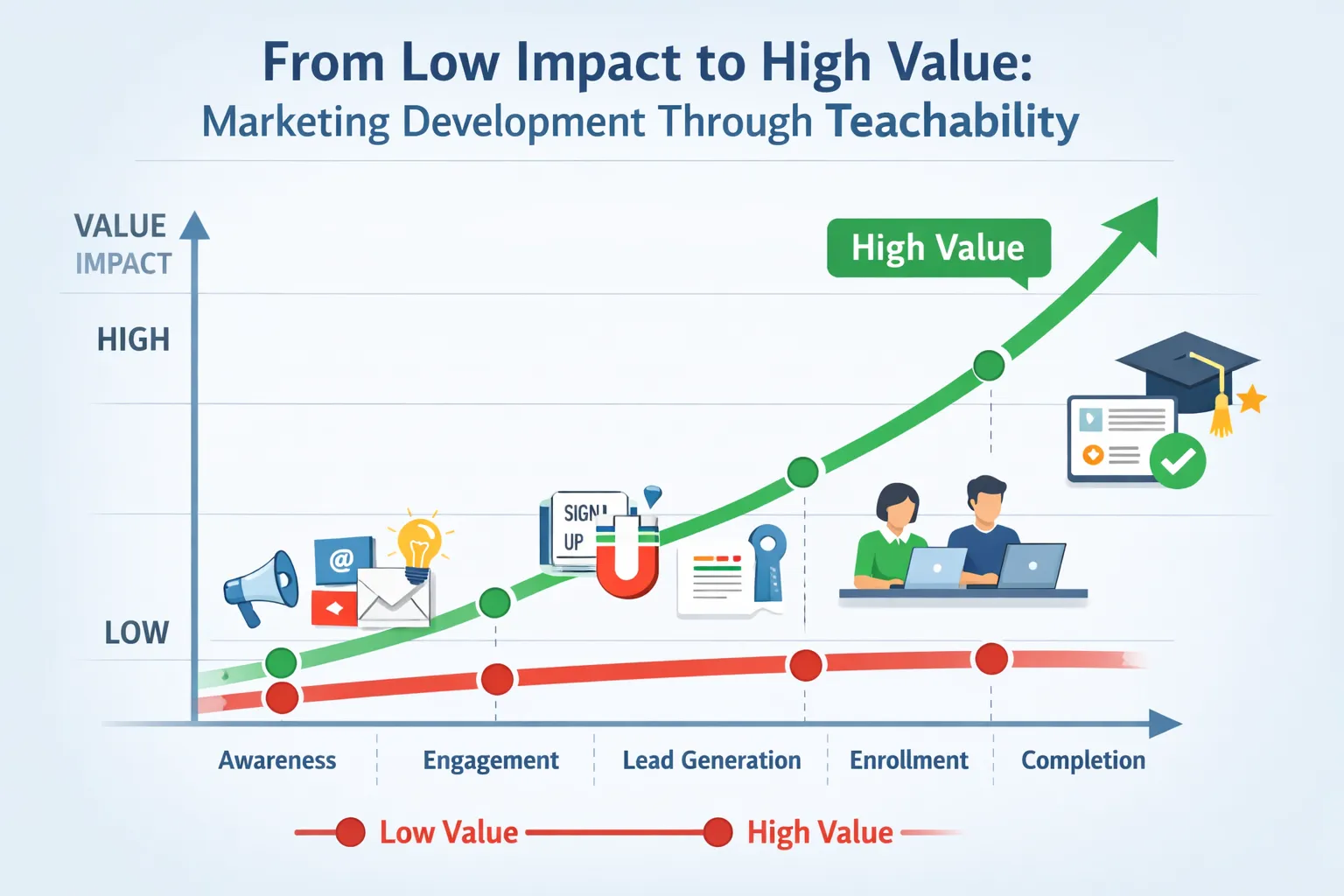
- Why Teachability Is the Core of Online Course Marketing
- Understanding Your Learners Before You Market
- Marketing an Online Course by Showcasing Learning Outcomes
- Select the Appropriate Online Course Platform
- Marketing Content That Builds Trust and Authority
- Social Media Marketing That Focuses on Learning, Not Hype
- Email Marketing That Converts, Not Just Leads
- Online Strategy Marketing with Value Demonstration
- Common Pitfalls That Harm Teachability
- Measuring Marketing Success
- Conclusion
- Frequently Asked Questions
The development of an online course is a success. It is altogether another challenge to market it successfully.
Teachability is one of the effective factors that make people enroll, but most educators pay much attention to ads, platforms, and promotions instead. The greatest marketing strategy will not work unless learners feel that your course is easy to digest, practical, and relevant.
In this guide, you will know how you can sell an online course based on teachability. Rather than following the fads, you will find out how clarity of learning value, comprehension of the audience, and shrewd digital approaches interact to get the appropriate learners and transform them into active students.
Understanding Your Learners Before You Market
It is necessary to learn what is meant by teachability in marketing before examining the strategies to market your course.
Teachability is the belief of learners concerning their ability to:
- Understand your content
- Apply it in real life
- Progress without confusion
When the focus of marketing emphasizes teachability, it creates trust quicker than glitzy offers.
A highly teachable course:
- Solves one clear problem
- Uses simple language
- Shows visible outcomes
- Not teacher-centered, but student-centered
This is what lays the groundwork for successful online education marketing tactics.
Before You Market: Understand Your Learners
The process of marketing starts much earlier than when you finally decide on a course platform over the Internet or create advertisements.
Establish the Learning Preparedness of Your Audience
Ask yourself:
- Are they novices, intermediate, or advanced learners?
- What are the impediments that prevent them?
- What do they want, not in the future, but now?
Teachability relies on the readiness of the audience. An excellent course can be given and not make the conversion unless marketed to the appropriate level of learning.
Targeting Your Audience in Terms of Teachability
Powerful audience targeting is concerned with:
- It is not the demographics but the learning gaps
- Competence, rather than positions
- Learning goals, not trends
The marketing copy ought to depict how your course is able to teach the learners on a step-by-step basis.
Marketing an Online Course by Showcasing Learning Outcomes

Selling features rather than results is one of the greatest errors of strategic marketing online.
Change From “What is Included” to “What Learners Can Do”
Instead of:
20 worksheets and video modules.
Try:
This skill will be usable at the end of this course in a manner that you will not guess.
This strategy strengthens teachability and curbs enrollment reluctance.
Demonstrate Academic Improvement
Some of the best course promotion tips would be:
- Module previews
- Sample lessons
- Learning roadmaps
- Pretest/posttest skill differences
These factors are visual demonstrations that learning is organized and attainable.
Select the Appropriate Online Course Platform
Your online course platform is not a tool only to host it; it is part of your marketing message.
Resources That Facilitate Learning Clarity
Choose platforms that allow:
- Clean navigation
- Progress tracking
- Microlearning delivery
- Interactive elements
A cluttered appearance sends a negative message concerning learnability.
Platform Messaging Matters
Your sales page structure also influences sales. Careful headings, easy descriptions, and coherent structure will help to assure learners that your course is not going to overwhelm them.
Marketing Content That Builds Trust and Authority
The best approach to content marketing is teaching first, then selling.
Teach First, Sell Second
Content marketing strategies include:
- Educational blog posts
- Short tutorials
- How-to videos
- Free learning checklists
This makes you a mentor and not a salesperson.
Relate Content with Course Learning
All the content must respond to:
- What problem does this solve?
- What does it do to prepare learners for deeper learning?
This strategy aligns with online learning solutions and builds long-term brand trust.
Social Media Marketing That Focuses on Learning, Not Hype
Most creators fail in social media marketing because they focus on visibility instead of value.
Successful social content contains:
- Mini-lessons
- Learning tips
- Common learner mistakes
- Skill breakdowns
This strengthens teachability and encourages enrollment.
Strategic Digital Media Use
Consistency counts more than quantity. Select the platforms your audience frequents:
- LinkedIn for professionals
- YouTube for tutorials
- Instagram for quick insights
Email Marketing That Converts, Not Just Leads
Email marketing is one of the most effective tools for building trust and conversions when done right.
Email Learning to Reduce Learning Anxiety
Instead of pushy sales emails, write:
- Learning guidance
- Course previews
- Success stories
- Skill-building sequences
This strategy creates leads who already trust your teaching style.
Teachability-Based Email Sequences
A strong email sequence:
- Recognizes a learning issue
- Explains why it’s difficult
- Shows a simple solution
- Introduces your course as guided
This keeps messaging aligned with learning value.
Online Strategy Marketing with Value Demonstration

Teachability is most effective when learners experience it before enrolling.
Provide Free Learning Opportunities
Free resources such as:
- Short workshops
- Intro lessons
- Skill assessments
Enable prospective students to test your teaching style. This is one of the best online course creation tips for boosting enrollment.
Use Data to Perfect Learning Messaging
Track:
- Lesson completion rates
- Email open rates
- Content engagement
These insights improve both course design and marketing strategies.
Common Pitfalls That Harm Teachability
Even the best-designed courses fail when marketing sends the wrong messages.
Avoid:
- Overpromising outcomes
- Using complex jargon
- Ignoring beginner concerns
- Selling transformation without process
Clarity always converts better than confidence.
Measuring Marketing Success
Success in online education marketing strategies goes beyond revenue.
Look at:
- Learner engagement
- Completion rates
- Skill application
- Student feedback
High teachability leads to referrals, testimonials, and sustainable growth.
Conclusion
Learning is personal. Individuals do not simply purchase courses; they invest in:
- Direction
- Clarity
- Trust
Knowing how to sell an online course using teachability makes every strategy more efficient:
- You market your course honestly
- You generate leads ready to learn
- You build long-term trust
In a crowded digital market, teachability is what makes your course stand out—and succeed.
Frequently Asked Questions
How to market an online course best?
Concentrate on the teachability: demonstrate to the learners that your course is understandable, well-organized, and practical. Use social media, email, and content marketing to emphasize results.
What do I do to sell my course without being salesy?
Free resources, share tips, mini-lessons. Prefer the value of letters, and a natural introduction to your course.
What is the best online course platform in terms of marketing?
Select platforms that have simple navigation, progress tracking, and interactive features—they make teaching easier.
How can email marketing bring leads?
Send course trailers, tips, and mini-lessons. An effective sequence of emails creates trust and spurs enrollment.
What can I do with social media to advertise my course?
Publish short tutorials, learner success stories, and educational material. Teach, not just promote.
How do I measure marketing success?
Pay attention to course activities, completion rates, email statistics, and learner feedback rather than just sales.