
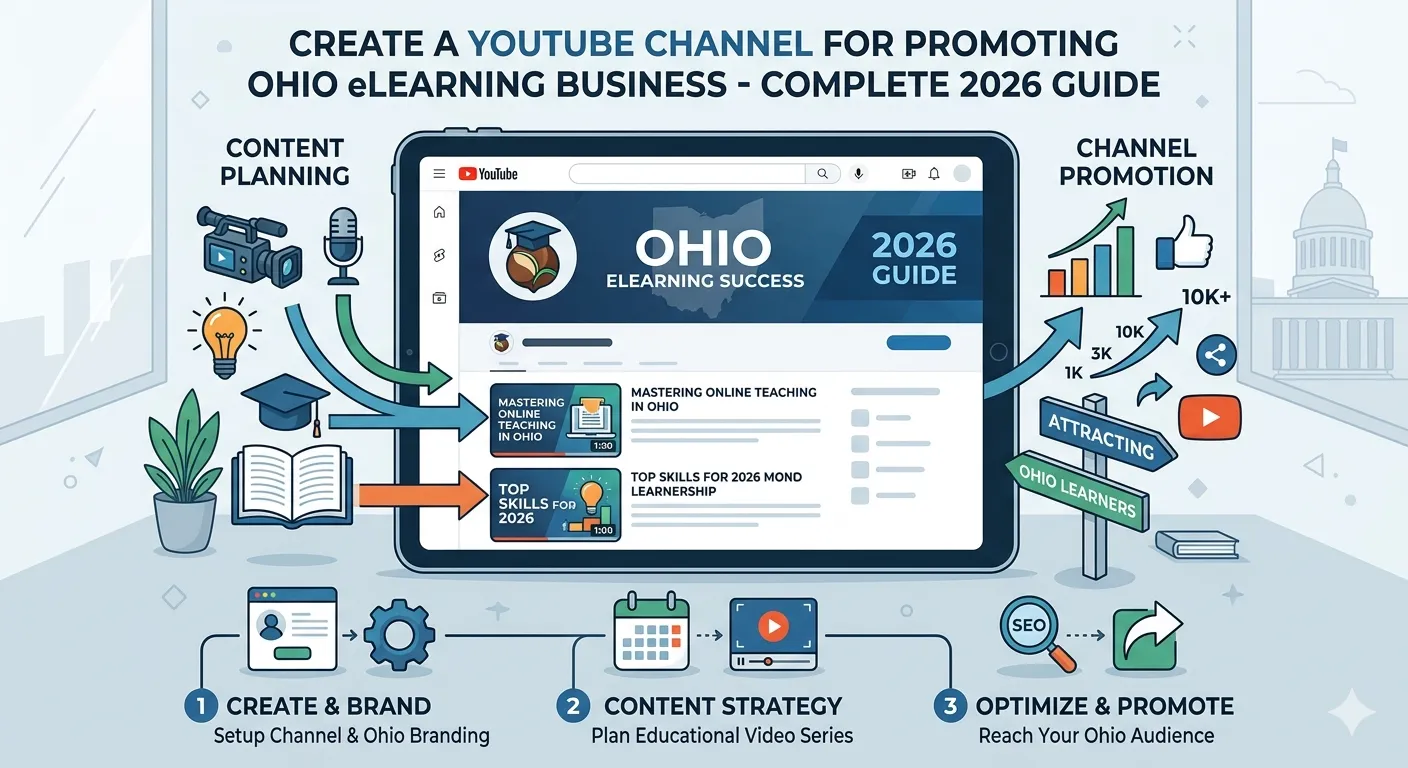
For many course creators and EdTech entrepreneurs in Ohio, launching an online eLearning course is only half the battle. The real challenge is getting the right audience to discover your training programs.
Many educators who build courses on platforms like Kajabi, Thinkific, or other LMS platforms often struggle with common problems:
- “How do I promote my online course effectively?”
- “How do I build trust before selling a course?”
- “How do I attract learners without spending heavily on ads?”
One of the most powerful solutions in 2026 is YouTube marketing for eLearning businesses.
A well-structured YouTube channel can help course creators:
- Build authority in their niche
- Attract organic traffic
- Educate potential learners
- Generate leads for their courses
For creators in cities like Columbus, Cleveland, Cincinnati, Toledo, and Dayton, YouTube has become a valuable tool for scaling digital education businesses.
This guide explains how to launch and grow a YouTube channel specifically for promoting an eLearning business.
Why YouTube Works for eLearning Businesses:
Video-based learning has become the preferred format for many learners. Before enrolling in a course, people often search YouTube to evaluate the instructor’s expertise and teaching style.
A strategic YouTube presence allows educators to:
- Demonstrate teaching ability
- Share free microlearning lessons
- Build credibility with learners
- Drive traffic to online courses
Unlike social media posts that disappear quickly, YouTube videos can generate traffic for years through search results. For online educators, this makes YouTube one of the most sustainable marketing channels.
Step 1: Define the Purpose of Your Channel
Before creating a channel, course creators must clarify how the channel supports their learning business.
Typical goals include:
- Promoting online courses
- Sharing educational insights
- Demonstrating teaching methods
- Building a professional learning brand
For example:
An instructional designer in Columbus may create videos about curriculum development strategies, while a coach in Cleveland may share microlearning lessons related to business growth.
Your YouTube content should always guide viewers toward a deeper learning experience through your courses.
Step 2: Choose a Niche That Aligns with Your Course
Successful educational YouTube channels are built around clear, focused niches.
Examples of strong niches for eLearning businesses include:
- Instructional design tips
- Online course creation tutorials
- AI tools for educators
- Curriculum development strategies
- Microlearning techniques
- LMS tutorials
If your course teaches digital marketing for small businesses, your channel should focus on actionable marketing lessons rather than unrelated topics.
Consistency helps YouTube’s algorithm understand your content and recommend it to the right audience.
Step 3: Set Up Your YouTube Channel Professionally
Once your niche is defined, the next step is creating a professional channel setup.
Key Elements:
Channel Name
Choose a name aligned with your learning brand.
Example formats:
- “Instructional Design Academy”
- “AI Automation for Entrepreneurs”
- “Course Creator Studio”
Channel Banner
Your banner should communicate:
- Who the channel is for
- What viewers will learn
- When new videos are posted
Channel Description
The description should include keywords like:
- eLearning
- online course creation
- instructional design
- LMS
- course marketing
This helps YouTube understand the channel’s focus.
Step 4: Plan Educational Video Content
The most successful educational channels follow a structured content strategy.
Instead of random videos, build a learning content ecosystem.
Example video ideas:
- “How to design your first online course curriculum”
- “Best LMS platforms for course creators”
- “How to structure microlearning lessons”
- “Common mistakes in course creation”
Each video should solve a specific learning problem your audience faces. For course creators in Cincinnati or Toledo, this approach builds authority and positions the instructor as a trusted expert.
Step 5: Use Microlearning Video Formats
Short educational videos perform extremely well on YouTube.
Microlearning content focuses on single concepts delivered quickly.
Examples include:
- 5-minute instructional design tips
- Quick LMS tutorials
- Short course creation strategies
- AI tool demonstrations for educators
Microlearning videos are easier to produce and often generate higher engagement rates.
Step 6: Optimize Videos for YouTube Search
To attract organic viewers, videos must be optimized for search.
Important Optimization Elements:
Video Titles
Use search-friendly titles such as:
- “How to Create an Online Course Curriculum”
- “Best LMS Platforms for Course Creators”
Descriptions
Write detailed descriptions including keywords related to:
- eLearning
- course creation
- instructional design
- LMS platforms
Tags and Keywords
Add relevant keywords that match your content.
Example tags:
- online course creation
- instructional design
- eLearning marketing
- course creator tips
Step 7: Connect YouTube Content With Your Online Courses
Your YouTube channel should always guide viewers toward deeper learning opportunities.
Ways to connect videos with your course include:
- Linking to your course landing page
- Offering free downloadable resources
- Sharing lead magnets
- Inviting viewers to join a learning community
For example: An educator in Dayton offering a course on curriculum development might link viewers to a free lesson or course preview.
This strategy converts viewers into potential students.
Step 8: Build Authority Through Consistency
Consistency is one of the most important success factors on YouTube.
Instead of uploading many videos at once, focus on regular publishing schedules.
Common strategies include:
- One educational video per week
- Short microlearning videos twice a week
- Monthly deep-dive tutorials
Over time, consistent publishing helps creators build authority, trust, and audience loyalty.
Cost Reality Check: Starting a YouTube Channel for Your eLearning Business
Creating a professional educational channel does not always require expensive equipment.
Typical startup costs include:
| Expense | Estimated Cost |
|---|---|
| Basic microphone | $50–$150 |
| Lighting setup | $40–$120 |
| Video editing software | $0–$30/month |
| Graphic design tools | $0–$15/month |
Many course creators begin with simple setups and improve production quality over time.
The most important factor is valuable educational content, not expensive equipment.
Final Thoughts:
For course creators and EdTech startups in Ohio, YouTube offers a powerful opportunity to build visibility, authority, and trust.
By combining educational content, microlearning videos, and strong SEO optimization, educators can attract learners organically while promoting their online courses.
Whether you are an instructional designer in Columbus, a coach in Cleveland, or a course creator in Cincinnati, building a strategic YouTube presence can become one of the most effective ways to grow an eLearning business in 2026.
References:
- https://uteach.io/articles/use-youtube-promoting-online-courses
- https://blog.hubspot.com/marketing/youtube-influencer-examples?hubs_content=blog.hubspot.com%2F404&hubs_content-cta=smart404-7%2520Examples%2520of%2520Influencer%2520Marketing%2520on%2520YouTube
- https://influencermarketinghub.com/youtube-stats/
FAQs:
Why should eLearning businesses use YouTube for marketing?
YouTube allows educators to demonstrate their expertise through educational videos, helping them attract learners and promote online courses organically.
What type of videos work best for promoting online courses?
Short microlearning videos, instructional tutorials, and course creation tips perform well because they solve specific learning problems.
How often should educators upload videos?
Consistency is more important than volume. Many successful creators publish one or two educational videos per week.
Can a YouTube channel generate students for online courses?
Yes. By linking videos to course landing pages, free lessons, or downloadable resources, educators can convert viewers into potential students.
How can TheEduAssist help course creators promote their eLearning business?
TheEduAssist supports educators by helping design structured eLearning courses, curriculum frameworks, and instructional content that can be promoted through platforms like YouTube, LMS systems, and online learning platforms.
Authored By: Sofia Arif