As the eLearning industry continues to evolve, one role is becoming increasingly critical behind the scenes: the Training Coordinator.
For course creators, EdTech startups, and L&D teams in Texas, this role bridges the gap between content development, instructional design, and LMS operations.
Whether you’re working with a course creator in Houston, managing a coaching program in Dallas, or supporting an academy in Austin, San Antonio, or Fort Worth, the demand for skilled training coordinators is growing rapidly.
Common Challenges Faced by Course Businesses:
Many course businesses struggle with:
- Disorganized course content
- Poorly formatted learning materials
- Inefficient LMS uploads
- Lack of student tracking and analytics
- Inconsistent learning experiences
This is where a training coordinator plays a vital role — ensuring the entire learning ecosystem runs smoothly.
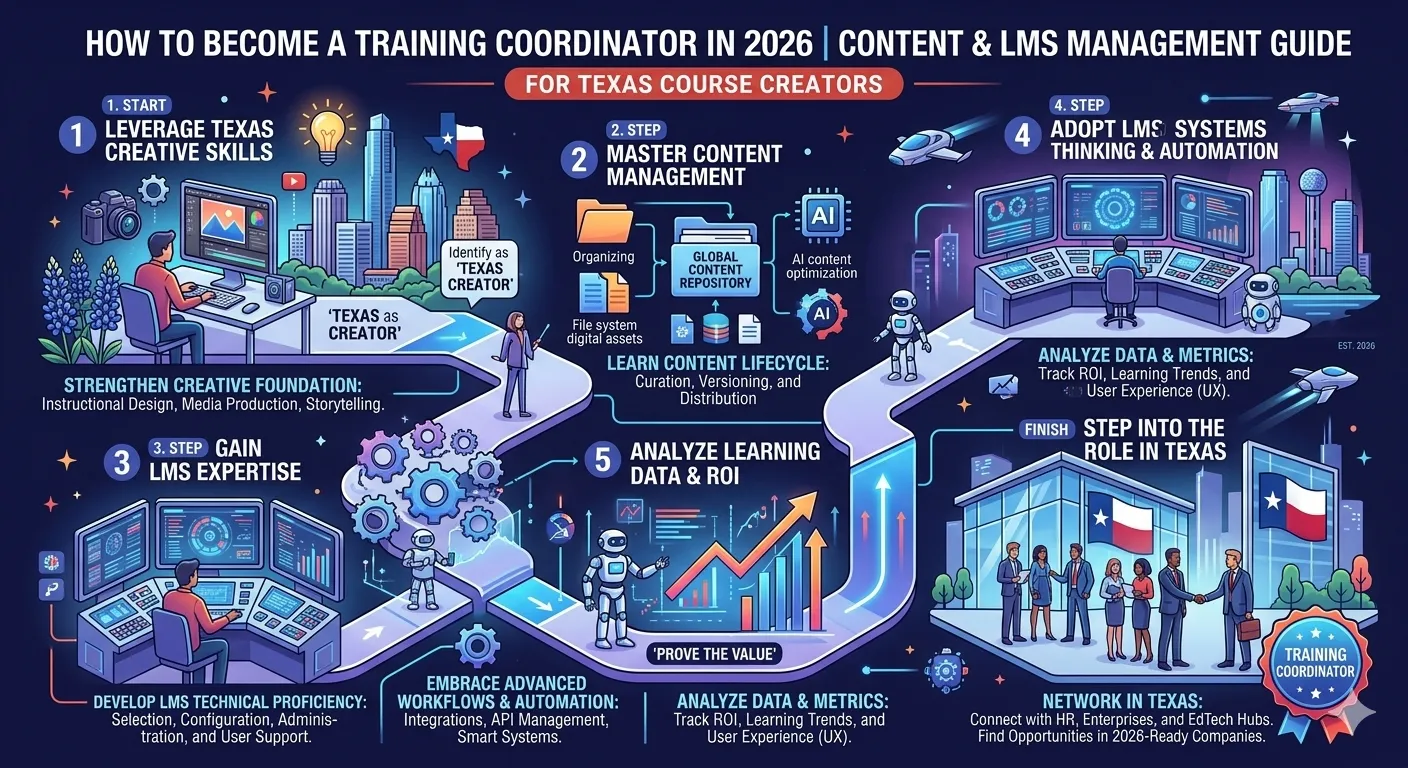
This guide explains how to become a training coordinator in 2026, with a strong focus on content management, LMS operations, and eLearning best practices.
The Real Role of a Training Coordinator in 2026:
The traditional view of a training coordinator focused mainly on scheduling sessions and managing logistics.
In 2026, the role has evolved into a hybrid position combining instructional design, content development, and LMS management.
Modern training coordinators are responsible for:
- Organizing course content
- Editing and formatting learning materials
- Managing LMS platforms
- Tracking learner progress
- Maintaining course quality standards
They act as the operational backbone of any eLearning business.
Why This Role Is Growing (And Where It Fits in L&D):
According to recent eLearning trends for 2026, organizations are investing heavily in digital learning ecosystems. This shift has increased demand for professionals who can:
- Manage custom eLearning programs
- Coordinate learning workflows
- Maintain LMS platforms
- Support instructional designers
In L&D environments, training coordinators ensure that learning programs are efficient, scalable, and learner-friendly.
For EdTech startups and independent course creators in Texas, this role is essential for delivering consistent and high-quality learning experiences.
Step-by-Step Guide: How to Become a Training Coordinator
Step 1: Build Core Skills in Content Development
At the heart of the role is content development.
Training coordinators must be able to:
- Edit lesson scripts
- Format course materials
- Organize modules and lessons
- Ensure clarity and consistency
Example:
A course creator in Dallas provides raw video scripts and notes. The training coordinator transforms them into structured, polished, and consistently formatted learning materials.
Key Tip: Strong writing and editing skills are essential for maintaining professional course quality.
Step 2: Learn LMS Platforms and Course Upload Workflows
A major responsibility is managing Learning Management Systems (LMS).
Popular platforms include:
- Udemy
- Thinkific
- Teachable
Key LMS tasks:
- Uploading video lessons
- Organizing modules and sections
- Adding quizzes and assignments
- Managing course settings
- Ensuring platform compliance
Example:
A training coordinator in Austin ensures courses meet platform guidelines for publishing and optimal student experience.
Step 3: Manage Course Operations and Daily Workflows
Training coordinators often assist founders or directors with day-to-day operations, including:
- Scheduling course releases
- Coordinating with instructors
- Updating course content
- Managing learning resources
- Handling student queries
In fast-growing EdTech businesses, this role prevents bottlenecks and keeps operations running efficiently.
Step 4: Track Student Progress and Platform Analytics
Modern training coordinators work with learning analytics:
- Monitoring course completion rates
- Analyzing student engagement
- Tracking quiz performance
- Identifying learning gaps
Example:
If a training academy in Houston notices low completion rates in a module, the coordinator flags the issue, recommends improvements, and collaborates with instructional designers.
This data-driven approach improves course effectiveness and learner outcomes.
Step 5: Understand Instructional Design Basics
While not full instructional designers, training coordinators should know basic principles such as:
- Structuring lessons logically
- Aligning content with learning objectives
- Ensuring learner engagement
- Supporting microlearning strategies
This knowledge helps them collaborate effectively with instructional designers and course creators.
Step 6: Ensure Quality and Consistency Across Courses
One of the most valuable contributions is quality control:
- Consistent formatting across lessons
- Clear and professional language
- Well-structured modules
- Properly functioning resources
For businesses offering custom eLearning solutions, consistency is critical for brand credibility.
Step 7: Support SEO and Course Visibility
Training coordinators often assist with SEO and discoverability by:
- Optimizing course titles and descriptions
- Adding relevant keywords
- Organizing course metadata
- Supporting blog and content strategies
Example:
A course on Teachable performs better when optimized with search-friendly descriptions and structured content.
Quick Comparison Table: LMS Platforms for Training Coordinators
| Platform | Best For | Key Advantage |
|---|---|---|
| Udemy | Marketplace courses | Built-in audience |
| Thinkific | Independent creators | Highly customizable courses |
| Teachable | Beginner course businesses | Easy setup and user-friendly |
Understanding these platforms is essential for managing course distribution and delivery.
Cost Reality Check: Skills vs Investment
Becoming a training coordinator does not require a large financial investment, but it does require focused skill development.
| Skill Area | Learning Investment |
|---|---|
| Content development | Low (self-learning or practice) |
| LMS platforms | Medium (hands-on experience) |
| Instructional design basics | Medium (courses or certifications) |
| Analytics and reporting | Low to medium |
Many professionals enter this field by gaining hands-on experience in real course creation projects.
Unique Perspective: The “Learning Operations Specialist” Evolution
In 2026, the training coordinator role is evolving into what many organizations call a Learning Operations Specialist.
This expanded role includes:
- Managing entire learning ecosystems
- Supporting L&D consulting services
- Coordinating between teams
- Optimizing learning workflows
For platforms like theeduassist.com, this role is essential in delivering scalable, high-quality eLearning solutions for clients.
Final Thoughts:
For professionals in Houston, Dallas, Austin, San Antonio, and Fort Worth, becoming a training coordinator offers a strong entry point into the growing eLearning and EdTech industry in Texas.
This role combines content development, LMS management, instructional design support, and analytics & optimization.
As eLearning trends in 2026 continue to shape the industry, training coordinators will play a key role in ensuring digital learning experiences are structured, engaging, and scalable.
References:
- https://www.instructionaldesign.org/models/addie/
- https://www.coursebox.ai/blog/online-learning-statistics?utm
- https://search.proquest.com/openview/5737105992ff0c8a9cd1444885b9c90d/1?pq-origsite=gscholar&cbl=18750&diss=y
FAQs:
What does a training coordinator do in eLearning?
A training coordinator manages course content, LMS platforms, student records, and learning operations to ensure smooth delivery of online training programs.
What skills are required to become a training coordinator?
Key skills include content development, LMS management, instructional design basics, and analytics tracking.
Do training coordinators need technical skills?
Basic technical knowledge of LMS platforms is required, but advanced programming skills are usually not necessary.
Which platforms should training coordinators learn?
Popular platforms include Udemy, Thinkific, and Teachable.
How can TheEduAssist help aspiring training coordinators?
Through edu-assist solutions and consulting services, theeduassist.com supports professionals by providing structured eLearning systems, curriculum frameworks, and hands-on exposure to real-world course development and LMS management.
Ready to start your journey as a Training Coordinator in Texas? Begin building your skills today and become the operational backbone of the eLearning industry in 2026.
Authored By: Sofia Arif