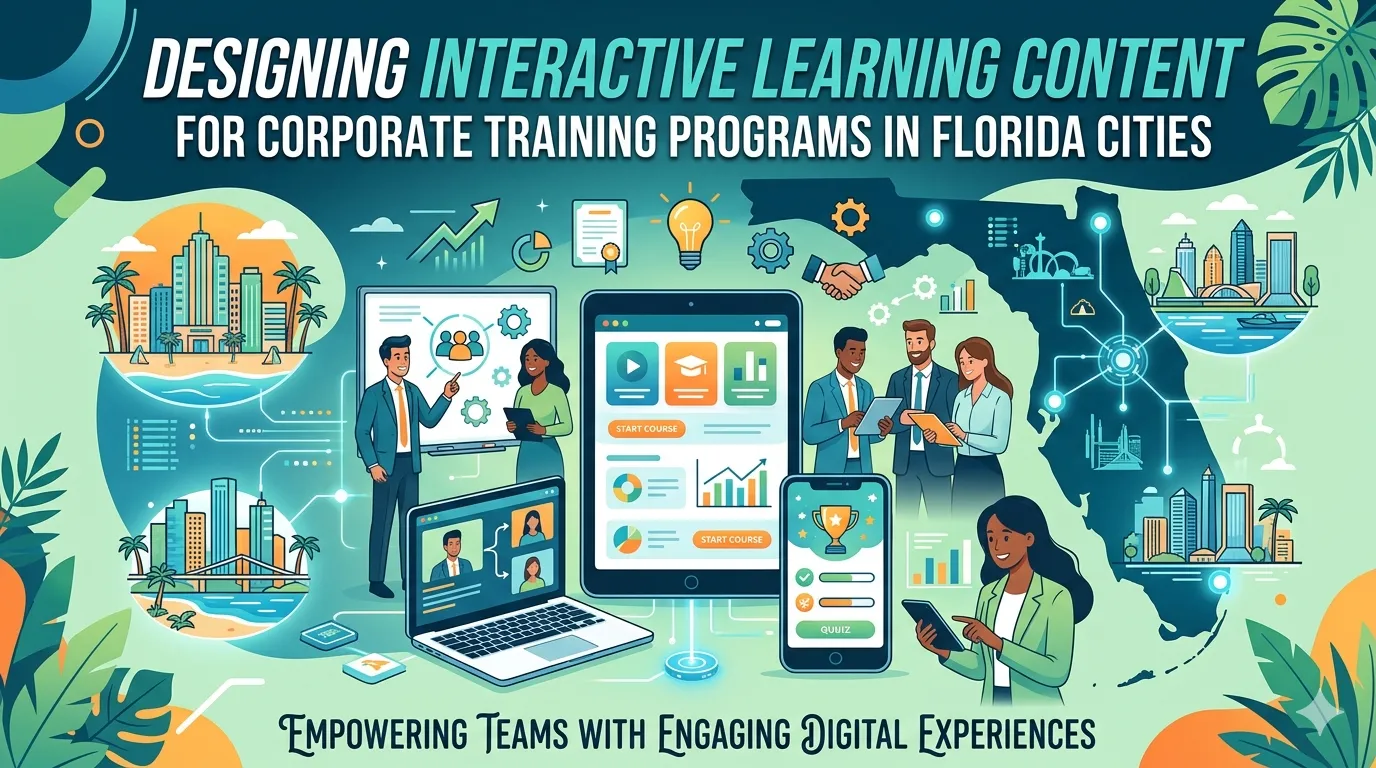

Visual storytelling has become a powerful approach in modern sales training, especially for businesses across Miami, Orlando, Tampa, and Jacksonville. Companies are increasingly adopting interactive learning content, sales enablement strategies, and eLearning design to improve training outcomes and drive revenue growth.
This guide explains why visual storytelling works, how to apply instructional design principles, and how US organizations can build high-impact sales training programs.
Why Visual Storytelling Works in Sales Training:
Visual storytelling enhances corporate training programs in Florida by making learning faster, more engaging, and easier to retain.
Faster Processing & Retention:
The human brain processes visuals significantly faster than text, improving memory and recall in sales scenarios.
Emotional + Logical Engagement:
Story-driven content activates both analytical thinking and emotional connection critical for real-world sales interactions.
Simplifies Complex Sales Concepts:
Visual storytelling transforms topics like:
- Sales pipelines
- Objection handling
- Pricing strategies
into diagrams, infographics, and short videos.
For businesses in Fort Lauderdale and St. Petersburg, this approach ensures sales teams quickly grasp and apply key concepts.
More reasons:
- Human brains process visuals much faster than text and retain them longer, making slide visuals highly effective for instructional content.
- Story-based structures engage both logical and emotional thinking, helping trainees connect with and apply sales techniques in real situations.
- Visual storytelling simplifies complex sales concepts such as pipelines, objection handling, and pricing models by turning them into diagrams, infographics, and short videos that are easier to understand.
Instructional Design Principles to Apply:
- Start with clear performance objectives (e.g., “handle price objections using the 3-step framework”) and align every story, visual, and slide with those goals.
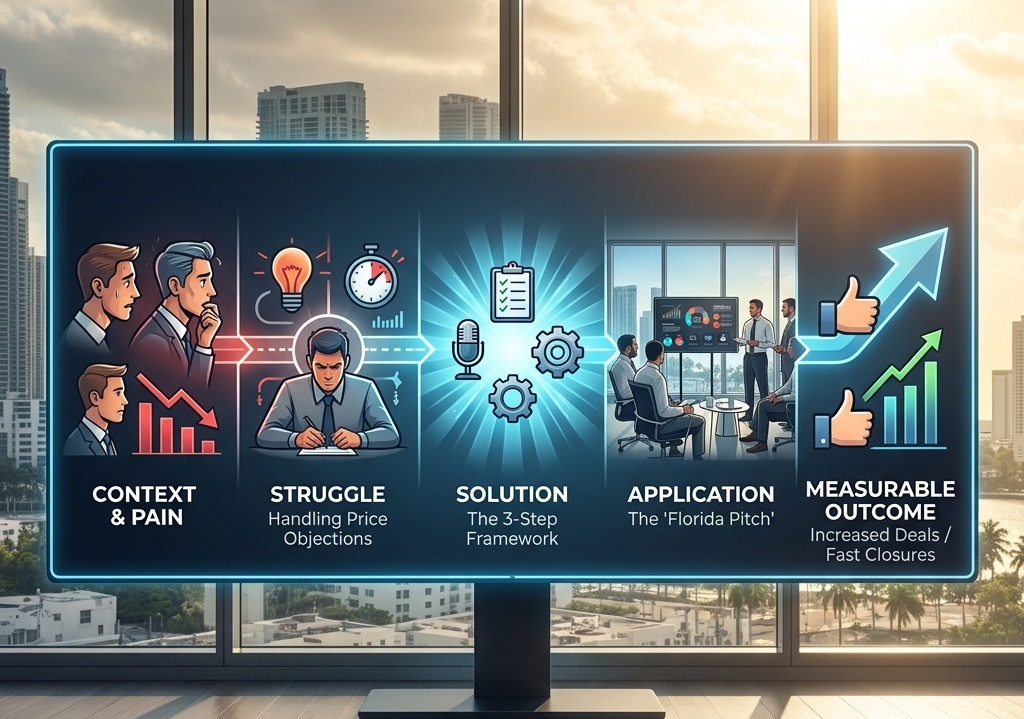
- Use a narrative arc in your deck:
- Context & pain → struggle → solution → application → measurable outcome
- Break content into short, focused sequences (micro-stories) to reduce cognitive load and improve retention.
Instructional Design for Sales Training in the US:
Applying strong instructional design principles ensures your training is not just engaging but effective.
1. Define Clear Performance Objectives:
Start with measurable goals such as:
- Handle price objections using a 3-step framework
- Close deals using consultative selling techniques
Every visual, slide, and story should align with these outcomes.
2. Use a Narrative Arc:
Structure your training like a story:
- Context & customer pain
- Failed attempts or challenges
- Introduction of the solution
- Real-world application
- Measurable results
This structure is widely used in eLearning design in Miami and sales training programs in Orlando.
3. Apply Microlearning Strategies:
Break content into short, digestible modules:
- Micro-stories
- Scenario-based learning
- Visual summaries
This reduces cognitive load and improves learner retention across fast-paced markets like Hialeah and Tallahassee.
Slide-Level Visual Storytelling Techniques:
Replace bullet points with customer stories supported by:
- Photos
- Journey maps
- Before/after visuals
- Simple impact charts
Use diagrams and infographics to explain:
- Sales processes
- Conversation flows
- Decision paths
Integrate multimedia (short videos, animations, interactive elements) selectively to demonstrate key skills like discovery questioning or demo sequencing.
Engagement and Interactivity Strategies:
Add interaction points within the story:
- Decision polls (“What would you say next?”)
- Scenario-based choices
- Quick practice exercises
Maintain high-quality, consistent, on-brand visuals to keep learners focused and reduce distractions.
Encourage co-creation:
- Pause the presentation and ask learners to script the next line in a sales conversation
- Let participants shape the story outcome for deeper engagement.
Visual Storytelling Techniques for Sales Training Slides:
Modern interactive sales training content replaces static slides with engaging visuals.
Replace Bullet Points with Stories:
Use:
- Customer success stories
- Before-and-after comparisons
- Visual journey maps
- Performance charts
Use Infographics and Diagrams:
Explain:
- Sales funnels
- Buyer journeys
- Decision-making processes
These techniques are commonly used in corporate training programs in Tampa and Jacksonville sales enablement strategies.
Integrate Multimedia Content:
Enhance learning with
- Short video demonstrations
- Animations
- Interactive simulations
Use multimedia selectively to avoid overload while maximizing impact.
Engagement Strategies for Florida Sales Teams:
Keeping learners engaged is critical for training success.
Add Interactive Elements:
- Decision-based polls (What would you say next?)
- Scenario-based exercises
- Role-play simulations
Maintain Consistent Design:
Use:
- High-quality visuals
- On-brand colours and layouts
- Clean, distraction-free slides
This is especially important for professional training environments in Miami and Orlando.
Encourage Co-Creation:
- Ask learners to complete sales conversations
- Let teams build their own story outcomes
- Use collaborative exercises
This boosts participation and knowledge retention.
Benefits of Visual Storytelling for Florida Businesses:
Organizations across Florida see measurable improvements:
- Higher engagement in corporate training programs
- Improved sales performance and confidence
- Faster onboarding for new sales hires
- Scalable eLearning solutions for distributed teams
Whether you’re in Cape Coral or Gainesville, visual storytelling helps modernize your sales training strategy.
Conclusion:
Visual storytelling is transforming sales training in Florida by making learning more engaging, practical, and results-driven. By combining instructional design, interactive learning, and story-based visuals, businesses can build high-performing sales teams that thrive in competitive markets.
If you’re looking to scale your training programs across Florida, integrating visual storytelling is no longer optional; it’s essential for success.
Frequently Asked Questions (FAQs)
Q1: What is visual storytelling in sales training?
Visual storytelling in sales training uses images, videos, and narratives to teach sales concepts more engagingly and memorably.
Q2: Why is visual storytelling effective for corporate training in Florida?
It improves engagement, simplifies complex topics, and increases retention making it ideal for fast-growing business hubs like Miami and Orlando.
Q3: How can I implement visual storytelling in my sales training program?
Start by defining clear objectives, using story-based slide structures, and incorporating visuals like infographics, videos, and real-world scenarios.
Q4: What tools are used for interactive sales training content?
Popular tools include eLearning platforms, video-based training software, and interactive presentation tools designed for corporate training programs in Florida.
Q5: Which Florida cities benefit most from modern sales training?
Major business hubs such as Tampa, Jacksonville, and Fort Lauderdale benefit significantly due to their competitive markets.
References:
- Sense Making Presentations: Storytelling and Knowledge Visualization in B2B Sales – Experimental study showing storytelling visuals boost product knowledge (0.66 vs. 0.49), reduce cognitive load, and improve presenter attitudes.
- Effective Learner Engagement Strategies in Visual Presentations – Focuses on instructional design principles for visuals in training, emphasizing objectives and micro-stories.
- Storytelling During Retail Sales Encounters – Academic paper on story types’ impact on consumer responses in sales.
Practical Guides & Articles
- The Impact of Visual Storytelling in Sales Presentations – Neuroscience-backed retention stats (80% for visuals seen/do vs. 10% heard); techniques for emotional sales stories.
- The Power of Visual Storytelling in Sales – Sales deck tips like diagrams for pipelines and objection handling.
- How to Create Visual Storytelling in Sales Decks – Replaces bullets with customer stories, journey maps, and infographics.
- Master Visual Storytelling: Importance, Tips, Examples – Narrative arcs and chunking for sales training slides.
- Interactive Presentations in 2026: Techniques That Work – Engagement via polls and multimedia in story-based decks