
In 2026, the HTML & CSS Tutorial continues to be one of the most popular and searched beginner topics in web development. For coaches, online instructors, and educators targeting the US and Australian markets, creating high-quality HTML & CSS video tutorials is an excellent way to build authority, attract motivated learners, and generate sustainable revenue.
This SEO-optimized guide provides coaches with a step-by-step blueprint to plan, produce, market, and sell professional HTML & CSS Tutorial courses that perform well in search engines and convert viewers into paying students.
Why the Demand for HTML & CSS Tutorials Remains Strong in 2026
HTML and CSS form the foundation of every modern website. Even with advanced frameworks, HTML/CSS skills stay essential for front-end developers, freelancers, small business owners, and digital marketers.
Market Insights – US and Australia
- United States: The web development services market exceeds $89 billion, with strong growth projected through 2032. Web developer jobs are expected to grow 7–15% (much faster than average), driven by demand for performant, accessible websites.
- Australia: The online education market reached USD 1.7 billion in 2025 and is projected to grow to USD 15.5 billion by 2034 at a CAGR of approximately 26.65%. Broader e-learning segments show similar robust expansion, fueled by flexible upskilling needs in Sydney, Melbourne, and Brisbane.
Popular long-tail searches coaches can target include:
- HTML & CSS Tutorial for beginners 2026
- Responsive HTML CSS project tutorial
- HTML CSS video tutorial US
- Best HTML & CSS course Australia
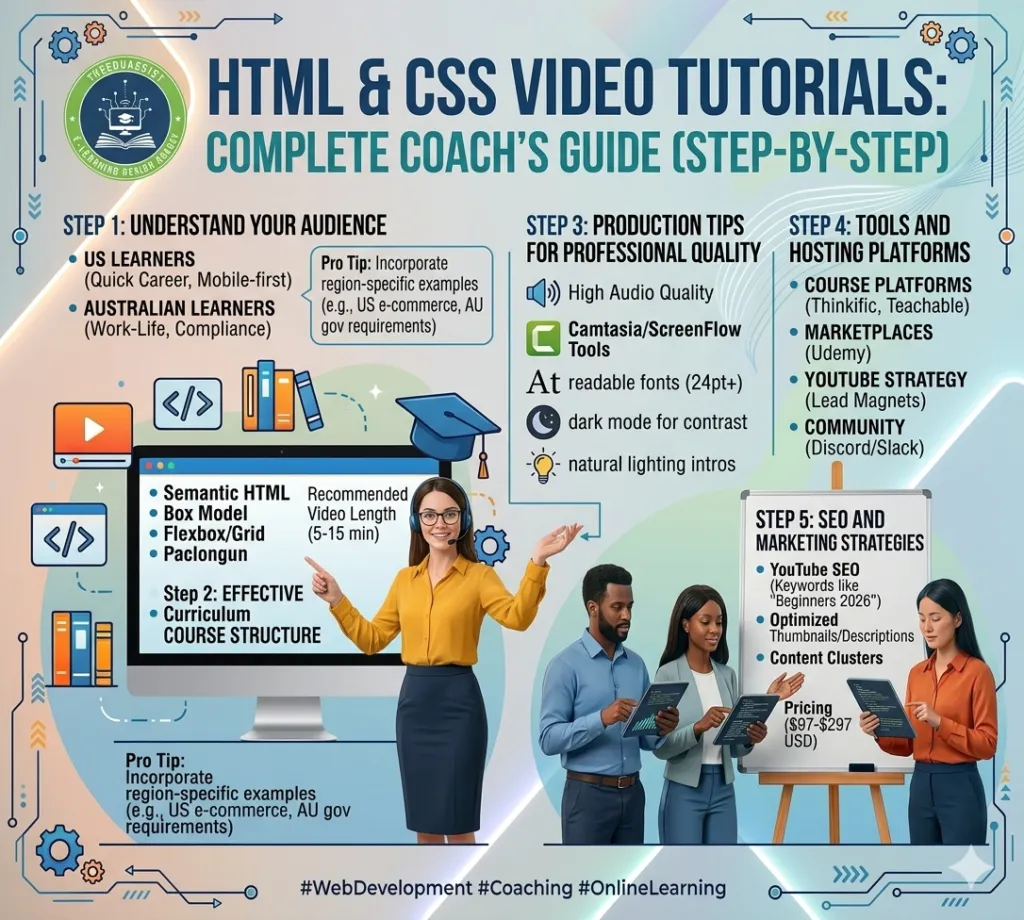
Step 1: Understand Your US and Australian Audience
US learners often seek quick career outcomes, certification-style content, and mobile-first access. Australian students value work-life balance, regional accessibility, and compliance with local standards like WCAG accessibility.
Pro Tip for Coaches: Incorporate region-specific examples in your HTML & CSS video tutorials, such as US e-commerce layouts or Australian government website requirements, to increase relevance and student engagement.
Step 2: How to Structure an Effective HTML & CSS Tutorials Course
Design a progressive, project-based curriculum that delivers real skills:
- HTML Fundamentals Semantic HTML5, accessibility (ARIA), forms, and SEO-friendly structure
- CSS Basics Selectors, box model, typography, colors, and positioning
- Modern Layouts Flexbox, CSS Grid, media queries, and responsive design
- Advanced CSS (2026 Features) Custom properties, container queries, native nesting,
:has(), animations, and subgrid - Capstone Projects Build a responsive portfolio, landing page, dashboard, or multi-page business site
Recommended Video Length: Keep individual lessons between 5–15 minutes for better retention.
Content Balance: 30–40% explanation + 60–70% live coding.
Include: downloadable starter files, GitHub repos, quizzes, and mini-challenges.
Engagement Tip: Pause videos with “Try this yourself before watching the solution” to boost active learning.
Step 3: Production Tips for Professional-Quality HTML & CSS Video Tutorials
High production value helps your course stand out on YouTube, Udemy, and your own platform.
- Audio Quality Use a good USB microphone and noise removal tools. Clear audio is the #1 factor preventing drop-offs.
- Screen Recording Use readable fonts (24pt+), dark mode for contrast, side-by-side code + live preview, and zoom/callouts for key changes.
- On-Camera Record short intros and motivational segments with natural lighting.
- Editing Tools ScreenFlow (Mac), Camtasia (Windows), or free DaVinci Resolve.
- 2026 Best Practice Update content regularly to cover new CSS features and browser support.
Step 4: Tools and Platforms to Host and Sell Your HTML & CSS Videos:
- Course Platforms: Thinkific, Teachable, Kajabi, or Podia (for branded sites and payments)
- Marketplaces: Udemy for broad US reach + your own website for higher margins
- YouTube Strategy: Offer free HTML & CSS Tutorial intro modules or “First 3 Lessons” as lead magnets
- Community: Add Discord/Slack for Q&A and code reviews to improve retention
Step 5: SEO and Marketing Strategies for Your HTML & CSS Video:
Optimize for search and sales with these tactics:
- YouTube SEO: Use titles like “HTML & CSS Tutorial for Beginners 2026 – Build a Responsive Website from Scratch”
- Thumbnail & Description: Eye-catching thumbnails + keyword-rich descriptions with timestamps
- Content Cluster: Create supporting blog posts and free resources around related keywords (Flexbox vs Grid, Responsive Design Projects, etc.)
- Pricing: $97–$297 USD (or AUD equivalent) with installment options
- Promotion: LinkedIn outreach, collaborations with tech communities, and retargeting ads for video viewers
Focus on building topical authority around HTML & CSS Tutorial to improve long-term rankings in both US and Australian search results.
Launch Your Profitable HTML & CSS Video Course in 2026
The combination of strong e-learning growth in the US and Australia, plus evergreen demand for foundational HTML & CSS skills, creates a prime opportunity for coaches.
Start small this week:
- Script and record Module 1 using the production tips above
- Publish a free introductory HTML & CSS Tutorial video on YouTube
- Gather feedback and iterate
With consistent effort, you can build a complete, revenue-generating course series that helps learners create real websites while growing your online coaching business.
Conclusion: Turn Your HTML & CSS Video Expertise into a Thriving Online Business
The combination of strong e-learning growth in the US and Australia, plus evergreen demand for foundational HTML & CSS skills, creates a prime opportunity for coaches in 2026.
Start small this week:
- Script and record Module 1 using the production tips above
- Publish a free introductory HTML & CSS Tutorial video on YouTube
- Gather feedback and iterate
With consistent effort, you can build a complete, revenue-generating course series that helps learners create real websites while growing your online coaching business.
Your future students are already searching for quality HTML & CSS video tutorials. Make sure they find and choose yours.
Ready to accelerate your course creation?
Platforms like TheEduAssist can help coaches and creators simplify the process with custom eLearning development, AI-powered tools, instructional design support, and scalable course-building solutions tailored for the US and Australian markets. Whether you need help with content scripting, multimedia production, or full course deployment, professional assistance can save you time and boost the quality of your HTML & CSS Tutorial offerings.Begin with your first module today and turn your expertise into a scalable digital product.
References:
https://www.ebay.com/itm/267432708563
https://influenceflow.io/resources/youtube-seo-optimization-techniques-the-complete-2026-guide
https://www.technavio.com/report/e-learning-market-industry-analysis
https://www.linkedin.com/pulse/success-formula-growing-united-states-esswf
Frequently Asked Questions (FAQs)
1. What is the best length for videos in an HTML & CSS Video Tutorial course?
Keep individual videos between 5–15 minutes. Shorter lessons improve viewer retention and perform better on YouTube and course platforms.
2. How much can coaches earn from HTML & CSS video tutorial in the US and Australia?
Pricing typically ranges from $97 to $297 per course. Top-performing courses on Udemy and branded platforms can generate significant recurring revenue, especially with upsells and community access.
3. Do I need advanced equipment to create professional HTML & CSS video tutorial?
No. A good USB microphone, screen recording software (like ScreenFlow or DaVinci Resolve), and natural lighting are often enough to start. Focus first on clear audio and readable code displays.
4. How can I make my HTML & CSS Tutorial stand out in competitive markets like the US and Australia?
Use project-based learning, region-specific examples, regular updates for new CSS features, and strong YouTube SEO. Adding community support and quizzes also boosts completion rates and reviews.
5. Should I host my course on Udemy or my own platform?
Start with Udemy for quick reach in the US market, then build your own site (using Teachable, Thinkific, or Kajabi) for higher profit margins and brand control.
6. How can TheEduAssist help me create and launch my HTML & CSS Tutorial?
TheEduAssist specializes in custom eLearning development, AI-driven course creation, instructional design, and multimedia content. They support coaches and creators with ready-to-deploy solutions, helping you build engaging, professional HTML & CSS video tutorials faster while targeting the US and Australian markets effectively.
7. Is it still worth creating HTML & CSS courses in 2026?
Yes. HTML and CSS remain foundational skills. Demand stays strong as new learners enter web development, and existing professionals need refreshers on modern techniques like container queries and responsive design.
Authored By : Atiqa Sajid http://www.linkedin.com/in/atiqa-sajid-747b57137