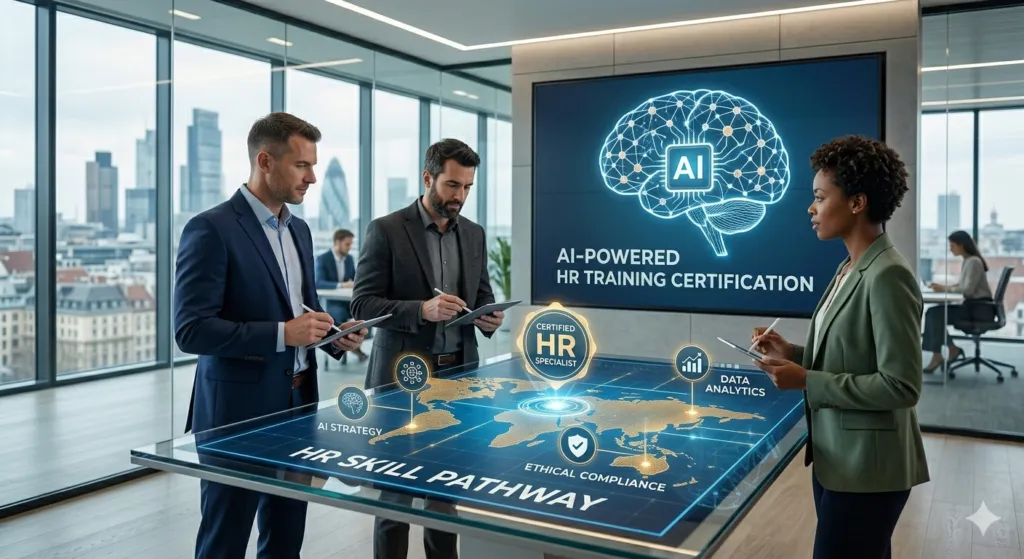
Artificial Intelligence (AI) is rapidly transforming the Human Resources (HR) industry by improving how organizations recruit, train, and manage employees. AI HR training programs with 360Learning are designed to help HR professionals understand and apply AI tools in real workplace scenarios.
These programs focus on practical skills such as recruitment automation, workforce analytics, and ethical AI decision-making rather than just theoretical knowledge.
In modern instructional design, platforms like 360Learning and service providers such as Edu-Assist play an important role in shaping scalable training solutions.
In this article, we also explore how custom elearning content development, L&D consulting services, and modern eLearning trends 2026 influence the future of AI-based HR training systems.
Learn more at: https://theeduassist.com
Why AI HR Training Programs with 360Learning Matter
AI is reshaping traditional HR functions by making them faster, more accurate, and data-driven. Organizations that adopt AI in HR gain a strong competitive advantage in hiring and workforce management.
Key transformations in HR due to AI:
- Automated resume screening and candidate shortlisting
- Predictive hiring based on data patterns
- Employee performance tracking through analytics
- AI-driven workforce forecasting
- Chatbots for onboarding and employee support
According to McKinsey & Company, companies that integrate AI into HR systems experience improved efficiency and decision-making quality.
Organizations that work with L&D consulting services often achieve faster adoption of AI tools in HR training programs. AI is also reshaping corporate learning systems through modern instructional approaches.
Learn more: https://theeduassist.com/ai-powered-elearning
Research Insights on AI in HR Training Programs
McKinsey & Company reports that generative AI can significantly improve HR productivity by automating repetitive tasks such as screening, scheduling, and early-stage decision-making. However, HR adoption is still in early stages, which highlights the need for structured training programs to build AI capability in HR teams.
👉https://www.mckinsey.com/capabilities/people-and-organizational-performance/our-insights/the-organization-blog/four-ways-to-start-using-generative-ai-in-hr
A global McKinsey workplace study found that employees are already using AI tools more than leaders expect. This gap between usage and organizational readiness shows the importance of formal AI HR training programs to ensure consistent and responsible use of AI in workplaces.
👉https://www.mckinsey.com/capabilities/mckinsey-digital/our-insights/superagency-in-the-workplace-empowering-people-to-unlock-ais-full-potential-at-work
Academic research highlights that AI in HR improves efficiency in recruitment, employee engagement, and workforce analytics. However, it also raises concerns around bias, fairness, transparency, and ethical decision-making, making AI ethics training an essential part of HR learning programs.
👉 https://arxiv.org/abs/2412.04796
Overall, research consistently shows that while AI is rapidly transforming HR functions, organizations must invest in structured AI HR training programs to ensure effective, ethical, and practical implementation in real-world HR environments.
Learning Objectives of an AI HR Training Programs
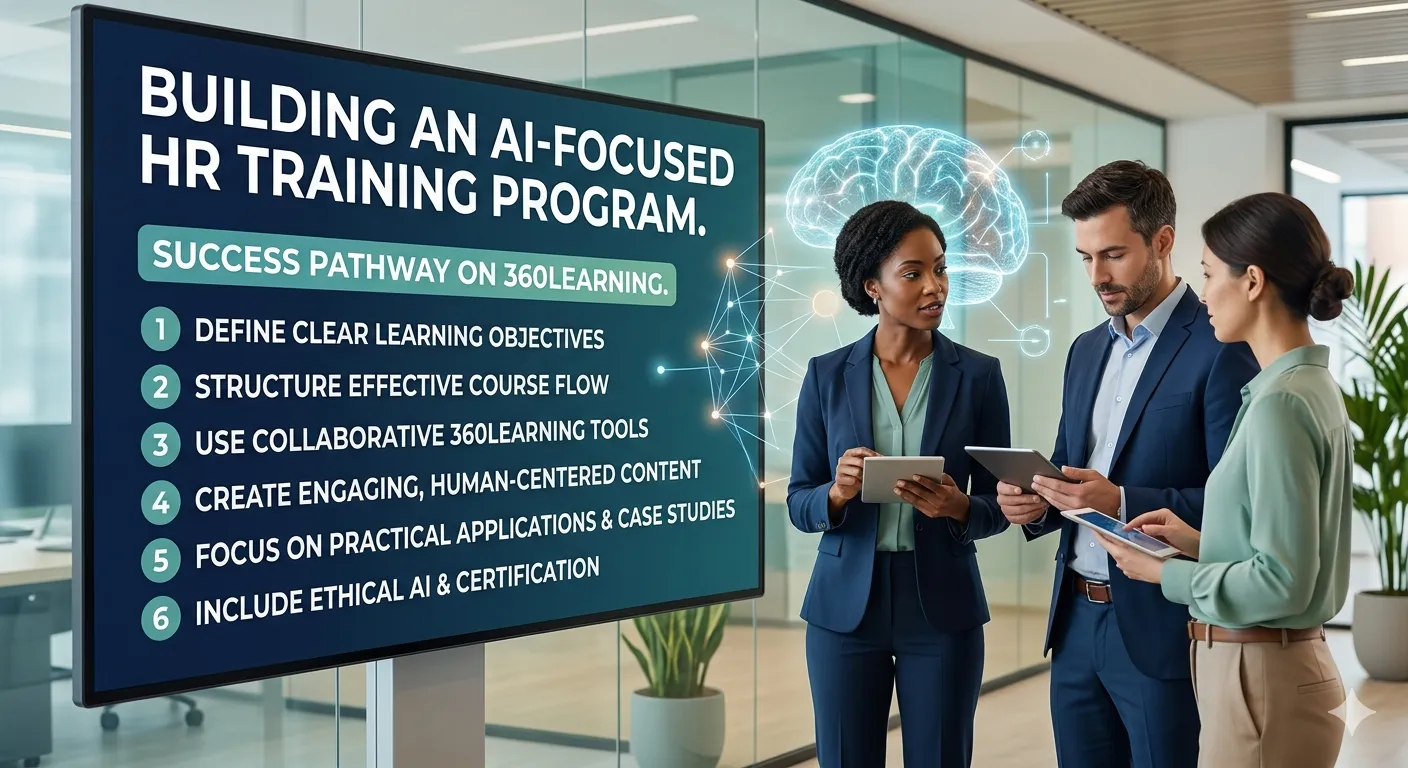
A strong AI HR training program should define clear outcomes:
- Understand AI applications in HR workflows
- Use AI tools for recruitment and analytics
- Interpret HR data for decision-making
- Identify ethical risks like bias in algorithms
- Apply AI insights for workforce planning
Modern programs designed through custom elearning content development ensure better engagement and retention.
These learning outcomes are typically achieved through structured instructional design and custom digital learning solutions that improve learner engagement and retention.
Learn more: https://theeduassist.com/custom-elearning-content-development/
Target Audience
- HR beginners entering tech-driven workplaces
- Mid-level HR professionals upgrading skills
- HR managers making strategic decisions
- Learning & Development professionals designing training programs
Many organizations rely on platforms like Edu-Assist and https://theeduassist.com to design structured HR training systems.
Course Structure (Instructional Design Flow)
1. Introduction to AI in HR
Basics of AI and HR transformation
2. AI in Recruitment
Resume screening, candidate matching, and automation tools
3. HR Analytics
Data interpretation, dashboards, and forecasting
4. Employee Lifecycle Management
Onboarding, training, performance tracking
5. Ethical AI in HR
Bias, fairness, privacy, and transparency
6. Case Studies
Real-world HR AI implementations
7. Final Assessment
Scenario-based evaluation and certification
This structured approach is widely used in modern L&D consulting services to ensure scalable and effective training delivery across organizations. learn more: https://theeduassist.com/benefits-of-technology-in-instructional-design/
Microlearning Strategy
Microlearning is one of the strongest eLearning trends 2026, helping learners understand complex HR-AI topics in small, focused modules.
Benefits:
- Higher retention rates
- Better engagement
- Faster learning cycles
- Flexible learning experience
Using 360Learning for AI HR Training Programs
360Learning is widely used in modern corporate training systems.
It works well alongside custom elearning content development approaches to create interactive and scalable HR learning experiences.
Key features:
- AI-powered learning suggestions
- Collaborative course creation
- Real-time analytics
- Mobile learning support
- Interactive learning paths
Instructional Design Best Practices in AI HR Training Programs
- Keep content simple and structured
- Use real HR case studies
- Include scenario-based learning
- Break content into modules
- Add quizzes and activities
- Continuously update content based on eLearning trends 2026
Organizations like Edu-Assist focus on improving these systems through L&D consulting services and instructional design expertise.
Practical Applications of AI HR Training Programs
- AI recruitment simulations
- Workforce forecasting exercises
- HR analytics dashboards
- AI chatbot onboarding systems
These applications are commonly developed through custom elearning content development projects.
Assessment & Certification
- Quizzes and tests
- Scenario-based problem solving
- Practical AI tool assignments
- Final capstone project
Ethical AI in HR
- Algorithm bias prevention
- Data privacy protection
- Transparent decision-making
- Human oversight in AI systems
SEO & Industry Integration Insights
Modern HR training systems increasingly depend on the following:
- custom elearning content development
- L&D consulting services
- Platforms like 360Learning
- Industry leaders such as Edu-Assist
- Emerging eLearning trends 2026
These elements together create scalable, future-ready HR learning ecosystems.
References
- McKinsey & Company – AI in Workforce Transformation
https://www.mckinsey.com - World Economic Forum – Future of Work
https://www.weforum.org - IBM Artificial Intelligence Research
https://www.ibm.com/artificial-intelligence - Google Search Central SEO Guidelines
https://developers.google.com/search/docs/fundamentals/seo-starter-guide - eLearning Industry Research
https://elearningindustry.com - 360Learning
https://360learning.com - TheEduAssist (Edu-Assist Learning Platform)
https://theeduassist.com
Frequently Asked Questions (FAQs)
1. What is an AI HR training programs?
AI HR training programs teach HR professionals how to use Artificial Intelligence in recruitment, employee management, and workforce analytics.
2. Why is AI important in HR training?
AI improves hiring accuracy, automates repetitive tasks, and helps HR teams make data-driven decisions.
3. What is custom elearning content development?
It is the process of designing tailored digital learning experiences based on organizational needs, often used in HR and corporate training systems.
4. How do L&D consulting services help HR training?
L&D consulting services help organizations design effective training strategies, improve learning outcomes, and implement scalable digital learning systems.
5. What are eLearning trends 2026?
eLearning trends 2026 include AI-powered learning, microlearning, gamification, personalized learning paths, and collaborative platforms like 360Learning.
6. What is Edu-Assist?
Edu-Assist refers to modern learning and development solutions offered through platforms like https://theeduassist.com, focusing on custom eLearning and corporate training.
7. How does 360Learning support HR training?
360Learning provides collaborative tools, AI-driven recommendations, and analytics for scalable HR training programs.
Conclusion
AI HR training programs with 360Learning are becoming essential for modern organizations. With the support of custom elearning content development, L&D consulting services, and platforms like 360Learning, companies can build scalable, future-ready learning systems.
Organizations such as Edu-Assist and https://theeduassist.com are actively shaping the future of workplace learning by integrating eLearning trends 2026 into real-world training solutions.