


Production of images to use in online courses has never been easy. Historically, it implied either the cost of subscriptions to stock images or hours in design tools, such as Canva, manually drawing schemes and drawings. Although tedious, it was at least predictable: you were aware of the restrictions, workflow, and output. In the year 2026, the situation has an entirely different picture. The design software currently offers immediate course graphics. It automatically generate diagrams, explanatory images, infographics that can create into slides, and even lesson videos that are made by it entirely automatically. A new tool emerges every few months that promises to transform the design of eLearning. However, the conversation between teachers regarding the tools that they indeed employ tends to sound more disoriented than authoritative. It is not about having no options; it is that there is an abundance of them; the lack of consistency in the output, and the challenge to match AI-generated images with the aims of instruction. Numerous course developers have tried several different platforms only to discover that some results are too artistic, and others are too simplistic, and most cannot comprehensively convey abstract ideas. You are not alone in this frustration, as you have experienced. The Reality Problem: Tools Over, Instructional Alignment Under The spread of AI applications in visualizing courses has created a paradox. Software asserting to fix all the issues is no stranger, and even instant diagrams, concept illustrations, explainer graphics, and even online-driven video content, most of these exist to sell marketing or to be a general-purpose design, not designed to instruct. Instructional and marketing visuals are two wholly different things. Marketing supposes to attract attention and impress the audience. The instructional design focuses on being clear, thought-free, and cognitively simple, as well as aligned to the learning objectives. The graphically beautiful image may have an immediate visual appeal to an audience, but when it adds to the extraneous cognitive load or distracts the learner from important concepts, it is not a success in educating. As many teachers are finding out, although it can produce visually engaging outputs, they tend to need a lot of human intervention to achieve the standards of instruction. The tools are not imperfect in nature; they simply fail to take into consideration the special cognitive and pedagogical needs of learning design. The Reason Why AI-Generated Course Visuals May Fail Most of the Time Teachers complain of two frustrations with AI-generated imagery. Too Many Artistic Outputs Artificial intelligence tools that are trained on various visual materials are more likely to create hyper-realistic drawings, theatrical lighting, abstract images, or stereotyped individuals. Although these images are impressive to the eye, they may be overwhelming to the learning process. The learner will be in a situation where he has to make meaning out of the visual rather than the idea it is meant to convey. That is, the Artificial intelligence creates the effect of a wow factor rather than clarity. Instructional designers understand that simplicity, organization, and cognitive coherence are much more valuable than aesthetics. Clean Yet Conceptually Shallow Graphics Certain online tools create clean yet conceptually shallow graphics. Minimalistic images or flat graphs might be pretty, but they are frequently not capable of complex or abstract concepts, like layered systems, feedback loops, or mental models. Teachers often have to edit their work, fix designs, and add comments to make sure that students are able to comprehend and remember the necessary ideas. The first draft is being perfected faster with it, although it does not eliminate professional design judgment very often. The Way Teachers Are Currently Utilizing AI in 2026 We can see a definite trend when we study practical deliberations about course creation by people. Teachers are not depending on one artificial in intelligence product to create all visuals of courses. Rather, they use several platforms based on the nature of the content they are creating. AI diagram tools generate base layouts, while Figma or Canva refine visuals; Vidocu creates lessons, yet humans ensure clarity and instructional quality. The lesson learned is obvious: AI is not a replacement, but an assistant. Those educators who are successfully integrating AI into their workflows are incorporating it into a hybrid process, automation speed, human control, design mastery, and pedagogical validity. Belief and the Marketing Noise Issue Outside the technical constraints, the AI tool ecosystem has a trust issue. Most teachers have a hard time separating actual peer recommendations and affiliated marketing or promotional messages in the form of advice. In online forums, users tend to suspect when they read an expression that is ad copy when the tool is mentioned. This lack of trust makes it difficult to make decisions. Teachers are not just testing the features, but they are testing credibility. The necessity to seek the tools that have evidence of real educational application, clear documentation, and the ability to be shown in accordance with teaching results will arise. The E-E-A-T principles, Experience, Expertise, Authoritativeness, and Trustworthiness, are important in choosing the AI software to use in course visuals. Ethical Issues: Why Educators Evade AI Another level of consideration is ethics. Other teachers will simply disregard AI images due to copyright issues, unclear training materials, or fear of homogenous visual aesthetics. Some fear that the use of AI-generated graphics is going to lower the quality of their courses. The discussion is especially pertinent in the corporate or paid learning contexts where issues of intellectual property and compliance are not a matter of negotiation. These ethical implications do not arise by chance; they are part and parcel of responsible course design. What Really Works with Course Creators The best application of AI in the course visuals is determined by an accordance with the instructional goals, and not pursuing all the new tools. The best application of AI is in delivering faster workflow, drafts, multilingual content, and rapid visual mockups. Nevertheless, AI will be less useful if it substitutes human judgment, uses aesthetics over clarity, and creates inconsistent visual styles.

How to Choose a SCORM Course Builder That Works with Any LMS 2026
Inspired by discussions in the Reddit community: https://www.reddit.com/r/instructionaldesign/ The eLearning market is changing at a fast pace, but the same discussion keeps being replayed once more: do we need another SCORM-compatible course builder? Each several months, a new tool is introduced, boasting of faster processes, easier to use, and easier LMS integration. Concurrently, veteran instructional designers react with trepidation. They have spent years learning how to use established platforms, how to perfect processes, and how to overcome technical limitations. As there is a new builder in the arena, the response is not excitement per se but scrutiny. You know why this is relevant, even if you have been involved in the errors of publishing in a few minutes before a compliance deadline, the time-consuming rendering times, or the high cost of high-quality authoring tools. The frustration is real. There is a need to be efficient. And the disconnect between what makers require and what technologies provide is becoming more apparent. The Future Relevance of SCORM in 2026 SCROM is still essential to the corporate training and academic setting despite the newer standards and learning technology. The majority of the Learning Management Systems continue to use SCORM 1.2 or SCORM 2004 to track completion, report scores, and guarantee interoperability. Organizations rely on such compatibility to transfer content between platforms without having to recreate whole courses. Nevertheless, the SCORM standards have not changed, but the demands on the instructional designers have increased greatly. The designers of today are not just constructing content: they are supposed to create engaging, accessible, mobile-friendly learning experiences at a pace. They also work in collaboration with subject matter experts who are not technical. They react to the evolving compliance demands. And people frequently ask to accomplish all these with a tight budget. Such pressure reveals the shortcomings of the conventional authoring processes. The Reason Why Instructional Designers Are Under Strain There is a reason why platforms like Articulate 360 and Adobe Captivate rule the market. They are full-fledged, rich in features, and have a wide range of support. A lot of teams also use iSpring Suite in terms of PowerPoint-based development processes. This is provided through these tools in terms of branching logic, triggers, variables, templates, and advanced multimedia integration. However, power is usually complex. On the one hand, subscription charges may be hard to afford for smaller teams or freestanding instructional designers. Licensing models can be constraining even for bigger organizations. Where budgets are tight, the question arises, which is inevitable: Is the value relative to the cost? Outside the pricing, the workflow efficiency emerges as a key concern. Not all courses need overlaid animations and intricate motion trajectories. In most practical applications, designers will require clarity and expediency over movie effects in onboarding modules, compliance refreshers, and policy updates. Prodromal friction is brought about by tools, leading to a decrease in productivity. The other problem that has kept recurring is ecosystem dependency. Authoring solutions also provide as part of many LMS providers, and seem convenient at first sight. Nevertheless, proprietary tools may introduce the backdoor lock-in. Content now optimizes to one platform, and a later migration is both costly and complex. SCORM was initially created to achieve interoperability, but there are some current-day ecosystems that unintentionally recreate dependency by having tightly-bound together systems. These facts justify why the emergence of a new SCORM course builder is not an issue that attracts excitement but controversy. Is the Market a Real Saturated One? At face value, the market appears to be saturated. Authoring platforms are competing in large numbers. Saturation does not, however, imply that there is no scope for innovation. It merely implies that differentiation has to be clear and meaningful. The new SCORM builder does not have to displace the already established giants to succeed. It must be targeting a specific audience with an explicit solution. As an illustration, a low-weight developer built specifically to suit startups or compliance-based organizations can slice a big value without having to compete directly on advanced animation capabilities. Reliability is what instructional designers always strive to achieve. They desire the first-time publication to work. They desire precise monitoring in their LMS. They desire resume predictable behavior. Their compliance needs accessibility that will not necessitate lots of manual adjustments. And most importantly, they would like to save time. When a new tool can bring such fundamentals with transparency and consistency, it is more than noise. The Trust Factor of Authoring Tools Being negative about new tools is not a sign of professionalism. Instructional designers are responsible to results in the learners, accuracy in reporting, and compliance with regulations. The failure of an SCORM package may affect certifications, audits, or performance records of employees. That risk is serious. Accordingly, any new SCORM-compatible builder should prove to be stable. It should be clear on the SCORM versions that it supports. It needs to show evidence of LMS testing. It should demonstrate that it has knowledge about resume data processing, completion triggers, and reporting behavior. The lack of such transparency will lead to hesitation. Documentation, actual implementations, and candid truth-telling on capabilities and limitations earn trust. Credibility is a necessity in a market dominated by experienced brands such as Articulate 360. The Real Opportunity of Innovation Replicating all the advanced features of traditional tools is not the real opportunity in the year 2026. It is to simplify what is most important. Differentiation on workflow efficiency, affordability of cost, and clean SCORM output is gaining importance. Course designers of today tend to focus more on quickness rather than visual richness. They desire to work harmoniously with the subject matter experts. They desire stable prices with no publishing restrictions. They desire the freedom to transfer content on LMS platforms without technical shocks. When a tool aligns to these priorities, it tackles actual pain points of operations. The skepticism changes into curiosity. The discussion concerning new SCORM builders is consequently less competition-based and rather relevance-based. Does the tool lessen friction? Does it make development easier?
Free Moodle Installation: The Realities of Self-Hosting Your LMS
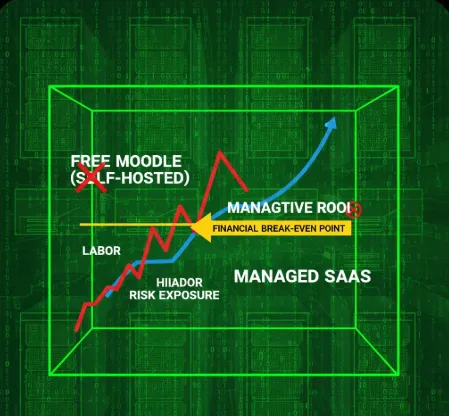
A new thread on Reddit has highlighted an often-overlooked offer in the EdTech market: free installation of Moodle, provided you purchase and manage your VPS hosting with a provider like Cloudzy. The proposal seems strong at first sight. You are provided with a working LMS with no technical setup fee. You own the hosting. You control billing. No subscription fees to use the platform regularly. This is a strategic victory for the teachers, trainers, and small organizations that are attempting to cut expenses. But under the same offer, there is a larger question of operation that many learning professionals do not find out until it is put into practice: who maintains the infrastructure when the installer is gone? This paper examines the structural, technical, and strategic realities of free Moodle setups offered, so you can make a better-informed decision based on long term sustainability rather than short-term savings. Why Moodle Has Remained the Favourite of Most Educators Moodle has been credited with reason all over the world. It is free, open-source, and can be customized, and is heavily used by universities, corporate L&D departments, and individual course authors. Its architecture enables institutions to create very structured learning paths, deploy powerful assessment frameworks, and have third-party extensions. Strategically, Moodle is symbolic of ownership. You are not bound to per-user SaaS cost. You retain control over data. You will define the system to fit your teaching philosophy. In the case of small organizations, start-ups, and pilot projects, this appears perfect. You do not need to spend money on costly LMS subscriptions to receive complete freedom. But as much as autonomy is accompanied by responsibility, the responsibility also usually falls outside of pedagogy into the area of server administration. The Least Understood Infrastructure Layer When a person claims a free Moodle setup, the most they are likely to give in this case is an installation and preliminary setups. They can set up the database, create access to the administration, and make the platform available to your server. However, the server itself exists on a Virtual Private Server (VPS). Cloudzy is one of the VPS providers that will provide you with a dedicated virtual environment in which Moodle will run. This is an environment that is powerful and flexible. Active management of it is also necessary. When you decide to go self-hosted, you are going to become responsible for: These are not a single-time activity. They are repetitive working processes. These duties would be considered non-core competencies to professionals with training in education, instructional design, or corporate training strategy. The emotional tension is created when you start not caring about course quality but server diagnostics. The Psychological Effect of Technical Overload The initiation of LMS by many course creators is quite enthusiastic. They have visions of organized modules, measures of learner interaction, and development. The technical backend is seen as an obstacle in the form of a setup that is temporary and can be overcome. But there is no single barrier to infrastructure complexity. It is ongoing. In cases where the plugins are not compatible after the updates, when the web hosting environment starts to run poorly in relation to the load, and when a change in the version of PHP starts to disrupt the functionality, then that is the moment that the learning project turns into a technical troubleshooting project. This change has an impact on motivation. It delays course launches. It introduces uncertainty. Practically, the same sentiment is often expressed by many teachers: “I just wanted to teach. I did not anticipate that I was going to be a system administrator.” This affective interference does not constitute a capability failure. It is a conceptual mismatch between the pedagogical knowledge and the management of infrastructure. This Is the Real Price of Free Open-source applications such as Moodle are affordable in terms of money, as no licensing fees are involved. However, open-source does not kill the cost of operation. Time, risk exposure, and strategic distraction are part of the total cost of ownership. Time cost is accrued when troubleshooting takes the place of instructional development. Risk exposure will be high in case security updates are postponed or configured improperly. Strategic distraction is where planning of growth takes the form of postponement on grounds of technical instability. Economically, it is not about the fact that Moodle is free. The issue is whether unmanaged hosting fits within your organizational ability. Technical maintenance in most small teams is reactive and not proactive. Issues are handled when they occur instead of being averted by managing systems in an organized manner. When Self-Hosted Moodle Will Be the Best Choice The problem of oversimplification should be avoided. Self-hosted Moodle can be strategically strong. Companies that have in-house IT knowledge tend to have complete control over their servers. Open-source architecture may be preferable to universities that need compliance customization or sophisticated development of their plugins. Learning and development departments that have DevOps in place can use Moodle to easily integrate into existing infrastructure ecosystems. The VPS hosting is not an intimidating issue in such settings. It is expected. The decisive difference is in the readiness of operations. In case your organization possesses the technical literacy and maintenance expertise that is needed, self-hosted Moodle can save long-term licensing expenses and expand the freedom of customization. This lack of such preparedness makes infrastructure a bottleneck. The Greater EdTech Dilemma: Power Versus Identity This discourse is a manifestation of a bigger trend in digital learning ecosystems. Companies have a strategic dilemma of either ownership or convenience. Autonomy is provided by self-hosted systems. Managed SaaS solutions are easy. Data control and customization are possible through ownership. Particularity saves on the complexity of operations. There is no superiority in either of the two models. The right model will require consideration of scale, resources, and long-term goals. But a large number of small learning projects fail to realise the complexity of the infrastructure that grows exponentially as the number of users grows. What might be a

Why Modern EdTech Still Fails to Create Real Skill Transfer
We drew inspiration from a conversation on Reddit (https://www.reddit.com/r/RethinkingEdTech), where educators, instructional designers, and EdTech professionals questions whether AI is truly transforming learning or simply digitizing traditional models. The EdTech sector has never been screeching. AI-driven platforms are scalable to personalization, predictive learning analytics dashboards purport to claim. Adaptive systems proposed to be able to cognize all learners. Since the entire LMS ecosystem is a niche AI authoring tool, the innovation seems insatiable. But there is one underlying question: Are we really changing the way people learn, or is it merely that we are just digitalizing old ways of instruction? This tension is likely to have been felt by you, should you work in the field of education, corporate L&D, product design, or instructional design. Completion rates increase, dashboards are impressive, and engagement metrics are healthy; however, there are still performance gaps. Students continue to have application problems. There is an irregular transfer of skills. Motivation fluctuates. This paper will discuss: How EdTech Produces the Illusion of Innovation Platforms such as Coursera, Udemy, and enterprise LMS providers, including Moodle, have become increasingly available to digital learning around the world over the last decade. In recent years, AI-driven systems and generative tools have enhanced the speed at which content is created faster than ever. And transformation is not speed. Most of the modern AI-driven learning systems are based on conventional learning designs: We have, in fact: The learning architecture is one thing that we have not redesigned on a regular basis. The basic assumptions have not violated: What Does It Indeed Mean to Have AI Understand a Learner? Another marketing assertion that has been repeated the most in AI in education is that systems are capable of understanding learners. What, however, is the cognitive meaning of understanding? Human learning shaped by: Modern AI personalization can be based on behavioral data: This is not understanding. It is pattern detection. Genuinely learner-centered AI system, such a system should have to combine: Unless the learning science is integrated into designing the system, AI is still a recommendation algorithm that is placed over the conventional e-learning systems. The Places Where Current EdTech Approaches Are Falling Short Content Over Competence Content libraries are costly to most organizations. Courses are made available in thousands. However, there is still a marginal performance improvement. Why? The exposure to information is not necessarily the same as the acquisition of skills. Competence requires: When the amount of content in learning systems is more important than the experience design, the outcome is superficial learning. Metrics That Mislead Dashboards filled with: These are administrative measures, not performance measures. Measures that are rarely taken within organizations are: When we maximize on the wrong measures, systems that promote conformity as opposed to expansion will be developed. Overspecification of Automation at the Cost of Human Anchoring In automation with AIs, friction in operations is decreased. Nevertheless, learning is not entirely mechanical. It is deeply psychological. Humans learn through: Transactional interaction can be minimized by completely eliminating the human layer. EdTech should not be a human-free field in the future. It should be human-augmented. The Ceaseless Dimension That We Are Missing Learning is not simply a mental activity. It is a reconstruction of identity. When a learner acquires a new skill, they do not think that they are simply learning something; they are redefining their own identity. The existing AI-based systems seldom consider: These are factors that have a drastic impact on the learning results. Unless technology-based platforms emphasize psychological variables and content sequencing, engagement will not increase despite an advanced level of technology. Scaling vs. Impact: Are We Designing to Be Scalable? Scalability is commonly favored in corporate Learning and Development. Thousands of learners have to be dealt with by systems. The content should be able to be deployed fast. Scalable design is not necessarily effective design. True impact requires: These functions can be supported with the help of AI only in the case that technology is guided by instructional design rather than vice versa. What Learners Are Really Searching Analyzing the tendencies in search behavior, learners are more and more seeking: Dissatisfaction found in these searches. More content is not what people are requesting. They are seeking: This signals an opportunity. A Problem-Solving Framework of Rethinking EdTech We have to have a structural change in case we are ambitious about changing learning in the era of AI. Step 1: It Begins with Performance Gaps, Not Content Libraries Determine what learners are unable to do and not what they have not read. Start with the design backward. Step 2: Integrate Sciencing into AI Systems Integrate: These are the dynamics that AI is supposed to arrange. Step 3: Redefine Personalization It should not be personalization, as in recommended videos. It should mean: That calls for interdisciplinary cooperation between: Step 4: Measure What Matters Shift metrics toward: In the absence of redefining success indicators, surface engagement optimization will continue. How AI Can Be Used in the Future: Human-Centered, Evidence-Driven, Performance-Focused AI is not the problem. Possibly, unquestioned assumptions are. Technology in education should incorporate: This is not about increased automation.The aim is a higher level of capability development. In case lecture-based models are recreated online, students will still be left unfocused no matter how advanced the technology of the platform becomes. The Reason Why This Conversation Is So Important Now The market of EdTech is expected to grow fast in the next five years. Organizations are also spending a lot of money on AI-based training systems. However, reinvestment without redesign is a chance to strengthen inefficiencies of scale. This is the time to take a pause and ask: Summary: Before We Scale, It Is Time to Rethink There is unmatched potential in the age of AI. Technology in itself does not change learning. Transformation requires: Faster content production will not be the true competitive advantage if you are building platforms, creating learning experiences, or leading L&D strategy. It will be the measurable performance impact based on learning

How to Break Into Corporate L&D in 2026: A Complete Guide for Teachers
As much as it can be exciting to move to working in corporate Learning and Development (L&D) as a teacher, it is not what most people envision. Having been in a classroom for many years, you may think that your teaching capabilities will easily be applied in the business world. The truth? The 2026 corporate L&D environment is now dramatically different, and the expectations should be clearly known so as not to be disappointed, frustrated, or waste time and resources. I have more than 20 years of experience in instructional design projects, learning technology implementation, and am currently running my own business of EdTech. The blunt version here is the following: in order to make the successful move into corporate L&D, you must have the experience of teaching, but you must also be able to think as a Performance Architect. https://www.reddit.com/r/edtech/comments/1r88coi/want_to_break_into_corporate_ld_an_honest_reality/?utm_source=share&utm_medium=web3x&utm_name=web3xcss&utm_term=1&utm_content=share_button The Change in Corporate L&D: Teaching to Driving Impact In the past, educators were employed in many companies to design training programs. The belief was merely that since one can teach, he/she can train employees. However, in the current day, corporate L&D is no longer pedagogy-based but performance-based. It is no longer a matter of content delivery but creating quantifiable business impact. Practically, this will imply that your success will be measured in terms of whether your programs have: …rather than how much participants liked a course. It is not sufficient to teach adults anymore; companies desire Operational Excellence. Think Beyond Lesson Plans: Go With ROI and L&D When you have a teaching background, lesson objectives and test scores will probably serve as your main measurements. The Kirkpatrick Model of corporate L&D establishes the impact measurement criterion. This model consists of four levels: Level 1 & 2 (Reaction & Learning) These are not new to teachers – the participants like the session and can remember. While significant, this is not sufficient to leave a strong impact on corporate stakeholders. Level 3 (Behavior) The most important question here is: What do learners do differently after training?Can your program: Level 4 (Results) This is the final measure. Will your training: The amount of time that a highly paid employee spends on irrelevant material is a direct financial loss. Lesson: Be ROI-driven, not outcome-based. When you can demonstrate measurable change in employee behavior or business performance, you are immediately a strategic partner, not a cost center. AI Fluency Is Expected, Not Optional Corporate L&D in 2026 is connected with technology. Manual content creation and the use of instructional design tools alone is not enough. Modern L&D practitioners are expected to coordinate AI tools to accelerate learning content development and improve learning outcomes. AI allows you to: Firms are no longer impressed by fixed, standard, one-size-fits-all modules. They value dynamic learning environments in which content adapts to the learner’s context and performance requirements. Managing in the High-Pressure Corporate Environment The business stakeholder environment is fierce. You will work with: They know what is important: close the performance gaps. Deadlines are not negotiable, particularly during product launches or compliance updates. This differs from a classroom setting. It is not about being “nice” or following a syllabus; it is about delivering meaningful interventions under strict deadlines. Teachers entering corporate L&D must embrace agility and operational thinking. Resumes Are Not as Important as Portfolios In corporate L&D, your portfolio speaks louder than your CV. Hiring managers seek problem-solving evidence rather than educational qualifications. Your portfolio should demonstrate: Example: For integrated sales onboarding: This demonstrates systems-level thinking, which companies highly value. The Salary Reality Check Even with extensive teaching experience, entering corporate L&D may mean a salary reset to an entry-level position, as the industry prioritizes business experience over educational tenure. The advantage? Long-term growth potential. Corporate L&D offers: Being realistic prevents frustration and allows strategic career planning. How to Become the Teacher-to-L&D Pivot: Action Plan How EduAssist Can Benefit You in Transition Moving from teaching to corporate L&D is challenging, but EduAssist bridges the gap between educational expertise and corporate performance needs. With our platform, you can: With EduAssist, teachers can confidently transition to corporate L&D with a clear roadmap and industry-ready skills. Frequently Asked Questions Q1: Can teaching experience help me make it to corporate L&D?A1: Teaching provides foundational skills, but corporate L&D focuses on measurable business outcomes, performance improvement, and technology fluency. Translate educational successes into business metrics. Q2: Do I need to know AI for corporate L&D?A2: Yes. AI is no longer optional. Companies expect professionals to use AI for content creation, adaptive learning, and prototyping. Q3: How do I demonstrate ROI in my portfolio?A3: Highlight outcomes like reduced time-to-competency, lower error rates, or improved productivity. Case studies, simulations, and ecosystems are more persuasive than slide decks. Q4: Will I be underpaid initially?A4: Possibly. Even experienced educators may start as juniors. Focus on skill development, growth potential, and long-term impact rather than initial salary. Conclusion The 2026 corporate L&D environment demands more than traditional teaching skills. Success requires: Programs like EduAssist provide the guidance, portfolio development, and skill-building needed to stand out in a competitive market. Remember, in corporate L&D, success lies not in teaching it lies in designing for impact.

Small Team Free LMS: Smart cost saving or Risky shortcut?
For most small organizations, the process of selecting a Learning Management System (LMS) appears to be a distinctly complex one. You do not require outlay dashboards.Multi-layered reporting is unnecessary.You do not have to have a specific customer success manager. You only require an effective system that will get your team to learn, monitor progress, and develop without draining your budget. However, when small groups start investigating the possibilities of LMS, they soon find out that it is frustratingly easy to come across the products that are sold at prices that are ten times higher than the scale of the companies they are designed to serve. This tends to raise one significant question: Should we opt to use a free LMS? Yes, it is not that simple, yes or no. It will rely on your organization, development strategies, and objectives of training. Let’s examine this carefully. Why LMS Pricing Feels Misaligned for Small Companies A majority of LMS systems have been initially created to serve big businesses. The characteristics that are represented in their pricing include: Team does not need most of these features in a team consisting of 10 to 20 people. But the pricing model usually presumes that you require them. This creates a gap. Small organizations believe that they are paying for a complicated system that they do not need. Consequently, free LMS systems are attractive. However, before leaping, it is worth knowing the areas where the free tools can be effective and the areas that they can impose restrictions. When a Free LMS Works Well Free LMS can be very effective when it is provided under some circumstances. When you have an understaffed and stable team, and your training requirements are simple (onboarding materials or product training, internal skills training, etc.), then a free system can be highly effective. Most of the current free platforms have: In the case of lightweight training structures, this is adequate. Also, free systems have less financial pressure in the initial stages of growth. In the case of startups and lean organizations, such flexibility may prove useful. Nevertheless, it should be appropriate to the future expectations, not only the needs at the moment. In which ways can Free LMS Platforms be constraining? Free tools unintentionally limited in nature. Such restrictions do not necessarily manifest as soon as possible. When you start expanding your content library, storage limits might start to show themselves, particularly when you are using video-based training or using SCORM packages. Scalability can often be defined by capacity and tiers of features and platforms like SCORM Cloud are handy to host structured learning content. User constraints may also become an issue if your team increases. A system that can use comfortably by 12 people may need upgrading to accommodate up to 25. Another typical limitation is reporting. Basic completion tracking is mostly free, although detailed exports or advanced analytics can a paid tier. This can be important, in case your leadership team anticipates a tangible ROI of training. Encouragement is also vital. Free plans are usually based on documentation and community forums. In the case of training being critical to operations, a slow response to support may affect productivity. All these problems do not imply ineffective free platforms. They just imply that growth should be taken into consideration. The Often-Ignored Cost: Migration Migration is one of the most underestimated risks of LMS choice. In case your organization outgrows a free platform, it has to rebuild its courses and move users, re-uploading the materials, and possibly losing the historical data. Even systems such as Moodle, which provide flexibility and control over them, still need administrative supervision during transitions. Migration is not only technical, but it also represents a time and attention drain. In the case of small teams, the cost of the software can be lower than the cost of operational disruption. Hence, the ruling must incorporate a 12–24 months growth projection, and not only short-term feasibility. Small Teams: Can Gamification Be Useful? When applied in an intelligent manner, gamification can be advantageous. In the case of small teams, the less obvious reinforcement techniques, like: can help boost engagement. Due to small teams, recognition is more personal. Nonetheless, not all company cultures will work well with aggressive competitive factors such as open leaderboards. In tight-knit groups, the performance comparison may demoralize certain members of the team. Learning objectives should be gamified rather than being distracted. It can be motivating when it is combined with proper instructional design. It may have a diminishing effect when overused. Do Small Organizations Always Need a Full LMS? Not necessarily. Alternative solutions can be effective in the event that your training material is not challenging and does not entail organized learning routes, sophisticated reporting, or discipline records. Full LMS architecture may not be necessary in structured knowledge hubs or lightweight course delivery systems. Nevertheless, when your company is based on the quantifiable skill growth, certification tracking, or processes of onboarding, an LMS offers transparency and responsibility. The choice is not as much in the company size as in the complexity of training. How to Decide: A Practical Evaluation Approach Before choosing a platform, ask these questions: In case your responses hint at stability and simplicity, a free LMS can be the right choice. In case growth, compliance, and integration are in focus, investment in scalable infrastructure can prevent disruption in the future. Sustainable Learning Systems Strategic Guidance The greatest error that organizations commit is in selecting software without having an idea of their learning strategy. Your training objectives should be supported by technology rather than set by technology. At EduAssist, we are getting involved with small and developing organizations to evaluate the needs of learning prior to proposing tools. Rather than retrenching to the enterprise systems, we are concentrating on right-sized solutions in accordance with the operational maturity, growth expectations, and budget realities. The approach assists organizations in saving on avoidable expenditures, eliminating the issue of further migrations in the future, and creating sustainable learning

Why Early Grades Struggle with E-Learning: The K2 Perspective
E-learning implemented as a new and adaptable method of learning. Nevertheless, in the case of the use of K2 (Kindergarten 2) and early primary, several institutions and families encounter serious difficulties. Children at the K2 stage are five to six years old. They are acquiring elements of cognitive, behavioral, and emotional bases. Their focus, control over digital devices, and ability to follow the instructions in structured online formats are still developing. Lack of acknowledgment of these developmental realities when designing the kindergarten online classes results in frustration instead of engagement. Parents feel overwhelmed. Teachers feel stretched. There is operational pressure on administrators. Digital learning in itself is not a problem. The problem is the implementation and design of K2 e-learning. K2 learner Developmental needs The K2 learners taught mostly by interacting, repeating, visually stimulating, and guided learning. They have a short attention span, and their learning has a strong relationship with physical and emotional involvement. The developmental discrepancy is evident when a long virtual session or the delivery of passive content is the foundation of early childhood digital education. Children lose interest easily since the model of learning is not in line with the information processing of children at this age. K2 e-learning should be based on brief learning cycles, narrative instruction, prompt interaction, and systemic reinforcement. These elements considered to make the successful implementation of the best technology platform meaningful without them. The Secret Tax on Parents in K2 Online Learning The level of parental involvement that need is one of the major challenges of e-learning at K2. In contrast to older students, K2 students do not have the ability to open platforms on their own, work with assignments, and solve technical problems. This puts pressure on families who can employ. Under the conditions when the hybrid schedules are variable, or the virtual classes demand uninterrupted supervision, the parents should reorganize work patterns to fit the needs of learning support. In the long run, this generates emotional and professional tension. The participation of parents in online learning is imperative at this point, but it should be organized realistically. Schools must have communication networks, foreseeable time structure, and streamlined processes that acknowledge the truth of contemporary households. The responsibility will be all on families without institutional support. Digital Education Instructional Design Iss The biggest reason behind the failure of K2 e-learning is the fact that technology is implemented too fast, and instructional design is not properly adjusted. Most institutions rushed to adopt LMS platforms, in which they thought that all they could transfer to the classroom would be adequate online. Nonetheless, online learning platforms demand a reconstruction of pedagogy, in particular that of early childhood. The instructional design in K2 environments should take into account the attention span, engagement triggers, cognitive load, and emotional presence. Equally, this lessens the effectiveness of repeating the classroom lectures in a virtual environment. The digital classroom is reactive as opposed to structured when learning experience design is not present. The attendance reduces, the level of participation declines, and the learning outcome impairs. LMS Implementation in the Absence of Pedagogical Alignment The learning goals should not substitute but assisted by technology. If LMS implementation is made without teacher training, usability test, accessibility validation, and clear operations planning, there will be more confusion throughout the system. The usability is especially important in online classes, K2. Interfaces have to be easy, navigation should be easy for the user, and directions should be easily understood by the parents and children. Educational establishments investing in systematic LMS implementation plans experience increased participation and minimal system crashes. Companies that do not take this step will often end up in the same frustration. Virtual Classroom Management at the Early Grades A virtual classroom with K2 learners will not manage using the same set of skills as with older students. Children at a young age react to the well-organized schedule, visualization, and brief interactive periods. Live sessions that last longer, uncontrolled audio settings, and the absence of participation criteria can all be overwhelming to both the teachers and students. Digital facilitation is an acquired aspect. Educators require models of engagement, microlearning approaches, and hybrid cohort administration methods. In the absence of this support, it would be hard to maintain classroom stability. Behind the Scenes Operational and Staffing Pressures Most of the K2 e-learning predicaments are indicators of underlying real operations. The lack of staff, the absence of training in digital pedagogy, the fast change of the policy, and the lack of communication can all affect the quality of the implementation. These are hardly deliberate difficulties. Nevertheless, unplanned and unreviewed, small holes become systemic problems. Learning institutions should have strategic partners who are aware of learning science and execution. EduAssist Strengthens K2 E-Learning Systems At EduAssist, we consider early childhood digital education as a niche design issue. Our knowledge of instructional design, the implementation of LMSs, quality assurance, and learning analytics enables institutions to shift from a response to problems rather than methodical enhancement. Our starting point is matching the learning objectives to the principles of developmental psychology. K2 courses are redesigned to encompass interactive storytelling, brief engagement cycles, and models of reinforcement-based assessment. The next thing is to make sure that LMS platforms are put in place strategically. This consists of accessibility compliant, usability testing, SCORM, and xAPI validation, and formalized teacher onboarding programs. Parental communication design is also important. Having clear weekly schedules, having simplified login procedures, and responsive support systems makes life less stressful and engages better. Through learning experience construction and operational planning, EduAssist can create sustainable, connected digital learning structures out of fragmented systems. Does K2 E-Learning improve over time? Students gain independence and digital literacy as they go up the grades ladder. Nonetheless, early experiences in the K2 have a major effect on subsequent patterns of engagement. Disengagement habits might persist when digital learning in the early grades is ill-structured. It creates confidence, flexibility, and digital capability when purposefully planned out. Its aim is not at

When E-Learning Feels Unrealistic: A Practical Fix for Modern Workplaces 2026
With the emergence of Learning Management Systems (LMS) and e-learning modules, corporate training has taken on a new dimension, as it is now scalable, measurable, and engaging to employees. Despite progress, one problem remains, namely, employees frequently feel that e-learning does not accurately reflect the actual reality of their working experience. An obvious case study emerges in the conversation between the retail employees, including Walgreens staff, complaining about training courses that talked of ideal employees, a seamless work process, and a harmonious work team. As a matter of fact, employees often have to contend with small staffing levels, restricted budgets, and unreliable workloads. In case training does not correspond to these realities, the engagements decline, retention declines, and confidence in corporate learning programs declines. Such a divide underscores a very important dilemma in instructional design, namely that with e-learning, readers and writers tend to focus more on theories than on practice. It is imperative to bridge this gap, and EduAssist offers viable solutions to make training realistic and effective. The E-Learning Problem of Unrealism The main cause of unrealistic e-learning is the lack of connection between the instructional design and the functioning scenario. Most training programs based on idealistic conditions, full teams, adequate staffing, and smooth processes, which rarely attained in the normal work environment. Gamification, badges, and interactive elements might be sufficient to offer short-term engagement, but they will never be able to make up for content that does not seem relevant to the real workplace setting. It takes employees very little time to see that the situations are not indicative of the pressure of their positions. In retail, such as in the case of limited staff or budget, personnel can be called upon to do more than one role at a given time. E-learning, which does not consider these realities, results in frustration and disengagement, which sabotage the intended effects of training. In addition, many conventional e-learning solutions do not provide frontline feedback. In the absence of employee feedback, training can be fixed and thus be out of date as business processes evolve. This lack of connectivity to training programs lowers training credibility and lowers turnover of investment to organizations. The EduAssist Way of Bridging the Gap in e-Learning The EduAssist takes corporate training differently. It does not concentrate on idyllic scenarios but rather on realistic performance-based learning. The system incorporates operations knowledge into the entire process of instructional design to make it such that training is based on the challenges that employees deal with in reality. Context-Based Scenario Design EduAssist relies on Context-Based Scenario Design. Training modules imitate real workflows, staffing patterns, and pressures of the real workplace by using real workplace data. The contents that employees work with reflect on their real-life experiences and increase the retention of those contents and the ability to apply skills effectively. Budget-Aware Simulations Budget-Aware Simulations make sure that a scenario is viable and within the realistic operation limits. Problem-solving is practised in real-life situations, which makes the employees prepared to work effectively even in the case of scarce resources. Feedback-Driven Course Evolution Another major component is Feedback-Driven Course Evolution. Frontline staff members will give feedback on the accuracy and relevance of scenarios, making the content up to date and credible. During the training, continuous updates as a result of feedback enhance the level of trust and involvement, which makes the training more effective. Performance-Related Measures Lastly, EduAssist focuses on performance-related measures. The idea of success is reflected in both the completion of the course and the skills of the employees to be used in the real world conditions. Monitoring the efficiency of operations, the reduction of errors, and the usage of the skills enables the organizations to judge the training effectiveness in accordance with the measurable results. The Reasons Why Realism is Better than Gamification Although gamification, points, badges, and leaderboards can be motivating to learners, they cannot substitute relevant and practical content. Real-life training in work is more effective, and knowledge is retained by employees better and is applied better when the training is related to actual challenges in operation. Realistic e-learning enhances participatory learning since it shows that the organization is aware of the day-to-day plight of the employees. It also enhances retention in that solutions offered are direct to the implementations by the learners. Conclusively, realistic training leads to the realization of quantifiable performance gains and operational efficiency, offering a better payoff as compared to engagement gimmicks. Best Practices with EduAssist Instructional Design EduAssist adheres to a series of best practices so that e-learning can be feasible and believable. Needs Analysis Needs Analysis: Determine operational issues before planning content so as to make it relevant and focused. e-Learning with Scenarios Learning with Scenarios Scenarios should be work-relevant and realistic rather than idealized. Constant Feedback Loops Constant Feedback Loops: Incorporate insights of frontline employees to keep the content accurate and credible. Performance Metrics Performance Metrics: Evaluate success on skills application and improved operation rather than the completion. Periodic Content Update Periodic Content Update: Periodically refresh courses as the operational realities are changing to make sure they remain relevant. These plans make corporate training interactive, engaging, as well as practical, credible, and effective. The EduAssist Advantage EduAssist makes e-learning more of a real-life, measurable, performance-based exercise rather than a theoretical one. EduAssist is the only way to guarantee that employees not only graduate from training, but also put into practice what they have been taught. The training that reflects the work environment will create trust, increase engagement, and skills retention. When organizations embrace this strategy, they are able to apply knowledge more effectively, enhance operational efficiency, and achieve actual improvements in performance. Call-to-Action Are you willing to make your corporate training theory-free, practical, interesting, and quantifiable? Discover how EduAssist can: Begin to streamline your e-learning today and make sure that all employees are ready to accept the realities of their jobs. [Contact EduAssist / Schedule a Demo / Visit Website]. Conclusion Unrealistic e-learning is not just a minor
Practical AI Learning in 2026: How to Build Real-World Skills That Matter
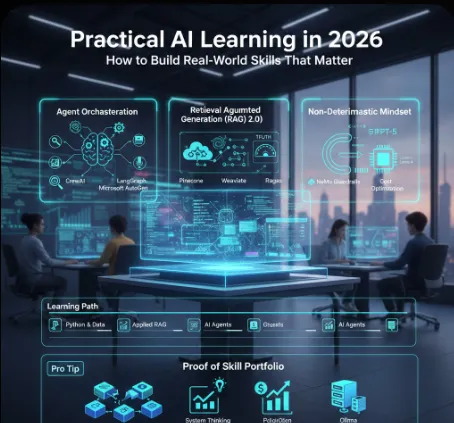
The AI is not a new tendency anymore. It is highly embedded in the daily business in 2026. AI is employed to analyze search intent and automate content pipelines by marketing teams. It is used by business leaders to make predictions and decisions. AI systems allow content creators to expand production without reducing quality. However, even with its ubiquity, a significant number of professionals have not been sure of how they could learn AI in a manner that would ultimately result in practical application. There are a plethora of tutorials, certifications, and tool demonstrations on the internet. Yet, useful ability is not a result of exposure. It derives from organized practice. The best approach to studying AI in 2026 is to consider it as a business ability and not as a technical interest. Transitioning from focusing on AI as a business skill, it’s important to recognize the Confusion with AI Learning. Organizations like OpenAI, Google, and Anthropic have made the AI ecosystem grow at a high rate. Advanced AI is now accessible to non-technical users, and tools such as ChatGPT and Claude have enabled this. In the meantime, systemic search-based applications like the Perplexity AI are altering information discoveries and corroborations. Professionals can be caught in two traps with all the available tools and changing features. Others read interminable theory without putting it into practice. The other people try things randomly without knowing the logic behind them. Nor does one construct transferable, enduring ability in either. The practical AI competence needs form and practice. Artificial Intelligence is Trained by Process, Not Input. Quite a few newcomers pay attention to better prompts. Although prompt engineering is relevant, it is only a minor aspect of applied AI. In the business context, artificial intelligence is not commonly applied to individual outputs. It is ingrained in processes. Think of a marketing department that is trying to enhance organic visibility. Some of the possible applications of AI include clustering keywords, competitor analysis, outlines, writing optimized content, and performance tracking. These steps are connected. The workflow is important, but not the personal prompt. Once you start to learn to design multi-step AI systems that make a connection between research, production, and optimization, then you start to think like a strategist as opposed to a user of the tool. This shift is critical in 2026. Begin with Background Knowledge. You do not have to graduate into a machine learning engineer. Nevertheless, the simplest knowledge of the mechanism of AI models can significantly enhance actual performance. Large language models respond to questions depending on the probabilities learnt on huge datasets. They are not humanly aware of information. They predict patterns. This is the reason why there are hallucinations, and the reason validation is crucial. Knowledge of the context windows, token limits, model bias, and data privacy will confer credibility and minimise operational risks. Enterprises appreciate the services of professionals knowledgeable of the capabilities and shortcomings of AI systems. This theoretical basis promotes EEAT principles. You will be more reliable and authoritative when you demonstrate experience and experience with how the AI works. Select a single Industry Application and Go Deep. AI skills are contextual. General awareness of AI tools is unworthy compared to implementation in the domain. When working in marketing, you should look at the development of AI-based content systems, audience segmentation models, or automated reporting workflows. In case you are in the business operations field, you create AI-assisted dashboards, automation systems of documentation, or forecasting models. In case you are a content creator, create research acceleration pipelines and repurposing frameworks. The depth brings about differentiation. Employers are not looking after generic AI enthusiasts. They seek professionals who can incorporate AI into systems that can generate revenue or enhance their efficiency. Create Projects in Real Life to Existing Measurable Problems. The most viable means of acquiring AI is to address a specific problem. As an illustration, suppose that you want to triple blog conversions. You can create an entire workflow of AI-generated optimization, as opposed to merely requesting AI to write you a better article. You can apply AI to search intent, determine content gaps, create authority-based outlines, write content in accordance with the rules of SEO, optimize the EEAT signals, and optimize calls-to-action. In the long term, you calculate the growth of the traffic, the engagement rates, and the enhancement of the conversions. It is an educational process that cannot be learned through a single tutorial. It cultivates analytical, prompting, performance, and iterative discipline. These are the competencies that businesses invest in. Are AI Certifications Ever Worth It? The certification programs by AI may be worthwhile, though there are certain conditions. When a certification emphasizes much on theory and does not have practical projects, its practical effect might be small. But a program that is well organized and based on use cases and necessitates the construction of workflows that are deployable can hasten the learning. The actual issue is not whether there is a certification or not. Whether it goes between knowledge and execution. By the year 2026, the hiring managers are likely to be more interested in portfolios than credentials. An established AI project with quantifiable results may be superior to a certificate. Nonetheless, the formal programs are capable of offering guidance, structures, and authenticity along with the application in practice. The 10 AI Skills that Will Impact the Future (2026). Though AI tools are constantly improving, multiple core competencies add value regularly. The design of workflow automation is becoming significant since organizations desire to have scalable systems as opposed to single outputs. Efficiency and quality of output are improved due to strategic prompt engineering that aims at the achievement of business objectives. Integration of AI and SEO The integration of AI and SEO is increasingly becoming a critical issue because the discoverability of AI-generated summaries and search interfaces is affected. Governance awareness can be used to implement in a responsible and compliant manner. Most importantly, professionals are singled out by their performance optimization.

SCORM Construction Courses for LMS: Compliance Made Simple 2026
High-quality SCORM construction courses in LMS platforms have been required in the UK. Construction businesses, subcontractors, and manpower suppliers operate in a highly regulated industry where training on compliance is mandatory. To LMS providers and training organizations, the conundrum is quite simple: where can you find faithful, UK-oriented, and LMS-ready SCORM content that you can implement within a minimal amount of time and license according to the requirements? Most organizations spend so much on their LMS infrastructure without realizing the complexity involved in the acquisition of compliant content. Technology is not the real bottleneck: locating e-learning in the construction industry that complies with the UK regulations, is compatible with the SCORM reporting standards, and can be integrated with licensing models that are scalable. The Core Problem: Licensing, Compliance, and Compatibility There are usually three significant barriers to locating off-the-shelf LMS courses. Licensing Confusion First, licensing confusion. There are those vendors that permit internal usage. Others limit redistribution or white-labelling. Provided you intend to provide construction compliance training to your own LMS customers, as a subcontractor, or partner organisations, you must ensure that you check redistribution rights before you purchase. Ignorance of the terms of licensing may lead to contractual risks and business interruption. Regulatory Alignment in the UK Second, alignment of the regulatory UK. The training should be based on the advice provided by the Health and Safety Executive and should meet the requirements in some of the regulations, like the Construction (Design and Management) Regulations and Working at Height Regulations, in the United Kingdom. The courses that mention US OSHA standards might not meet the UK compliance standards. In the absence of proper localisation, the training might be discredited and indefensible at audit. SCORM Technical Compatibility Third, SCORM technology compatibility. Your LMS can be SCORM 1.2, SCORM 2004, or either. The course package should be in a position to monitor completions, assessment score and the development of the learner. Compliance documentation would not be reliable in the case of report failure. Inaccurate reporting is not a minor inconvenience in organisations that work in high-risk industries, such as construction, but a liability. TheEduAssist.com: Construction LMS Content Structured Solution TheEduAssist.com has solved these challenges by adopting a compliance-first, LMS-ready strategy. We offer off-the-shelf construction industry courses in SCORM that are UK-relevant, technically tested, and featured with flexible licensing arrangements. SCORM Course Catalogue Manual Handling of Construction, Working at Height, Asbestos Awareness, Fire Safety on Construction Site, PPE Awareness, COSHH Awareness, Risk Assessment and Method Statements, Electrical Safety Basics, and Site Induction Training are some of the modules in our construction training catalogue. All of the courses will be SCORM export-enabled, have structured assessments, and can be brought into LMS reporting. The courses are mobile-friendly, learner-friendly, and instructionally oriented according to adult learning needs as well as the UK terminologies and regulatory requirements. It will make sure that your training library is operational, safe, and compliance-ready. Quick and Simple Custom SCORM Course Development One of the myths surrounding e-learning is that the development of new courses is always a matter that takes months of output. Although the old-fashioned bespoke development can be time-consuming, the contemporary workflow of authoring can facilitate ordered, resource-efficient constructions without compromising the quality. Authoring Workflow TheEduAssist employs professional authoring software like Articulate 360 and Adobe Captivate to build SCORM-compliant courses in an efficient way. The first step is the definition of the learning objectives and mapping compliance requirements. We then implement modular instructional design templates, interactive situations, and validated assessment plans. Content is reviewed by subject matter experts to make sure it is accurate in regulation and sector-relevant. Lastly, testing of the SCORM package is done in LMS environments to ensure that reporting is possible before delivery. Since the process is based on a systematic blueprint and not an improvised approach, new construction courses can then be created within weeks, as opposed to months. That is why it will be fully possible to react promptly to new regulatory changes or individual training demands of clients. Hybrid Strategy: Purchase Ready-Made SCORM Course, Build on Demand A hybrid strategy is the most effective in the case of many LMS providers. Minimal SCORM building courses enable quick implementation as well as instant generation of revenue. Tailor-made modules offer brand differentiation and address the niche client requirements. An example would include an LMS provider based in the UK serving contractors in the UK with a core compliance module based on Manual Handling and Working at Height, licensed but commissioning bespoke induction training based on a particular construction site setting. This combination helps in minimizing development timelines, cost control, and integrity of compliance. The Importance of Accuracy in Construction E-Learning The construction industry is a hazardous industry in which safety training has a direct influence on the workplace welfare, law, and business image. Poorly formatted or inaccurate training may lead to regulatory oversight, fines, insurance issues, and operational delays. The UK regulatory frameworks are in line with the content, and this factor enhances the audit defensibility and proactive compliance culture. To make sure that each SCORM package is correct, operational, and can be deployed, TheEduAssist uses structured quality assurance methods and instruction design standards, as well as SME validation. Frequently Asked Questions Is it possible to resell SCORM construction courses to LMS customers? Yes. Redistribution county on the terms of an agreement can be encompassed in the licensing models. Are the courses UK-specific? Yes. The content complies with the UK regulatory frameworks and terms applicable to the construction industry. What are the supported SCORM versions? Packages of SCORM 1.2 and SCORM 2004 exist. Is it possible to white-label courses? Yes. Branding will be available based on licensing deals. What is the speed of creating a course on custom construction? Timelines of development are dependent upon extent, but with modern authoring frameworks, structured rapid builds can be achieved in weeks. Are there courses that have assessments and tracking? Yes. All the modules are assessed and tested to ensure proper LMS reporting. Conclusion Buying