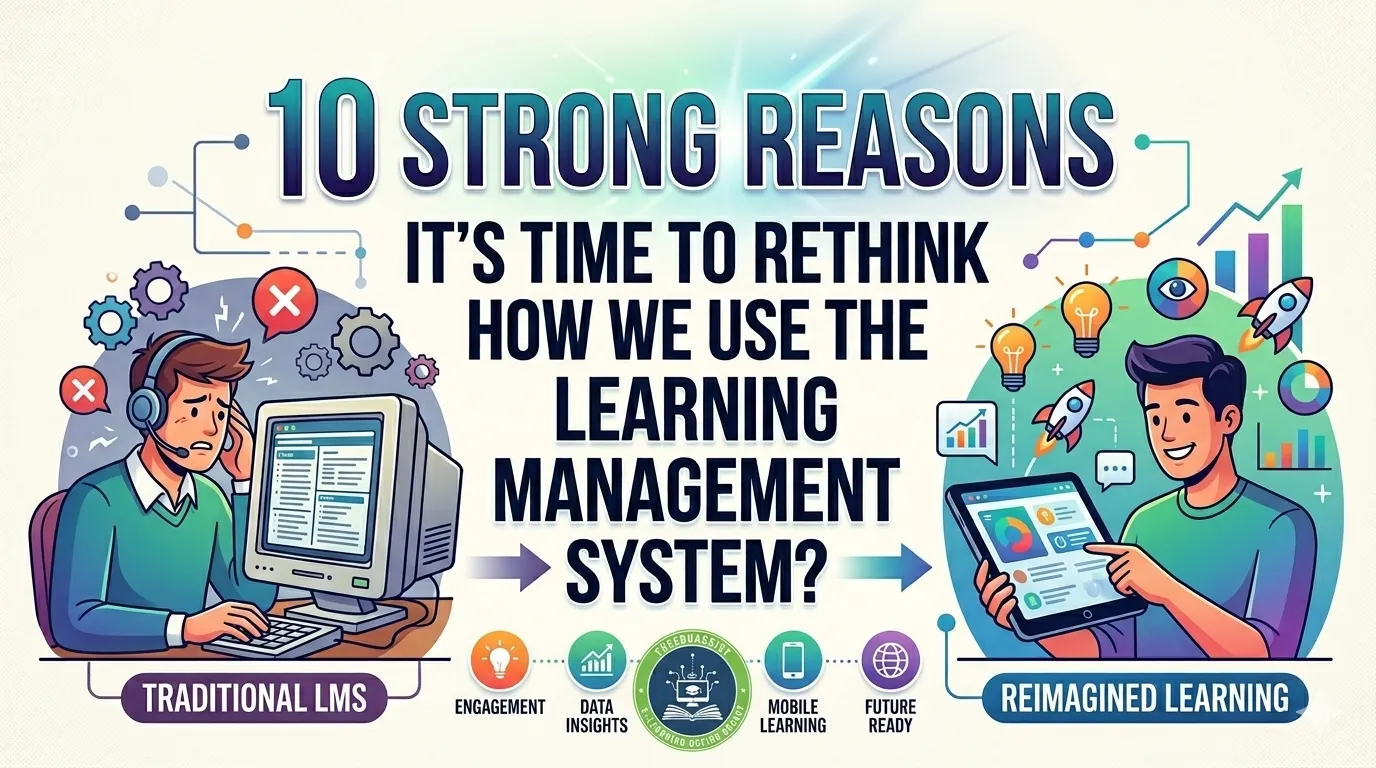
The Learning Management System is no longer just a digital filing cabinet for courses, quizzes, and certificates. Organizations and institutions are increasingly evaluating LMS platforms by how well they support engagement, accessibility, mobile learning, analytics, and real learning outcomes rather than simple content delivery.
For The EduAssist, this shift matters because the future of learning is not about using an LMS more often, but using it more intelligently. A modern Learning Management System should support flexible learning paths, performance tracking, collaboration, and skills development in ways that match how people actually learn and work today.
Why Rethink the LMS?
The traditional LMS model was built around administration, not learning experience. In many institutions, it still functions as a repository for files, assignments, and compliance tasks, while learners and instructors struggle with poor usability, weak engagement, and limited flexibility.
Studies and reviews of LMS adoption consistently point to common barriers such as inadequate technical support, insufficient training, negative attitudes toward technology, and poor infrastructure. These issues suggest that the problem is not only the platform itself, but also how the Learning Management System is planned, implemented, and used.
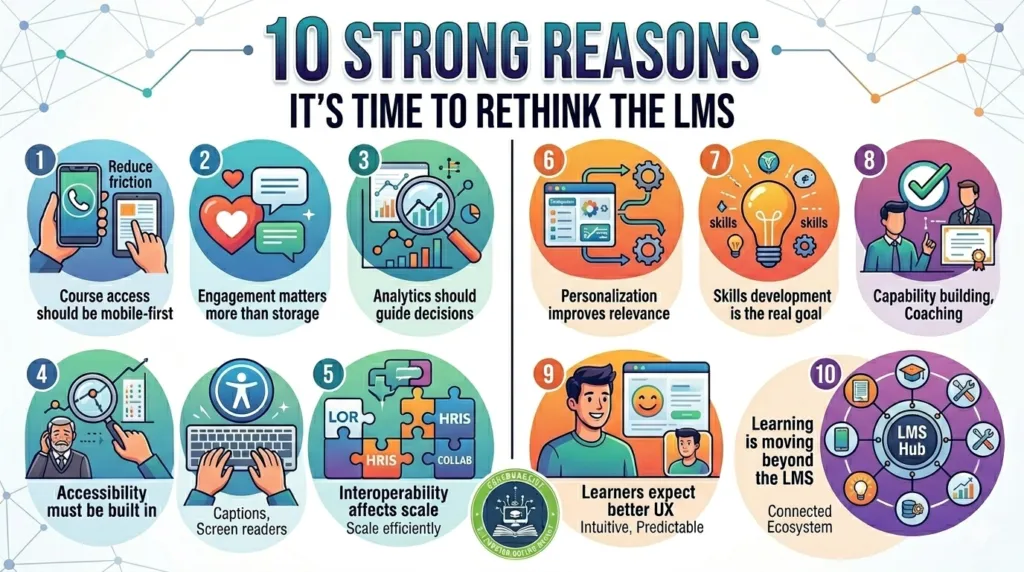
1. Course access should be mobile-first
Learners now expect to study on phones and tablets, not only desktop computers. Research on mobile learning and corporate training shows strong demand for mobile access, and modern LMS platforms are increasingly being judged by how well they support responsive design and on-the-go learning.
If your Learning Management System is difficult to use on a mobile device, it creates friction before learning even begins. That friction can reduce participation, lower completion rates, and weaken the learner experience.
2. Engagement matters more than storage
A Learning Management System should do more than host content; it should create interaction. Research indicates that LMS use is associated with student satisfaction and can support self-directed learning and meaningful engagement when course design includes active learning opportunities.
This means that discussion, feedback, reflection, and practice should be built into the LMS experience rather than added as an afterthought. A platform with strong engagement design helps move learning from passive consumption to active participation.
3. Analytics should guide decisions
One of the strongest reasons to rethink LMS use is the rise of data-driven learning. Modern LMS reports can show completion rates, learner progress, assessment performance, compliance status, and training impact, helping organizations make better decisions about content and delivery.
Without analytics, the Learning Management System becomes a guesswork tool. With the right reporting, it becomes a decision engine that helps instructional designers, managers, and trainers improve outcomes over time.
4. Accessibility must be built in
Accessibility is not optional in a serious Learning Management System strategy. Research and accessibility-focused resources show the importance of screen reader compatibility, keyboard navigation, captions, and inclusive interface design for learners with different needs.
When LMS content is not accessible, learners are excluded from full participation even if the content is technically available. A better LMS approach puts accessibility into the design process from the start, not as a post-launch fix.
5. Interoperability affects scale
Many organizations work with multiple tools, repositories, and content systems, which means the Learning Management System must connect smoothly with other platforms. Research on interoperability shows that LMS environments can face gaps in how they exchange data with learning object repositories and external tools.
This is why integration standards matter. If an LMS cannot connect well with content libraries, HR systems, assessment tools, or collaboration platforms, it becomes harder to scale learning efficiently across departments or institutions.
6. Personalization improves relevance
Learners do not all need the same path at the same time. Modern LMS thinking is moving toward personalization, including configurable dashboards, adaptive pathways, and tailored content based on role, progress, or skill level.
Personalization makes the Learning Management System feel relevant rather than generic. It can reduce overload, improve motivation, and help learners focus on the next best action instead of navigating a crowded course catalog.
7. Skills development is the real goal
The World Economic Forum’s Future of Jobs outlook highlights rapid shifts in skills demand, especially in areas like technology, AI, and related capabilities. This reinforces the need for LMS platforms to support continuous upskilling rather than one-time course completion.
A modern Learning Management System should therefore function as part of a broader learning ecosystem that connects training to workforce capability. That means skills mapping, learning journeys, practice opportunities, and progress tracking matter as much as course delivery.
8. Compliance is not enough
Many organizations still use the LMS mainly for compliance training and certificate tracking. While that remains important, research and industry reporting suggest that LMS value is much broader when it supports coaching, learning reinforcement, and measurable development.
If the platform is treated only as a compliance engine, it underuses its potential. The smarter model is to use the Learning Management System for compliance, capability building, and continuous learning all at once.
9. Learners expect better UX
Usability issues remain a major reason people disengage from LMS-based learning. Research on LMS implementation and usability highlights problems such as difficult navigation, steep learning curves, and limited learner-centered design.
A strong Learning Management System experience should feel clear, intuitive, and predictable. If users need repeated instructions just to find content or complete an activity, the system is creating avoidable cognitive load.
10. Learning is moving beyond the LMS
Perhaps the biggest reason to rethink LMS usage is that learning now happens across many platforms, formats, and moments. Modern learning ecosystems include mobile content, microlearning, performance support, collaboration tools, and repositories that extend beyond the LMS itself.
That does not make the LMS obsolete, but it does change its role. The Learning Management System should become the hub of a connected learning ecosystem, not the only place where learning exists.
What The EduAssist can do:
For The EduAssist, the opportunity is to help clients move from an administration-first LMS model to a learning-first model. That means designing content, workflows, and learner journeys around engagement, accessibility, mobile use, analytics, and skills development.
A practical LMS strategy should include better course design, smarter reporting, stronger integration, and more learner-centered experiences. When these elements work together, the Learning Management System becomes a business asset rather than just a hosting platform.
Conclusion:
It is time to rethink how we use the Learning Management System because learner expectations, workplace needs, and technology standards have all changed. The best LMS strategy today is not about adding more courses; it is about creating a flexible, measurable, accessible, and connected learning experience.
For The EduAssist, that message can position the company as a strategic learning partner rather than only a content provider. The future of the Learning Management System is not simpler administration. it is better learning.
References:
- A systematic literature review of learning management systems in higher education suggests that LMS research is still heavily focused on administrative functions rather than deeper learning design.
Citation:
LEARNING MANAGEMENT SYSTEMS (LMS) AND E-LEARNING MANAGEMENT: A review of the literature. (2016). Revista de Gestão da Tecnologia e Sistemas de Informação. https://www.scielo.br/j/jistm/a/TT3Pk4mwkp5Cmmbf4NbfPvw/ - A comparative review of LMS research in Australia and China examined how empirical studies have been designed and analyzed over time.
Citation:
Kopp, B., et al. (2021). Learning management systems: a review of the research in Australia and China. Research in Learning Technology, 29, 1–15. https://doi.org/10.1080/1743727X.2020.1737002 - A more recent study found that LMS usability is linked to academic performance and learner satisfaction in higher education settings.
Citation:
Assessing the Effectiveness of the LMS in Enhancing Academic Performance. (2025). Scientific Research Publishing. https://www.scirp.org/journal/paperinformation?paperid=144757 - A critical review of LMS adoption literature highlights student readiness, implementation challenges, and institutional support as key factors.
Citation:
A Critical Review of Learning Management Systems: Identifying Students’ Readiness Toward the Adoption of Learning Management Systems in Higher Education. (n.d.). Human Resource Management Academic Research Society. https://hrmars.com/ - A bibliometric study mapped LMS research trends from 1991 to 2021 and showed that conference papers and English-language publications dominate the field.
Citation:
Shaikh, D. N., Chauhan, M. S., & Nikum, M. V. (2025). Learning Management System (LMS). International Journal of Advanced Research in Computer and Communication Engineering, 14(11). https://doi.org/10.17148/IJARCCE.2025.141130
FAQs:
1. What is a Learning Management System?
A Learning Management System is a digital platform used to deliver, track, and manage training or online learning in one place. It helps learners access content, complete assessments, and monitor progress more efficiently.
2. Why is a Learning Management System important?
A Learning Management System is important because it organizes learning, improves accessibility, and makes training easier to measure. It also helps companies and educators deliver consistent learning experiences at scale.
3. What are the main benefits of a Learning Management System?
The main benefits of a Learning Management System include centralized content delivery, better learner tracking, improved reporting, and easier course management. It also supports flexible learning for mobile and remote users.
4. How does a Learning Management System improve training results?
A Learning Management System improves training results by making learning more structured, trackable, and accessible. It also allows organizations to identify knowledge gaps and adjust content based on learner performance.
5. What features should a good Learning Management System have?
A good Learning Management System should have mobile access, reporting tools, user-friendly navigation, accessibility support, and integration options. Personalization and analytics are also important for better learning outcomes.
6. Is a Learning Management System useful for corporate training?
Yes, a Learning Management System is highly useful for corporate training because it supports onboarding, compliance, skill development, and performance tracking. It helps businesses train employees consistently and efficiently.
7. Can a Learning Management System support mobile learning?
Yes, a modern Learning Management System should support mobile learning so learners can access content anytime and anywhere. Mobile-friendly design improves convenience, engagement, and completion rates.
8. How can The EduAssist help with Learning Management System strategy?
The EduAssist can help businesses design better Learning Management System strategies by improving course structure, learner engagement, and training flow. It can also support content planning, reporting, and instructional design for stronger outcomes.
Authored By: Atiqa Sajid http://www.linkedin.com/in/atiqa-sajid-747b57137