
Master sales objections with practical techniques and real scenarios. This engaging Synthesia AI avatar training helps you confidently turn ‘no’ into closed deals.
Master Sales Objections: Proven Techniques to Close More Deals in 2026
Sales objection handling remains one of the most critical skills for any sales professional. Prospects rarely say “yes” immediately — they raise concerns about price, timing, competition, or fit. Top performers don’t see objections as roadblocks; they treat them as opportunities to build trust and move the deal forward.
In today’s competitive landscape, effective objection handling training can dramatically improve close rates. With the global sales training market projected to grow significantly through 2032, investing in modern, engaging training methods — such as Synthesia AI avatar video modules — helps sales teams practice in realistic scenarios without the pressure of live calls.
This guide covers common sales objections, proven frameworks, real response examples, and how AI-powered training makes mastery easier than ever.
Why Objection Handling Matters More Than Ever
Objections are a natural part of the sales process. Research and real-world data show that reps who handle objections well close 20-30% more deals. Poor handling, on the other hand, leads to stalled pipelines and lost revenue.
In 2026, buyers are more informed and cautious. They face budget constraints, internal alignment challenges, and abundant alternatives. Sales teams that anticipate and address concerns confidently stand out.
Modern objection handling training using Synthesia AI avatars brings scenarios to life. Learners watch, practice, and receive immediate feedback in short, engaging video modules — far more effective than traditional slide decks or one-off workshops.
The Proven Framework for Handling Any Objection
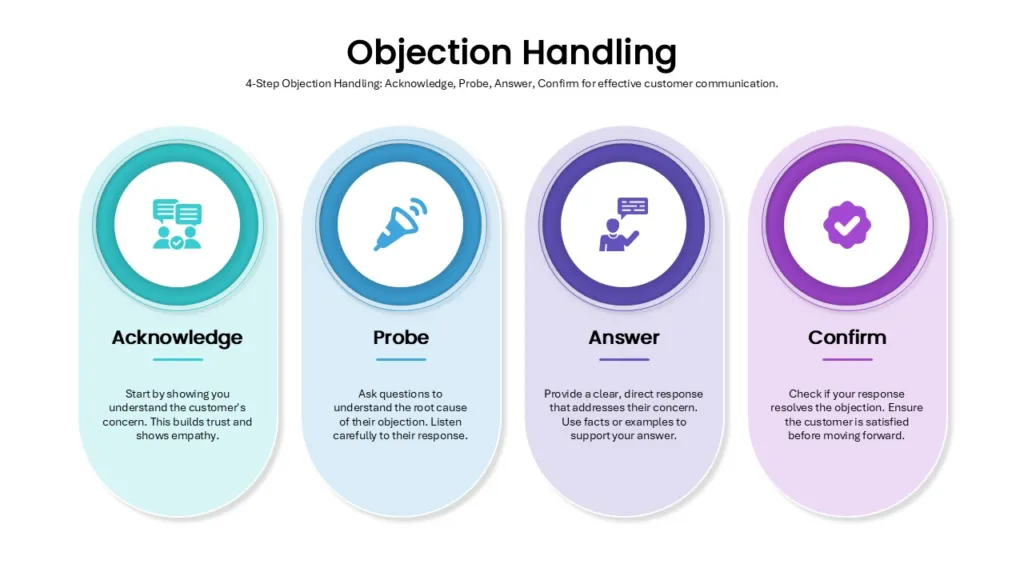
Successful objection handling follows a consistent structure rather than rigid scripts. A widely recommended approach includes these steps:
- Listen actively — Never interrupt. Let the prospect fully express their concern. This builds rapport and shows respect.
- Acknowledge and empathize — Validate their feeling without necessarily agreeing. Phrases like “I completely understand why that’s a concern right now…” go a long way.
- Clarify the real issue — Ask open-ended questions to uncover the root cause. Often the stated objection masks a deeper one (e.g., “too expensive” may really mean “I don’t see the ROI yet”).
- Respond with value and evidence — Bridge back to benefits tailored to their situation. Use case studies, data, or success stories.
- Confirm and move forward — Check if the concern is resolved, then propose a clear next step.
This LAER-inspired model (Listen, Acknowledge, Explore, Respond) or similar frameworks helps turn “no” into productive dialogue.
Proven step-by-step guide to handling objections in sales:
https://www.apollo.io/insights/handling-objections-in-sales
Practice this framework repeatedly through role-play in your objection handling training sessions for muscle memory.
Common Sales Objections and How to Handle Them
Here are the most frequent objections and practical responses:
1. Price Objections (“It’s too expensive” or “We don’t have the budget”) This is the #1 objection. Don’t defend the price immediately. Instead, reframe around value and cost of inaction.
Response example: “I appreciate you raising the investment aspect. Many of our clients felt the same initially. After implementing our solution, they saw a 25% reduction in long-term costs. Can you share more about your current challenges with [specific pain point]?”
Shift the conversation to ROI, total cost of ownership, or how the solution pays for itself.
2. Timing Objections (“We’re not ready” or “This isn’t a priority right now”) Probe for underlying reasons and create gentle urgency.
Response example: “I understand timing is important. What would need to change for this to become a priority in the next quarter? Many teams in New York have faced similar delays and found that starting a pilot now positioned them ahead of competitors.”
3. Competitor or Status Quo Objections (“We already use another provider”) Highlight differentiation without bashing the competition.
Response example: “That makes sense — many of our best clients started with [competitor]. What they appreciated most after switching was [unique benefit]. Would you be open to a quick comparison of how we handle [specific feature]?”
4. Authority or Internal Alignment Objections (“I need to check with my boss/team”) Equip your champion with tools to sell internally.
Response example: “Absolutely, stakeholder alignment is key. I can prepare a short summary with key benefits and ROI data tailored for your decision-makers. Would that help?”
For teams in fast-paced markets like New York, where decisions often involve multiple stakeholders, providing ready-made briefs accelerates consensus.
Real-World Scenarios: Bringing Training to Life with Synthesia AI
Traditional training often fails because reps forget up to 70% of what they learn. Synthesia AI avatars solve this by delivering realistic, on-demand video modules.
Imagine an AI avatar acting as your sales coach:
- Demonstrating a full objection-handling conversation.
- Showing “good” vs. “poor” responses side-by-side.
- Pausing for you to practice aloud before continuing.
Sales teams using AI video training report faster ramp-up times and higher confidence. Whether your reps are based in bustling hubs like New York, remote setups, or hybrid environments, accessible Synthesia modules ensure consistent skill development.
For example, a module titled “Master Sales Objections” can include branching scenarios where learners choose responses and see different outcomes — perfect for self-paced learning.
How to Integrate Objection Handling into Your Sales Process
Don’t treat objection handling as a separate skill. Build it into every stage:
- Prospecting & Discovery — Anticipate objections early by asking better qualifying questions.
- Demo & Proposal — Pre-empt common concerns with data and stories.
- Negotiation & Closing — Use objections as signals to reinforce value.
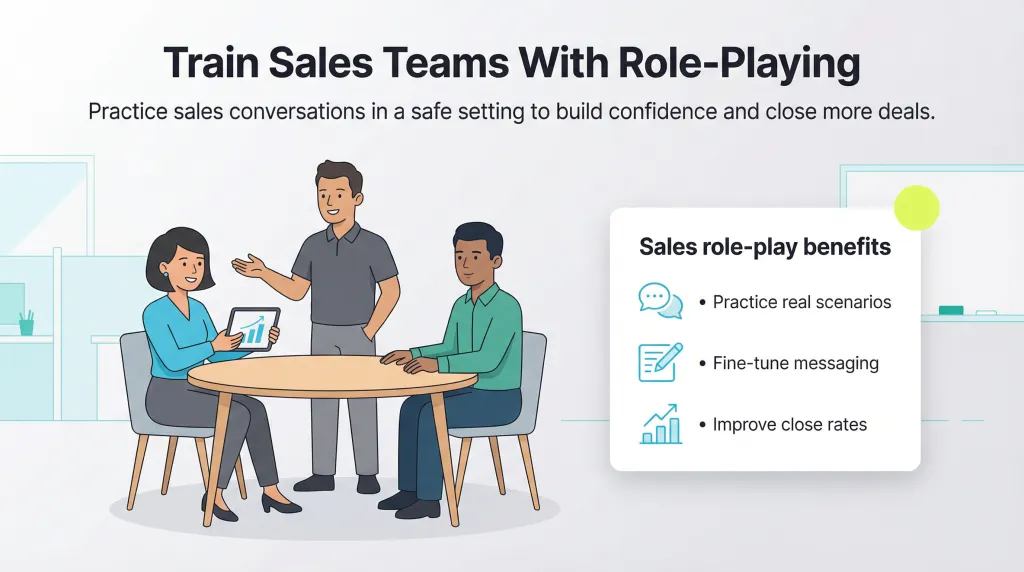
Sales leaders should incorporate regular role-playing and coaching. AI-powered conversation intelligence tools can analyze real calls and flag moments where better objection responses could have changed the outcome.
Teams operating in competitive cities such as New York often face higher scrutiny on value and ROI. Tailoring your objection handling training to regional challenges — faster decision cycles, premium pricing tolerance, or dense competition — gives local reps a clear edge.
Measuring Success and Continuous Improvement
Track these metrics after implementing strong objection handling practices:
- Win rate improvement
- Average deal size
- Sales cycle length
- Rep confidence scores (via post-training surveys)
Analysis of over 67,000 sales calls:
https://prospeo.io/s/objection-handling
The best objection handling training programs include built-in quizzes, practice worksheets, and progress tracking. With Synthesia AI, you can update modules quickly when market conditions or product features change.
Ready to Master Sales Objections?
Objections will always exist, but they don’t have to derail your deals. With the right framework, real-world practice, and engaging AI-powered training, your team can confidently turn concerns into closed business.
Start small: Pick one common objection your team hears weekly, craft responses using the listen-acknowledge-clarify-respond model, and practice in short Synthesia AI video sessions.
Sales professionals who master this skill don’t just survive — they thrive, even in challenging markets like New York where every conversation counts.