In today’s digital learning ecosystem, onboarding is no longer limited to employee orientation. For course creators, coaches, and EdTech startups, onboarding represents the first learning experience students have with a program, making it a critical component of overall course success.
Why Structured Onboarding Matters for Modern eLearning Programs:
In growing education hubs like Columbus, Cleveland, and Cincinnati, many educators are launching digital programs that require structured onboarding experiences.
Learning management systems such as TalentLMS provide powerful tools for creating onboarding pathways that guide learners through course expectations, community guidelines, and essential foundational knowledge.
However, simply uploading introductory modules is rarely enough. Effective onboarding requires intentional curriculum design and instructional design frameworks that guide learners smoothly into the learning environment.
Why Many LMS Onboarding Programs Are Poorly Designed:
Many course creators treat onboarding as a basic “welcome module.” As a result, learners often enter courses without clear expectations or understanding of how to navigate the program.
Common issues include:
- Unclear course structure
- Lack of engagement in early modules
- Limited learner orientation to the platform
- Inconsistent training pathways
These issues can significantly affect learner outcomes.
Research from the Association for Talent Development indicates that structured learning programs can improve knowledge retention and learner engagement by creating clear expectations and guided learning journeys.
For eLearning creators building programs in TalentLMS, onboarding should function as a strategic curriculum layer, not just an introductory lesson.
Why TalentLMS Is Popular for Scalable Training Programs:
Course creators often choose TalentLMS because it offers tools designed for structured digital learning environments.
Key features include:
- Modular course organization
- Quizzes and assessments
- Interactive multimedia lessons
- Progress tracking and reporting
- Learner segmentation and learning paths
These features make TalentLMS especially useful for creators developing professional training programs, certification courses, or structured educational curricula.
However, the effectiveness of these tools depends heavily on how the onboarding experience is designed.
Instructional Design Principles for LMS Onboarding:
Strong onboarding programs are built using principles from the field of Instructional Design.
These principles help ensure that learners understand the course environment, expectations, and learning outcomes before progressing to more advanced content.
A well-designed onboarding experience typically focuses on three core goals:
- Orienting learners to the learning platform
- Establishing clear course expectations
- Building early engagement and motivation
By structuring onboarding around these objectives, course creators can reduce confusion and improve course completion rates.
The Ultimate TalentLMS Onboarding Framework:
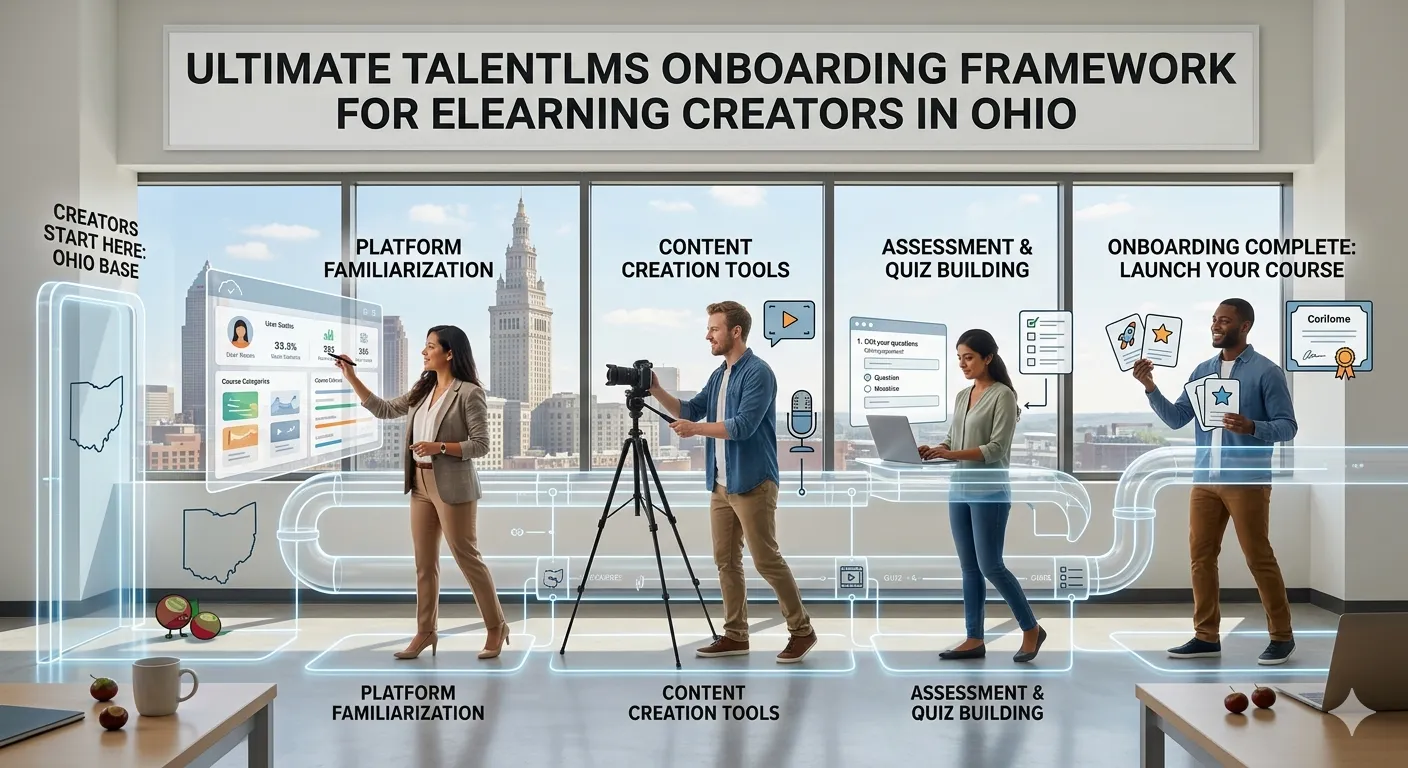
Below is a practical framework that eLearning creators in Ohio can use to design high-impact onboarding programs.
Step 1: Welcome and Orientation Module
The first module should introduce learners to the course environment.
Key elements include:
- Course overview and objectives
- Instructor introduction
- Navigation walkthrough of the LMS
- Community expectations
This module helps learners feel comfortable with both the platform and the learning journey.
Step 2: Learning Path Introduction
Next, provide a clear overview of how the course is structured.
This section may include:
- Module breakdown
- Estimated course timeline
- Recommended study schedule
- Progress milestones
Clear learning pathways reduce cognitive overload and help learners plan their progress.
Step 3: Engagement and Community Setup
Modern learning programs often incorporate community-based learning. Some creators host communities on platforms like Skool, while others integrate discussion spaces directly within their LMS.
Early onboarding activities may include:
- Discussion prompts
- Learner introductions
- Peer interaction activities
These activities build social engagement and accountability.
Step 4: Foundational Knowledge Module
Before diving into advanced course material, learners may need a short foundational module that introduces key concepts.
For example:
- Terminology definitions
- Industry background
- Core frameworks used in the course
This step ensures that all learners start the program with a shared understanding of the topic.
Step 5: Initial Skill Assessment
A short quiz or diagnostic assessment can help learners evaluate their current knowledge level.
Assessment tools within TalentLMS allow course creators to:
- Identify learner skill gaps
- Personalize learning pathways
- Track learner progress
This step also reinforces active engagement from the beginning of the program.
Quick Comparison: Basic Onboarding vs Structured LMS Onboarding
| Factor | Basic Onboarding | Structured TalentLMS Onboarding |
|---|---|---|
| Course Orientation | Minimal | Clear learning roadmap |
| Learner Engagement | Passive | Interactive onboarding activities |
| Curriculum Alignment | Limited | Structured learning pathways |
| Skill Assessment | Rare | Diagnostic quizzes included |
| Learning Outcomes | Inconsistent | More predictable results |
Structured onboarding significantly improves learner readiness and course completion.
Cost Reality Check: Developing Professional LMS Onboarding Programs
Designing a comprehensive onboarding program often requires investment in educational design and production resources.
Typical development components include:
- Curriculum architecture
- Instructional design consulting
- Multimedia lesson development
- Assessment design
According to industry research from Training Industry, organizations in the United States spend over $874 per employee annually on training and development programs.
While independent course creators may invest less, professional onboarding design still requires thoughtful planning.
Many educators collaborate with specialists offering custom eLearning development services to ensure their programs meet professional learning standards.
Integrating Onboarding With Your Course Business Ecosystem:
For many digital educators, onboarding is part of a broader course ecosystem that includes marketing funnels and online communities.
Examples include:
- Marketing funnels built through ClickFunnels
- Course delivery through TalentLMS
- Learner communities hosted on Skool
When these systems are aligned, onboarding can seamlessly transition new students from marketing funnels into structured learning environments.
Takeaways:
For eLearning creators in Ohio, building a structured onboarding experience is one of the most effective ways to improve learner engagement and course success.
Platforms like TalentLMS provide the technical infrastructure for scalable training programs, but the real impact comes from thoughtful instructional design and curriculum planning.
By implementing a structured onboarding framework — including orientation modules, learning pathways, community engagement, and skill assessments — course creators can transform the first stage of their programs into a powerful learning experience.
For educators seeking to build professional digital learning programs, collaborating with experts in custom eLearning development services can help ensure onboarding experiences are both technically effective and pedagogically sound.
References:
- https://www.td.org/content/press-release/atd-research-blended-learning-can-have-a-significant-impact-on-learning
- https://trainingmag.com/2025-training-industry-report/
Frequently Asked Questions:
1. What is TalentLMS used for in eLearning programs?
TalentLMS is a learning management system used to host courses, manage learners, and deliver structured training programs.
2. Why is onboarding important in online courses?
Onboarding helps learners understand the course structure, expectations, and platform navigation before starting the main curriculum.
3. Can TalentLMS support interactive onboarding modules?
Yes. TalentLMS supports quizzes, videos, interactive lessons, and progress tracking.
4. Should onboarding include assessments?
Short diagnostic assessments help identify learner knowledge levels and personalize learning pathways.
5. Can LMS onboarding integrate with course marketing funnels?
Yes. Many creators connect onboarding programs with marketing funnels using tools like ClickFunnels and community platforms like Skool.
Authored By: Sofia Arif