- Why Does It Happen?
- Trucking Safety Risks: Why They Can’t Be Ignored
- What Are the Ways of Preventing Truck Incidents?
- What are the Side Effects of this Issue?
- The Reasons why Traditional Training is a Failure
- The Future of Truck Safety: Mobile and Personalized eLearning
- What Does EduAssist Provide?
- Conclusion
- Frequently Asked Questions
Thousands of trucks are in operation daily on highways, industrial roads, and logistics roads. Drivers experience pressure at all times, with strict deadlines to meet, long working hours, traffic jams, numerous adverse weather conditions, and physical exhaustion.
In these conditions, the drivers are expected to make decisions within a split second. Even the slightest error can result in a huge incident when there is no proper training, awareness, or situational judgment.
Such is the starting-point of the situation:
- Exhausted motorists on the road.
- Safety regulations were restricted to books, but not actual practice.
- No reinforcement and one-time training.
- Minimal or no risk exposure to real-life situations.
Consequently, the human factor is the first cause of truck accidents.
Why Does It Happen?
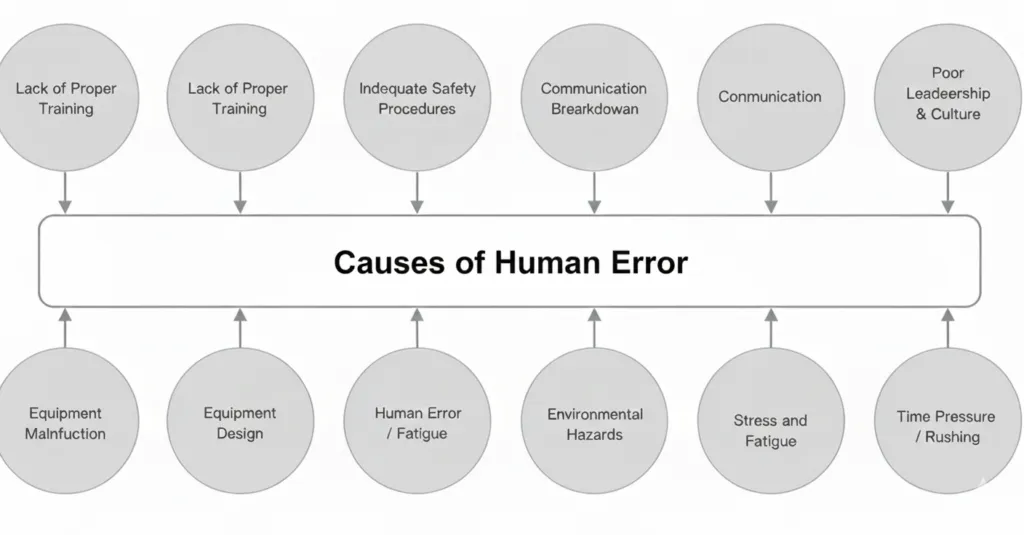
According to industry statistics, about 87% of the truck accidents occur due to human error. This does not imply that drivers are reckless; it is just that the system does not train them well.
The root causes most prevalent are:
- Obsolete or unspecialized safety training.
- Theoretical education that bears no links to the real world.
- Deficiency in the practice of decision-making scenarios.
- Inadequate safety procedural retention.
- Minimal behavioral change and risk awareness.
It is not the issue of the vehicle or technology, but the training method.
Trucking Safety Risks: Why They Can’t Be Ignored
The accidents involving trucks are not exceptions. They have extensive implications for organizations, employees, and the populace.
Their impact includes:
- Risk to human lives
- Damage to vehicles and cargo
- Higher insurance and costs of operation.
- Penalties and compliance problems.
- Slowing delivery times and supply problems.
- The destruction of the company’s image in the long run.
Most organizations respond to situations when an incident has taken place. But prevention by good training is much more permanent than the reactionary.
What Are the Ways of Preventing Truck Incidents?
The Customized eLearning in Safety Training
The conventional safety training places a lot on policies, documents, and compliance checklists. As much as it is needed, this method does not equip drivers with practical scenarios.
Personalized customized eLearning lays emphasis on the practice rather than memorization.
It enables organizations to:
- Real accident and risk-scenarios that train drivers play.
- Provides interactive, visual, and engaging learning.
- Divide training into small and targeted microlearning.
- Offer mobile-friendliness to learn at any time.
- Measure knowledge by evaluating and analyzing.
This practice not only aids the drivers to know the rules of safety, but they should also practice them when the time is critical.
What are the Side Effects of this Issue?
Organizations are exposed to long-term risks, which include: when safety training is not specific or up to date.
- The occurrence of repeated incidents due to the same errors.
- Risky actions of drivers are being normalized.
- Less faith in training programs.
- Lack of a strong safety culture in the operations.
- Greater financial and legal exposure.
Safety is not merely a policy; it is an attitude. And attitudes are developed with constant, successful learning.
The Reasons why Traditional Training is a Failure
The traditional safety training is mainly centered on:
- Policies and manuals
- Compliance checklists
- One-time classroom sessions
Although these are necessary to meet the requirements of the law, they do not equip drivers with live risks and pressure-related decision-making. The drivers know the rules by heart and cannot implement them during emergency situations, and thus end up committing the same mistake over and over again.
The Future of Truck Safety: Mobile and Personalized eLearning
Personalized eLearning is a revolution in traditional training as it focuses on the practical application, interaction, and repetition. Key features include:
Scenario-Based Learning
Drivers are involved in simulated conditions of accidents, and they are taught how to react.
Interactive Modules
Videos, quizzes, and simulations are very differentiated material that enhances retention.
Microlearning
Drivers can learn in small bites as they are taught through small and focused modules.
Mobile Access
Drivers will be able to train at any time, wherever they are, without upsetting their schedules.
Assessment and Analytics
Organisations will be able to monitor comprehension, find areas of weakness, and offer specific retraining.
This will have the effect of ensuring that drivers are taught the rules of safety, and then are tested when under pressure to ensure they use the safety rules to mitigate the incidents.
What Does EduAssist Provide?
EduAssist assists organizations in the process of converting traditional safety training to results-based, custom eLearning solutions.
Safety Training Services for EduAssist include:
- Development of Safety eLearning Content.
- Interactive Learning Modules and Scenario-Based.
- Drivers and Field Staff Microlearning.
- Demonstration-Based Training and Simulations.
- Safety Analytics, Assessments, and Quizzes.
- Manual to Digital Course Conversion.
- LMS Implementation and Training Tracking.
- Logistics, transport, and oil and gas Industry-Specific Safety Training.
EduAssist has a straightforward and efficient strategy:
Theoretical problems into practice, to real-life problems, to quantifiable safety.
Conclusion
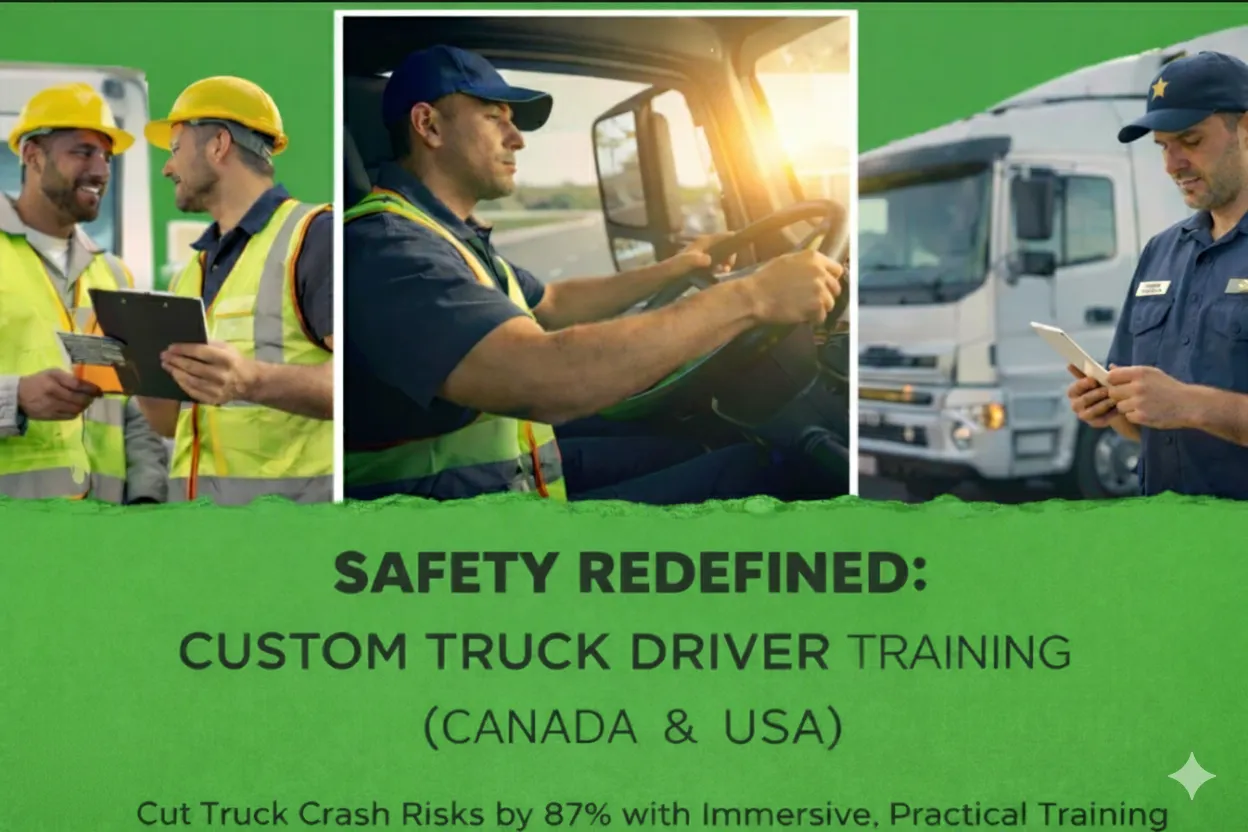
In case almost 87% of truck accidents are caused by human error, the answer does not lie in harsher punishment and second alerts, but rather in smarter training.
Drivers are able to:
- Understand real-world risks
- Better under pressure decisions.
- Formulate long-term safe driving habits.
EduAssist offers the knowledge, tools, and learning strategies required to enable organizations to change their safety culture to a more proactive endeavor instead of a reactive approach to safety.
Frequently Asked Questions
What is the key reason behind truck incidents?
Approximately 87% of truck accidents arise because of human factors, and the primary cause is the lack of proper or obsolete safety training.
What is wrong with the old-fashioned safety training?
Conventional training in safety is based on rules and documents, with no training on how to behave in real life and make decisions when under pressure.
What is the effect of customized eLearning in enhancing truck safety?
The tailored eLearning is based on real-life situations, interactive modules, and microlearning to assist drivers in using the safety rules in urgent cases.
What are some of the dangers companies might encounter in case of non-compliance with safety training?
Failure to follow the right safety training can result in recurring accidents, irresponsible driving, legal problems, and loss of even more money.
What is EduAssist’s contribution to safety training?
EduAssist offers individualized safety eLearning, scenario-based, driver-based microlearning, and evaluating and tracking training using the LMS.